
Exporting Samoan Taro to New Zealand

Empowering Farmers and Nurturing Communities In the heart of Samoa, where lush green fields stretch under the embrace of the Pacific sun, a remarkable story of resilience and opportunity unfolds. Meet Seuamuli Kome Robbie Lauano, a 48-year-old entrepreneur whose dedication and resourcefulness have brought the flavours of Samoan taro to the shores of New Zealand, thanks to the support of the Ministry of Agriculture and Fisheries (MAF) Samoa and the PACER Plus Implementation Unit. Mr. Lauano’s journey began with a simple but profound realisation. He saw the untapped potential of small farmers in Samoa who lacked the opportunity to export their produce. Determined to bridge this gap, Mr. Lauano reached out to the PACER Plus Implementation Unit, which utilised its networks to support Mr Lauano. With a vision of empowering local farmers, Mr. Lauano set out to purchase their taro, offering fair prices that sustained their families in numerous ways. By eliminating the middlemen and directly supporting the farmers, he not only ensured their financial stability but also fostered a sense of hope and optimism within the community. Iopu Ma’aolo (left), a farmer from Savai’i, smiles as he receives WS$1,080 in cash from Seuamuli Kome Robbie Lauano for the export of his taro. Through Mr. Lauano’s efforts, over 2,000 kilograms of Samoan taro made their way to New Zealand, crossing borders with zero tariffs under the PACER Plus agreement. The destination was Papakura Wholesale Meats Direct, a store in Auckland, New Zealand owned by Mr. Lauano and his business partner, Toomata Paul Stowers. The response from consumers were overwhelming, as word spread about the availability of fresh, high-quality Samoan taro. Throngs of eager customers travelled from Otara, Manurewa, and Mangere to savour the taste of these traditional delights. The aroma of boiled taro filled the air, as families gathered around tables adorned with the bounty from Samoa. The connection to their cultural heritage was rekindled, and the demand for Samoan taro soared. For Mr. Iopu Ma’aolo, a 35-year-old farmer from Savai’i, this newfound opportunity brought tangible improvements to his family’s life. With a beaming smile, he shared how he earned WS$1,080 (US$400) from the export of his taro. Comparing the current market prices, he expressed gratitude for the upfront payment and the increased value of his produce. The additional income would help secure a brighter future for his two children, offering them improved access to education and healthcare. Avea Vaoga (right), a farmer from Savai’i, receives WS$5,400 from Seuamuli Kome Robbie Lauano which he plans to invest in his farm. Similarly, Mr. Avea Vaoga, a 52-year-old farmer also from Savai’i, rejoiced at the fruits of his labour. When he received a cash payment of WS$5,400 (US$2,000) for his taro, his joy knew no bounds. As a community leader, Mr. Vaoga understood the significance of this opportunity not only for his family but also for the entire community. With his newfound earnings, he planned to invest in his farm, providing employment to young men in the village. The prospect of agricultural prosperity excited him, as he envisioned a future where opportunities for export continued to uplift local farmers. Beyond the financial gains, the export of Samoan taro holds deeper significance. It symbolises a revival of cultural identity and pride, reminding Samoans living abroad of their roots. The aroma, taste, and texture of this traditional staple transport them back to cherished memories and traditions, strengthening the bonds that unite the Samoan diaspora. The success of Mr. Lauano’s venture highlights the importance of empowering local farmers and supporting agricultural growth in Pacific countries. Samoa’s MAF and the PACER Plus Implementation Unit’s role in supporting this journey serves as a testament to the transformative power of collaboration and opportunity. As the sun sets over the expansive taro fields of Samoa, Mr. Lauano continues to work tirelessly, bridging the gap between farmers and distant markets. His story is a testament to the resilience and determination of Pacific communities and a beacon of hope for farmers who dare to dream of a brighter future. With each kilogram of Samoan taro exported, a legacy of empowerment, sustainability, and cultural preservation is written, one that echoes through generations to come. -END- More articles like this one
PACER Plus and PTI New Zealand partnership to boost investment and economic growth in the Pacific

Pacific Trade Invest New Zealand (PTI NZ) in collaboration with the PACER Plus Implementation Unit (PPIU) is delighted to announce the launch of the Investment Readiness Programme aimed at stimulating economic growth and creating investment opportunities in the Pacific. The programme will develop a robust pipeline of up to 15 investable projects within the eight Pacific parties of PACER Plus, including Cook Islands, Niue, Kiribati, Samoa, Solomon Islands, Tonga, Tuvalu, and Vanuatu. The primary objective of the Investment Readiness Programme is to support selected small and medium-sized enterprises (SMEs) in the Pacific by assisting them in developing investment proposals. These proposals will be utilised by PTI NZ to facilitate connections between foreign investors and developers, fostering mutually beneficial partnerships and driving sustainable economic development. The Investment Readiness Programme will adopt a sector-agnostic approach, focusing on key industries such as agriculture, renewable energy, manufacturing, fisheries, and tech/innovation. By taking this approach, the programme aims to leverage the diverse strengths and capabilities of Pacific SMEs, highlighting the region’s potential to global investors. Ms Glynis Miller (left), PTI NZ Trade Commissioner with Mr Alipate Tavo, PPIU Trade and Investment Adviser. A core principle of the Investment Readiness Programme is its commitment to promoting and supporting women-owned or led businesses. Through active engagement and dedicated resources, the programme will empower women entrepreneurs, providing them with the necessary tools and opportunities to thrive in their respective industries. Furthermore, the programme will actively promote these women-owned businesses to the impact investment community in New Zealand and abroad, recognising the significant contributions they make to the Pacific economy. Ms Glynis Miller, PTI NZ Trade Commissioner, says: “Pacific Trade Invest New Zealand is committed to assisting Pacific parties of PACER Plus expand their investment opportunities and bring global attention to the many high-value projects in the Blue Pacific. The programme offers a vital practical step for SMEs seeking equity and growth, and wanting to assess their potential firstly for investment, then for business and export development.” Mr Roy Lagolago, Head of PPIU, expressed his enthusiasm for the programme, emphasizing its value in driving economic transformation and attracting foreign investments in the Pacific. “The Investment Readiness Programme represents a tremendous opportunity for the Pacific. By nurturing and showcasing the potential of our SMEs, we are not only fostering economic growth but also promoting the values of inclusivity and diversity. Investing in businesses with a higher representation of women in leadership positions has proven to be a predictor of long-term value creation and improved financial performance. We are confident that the programme will serve as a catalyst for positive change, unlocking new avenues of development and prosperity for the Pacific,” said Mr Lagolago. So far, 12 projects have been undertaken across the Pacific. These businesses operate across a breadth of industries and have been chosen both due to the exciting scope of their work and potential for growth. While the participation in the programme cannot provide an assurance for future investment, it will provide a solid foundation to understand where businesses can focus attention to attract committed financial partners. The PACER Plus Implementation Unit and Pacific Trade Invest New Zealand are excited to embark on this collaborative journey to boost investment readiness and propel Pacific businesses onto the global stage. By capitalising on the region’s strengths, the Investment Readiness Programme aims to create a thriving investment environment that fosters sustainable development, economic empowerment, and inclusive growth. -END- More articles like this one
PACER Plus to support sustainable economic development for Niue

ALOFI, Niue – The regional governance meeting for the Pacific Agreement on Closer Economic Relations Plus (PACER Plus) will be held in Alofi, Niue on 30 May – 1 June 2023. The PACER Plus Agreement is a comprehensive free trade agreement (FTA) between the Pacific Island Countries and Australia and New Zealand, covering trade in goods, trade in services, investment, and a side-arrangement on labour mobility. The Agreement was signed in 2017 and entered into force in December 2020. Niue is one of eight Pacific countries that have ratified the Agreement. Other Pacific Parties are the Cook Islands, Kiribati, Samoa, Solomon Islands, Tonga, Tuvalu, and Vanuatu. PACER Plus is a unique FTA in the sense that its central focus is to support regional development and assist Pacific Parties to participate more actively in, and benefit from, international trade. The Agreement is in fact one of few FTAs to have a Development and Economic Cooperation Work Programme which provides development assistance to Pacific Parties to strengthen their capacity to benefit from regional and international trade. Premier of Niue, Hon Dalton Tagelagi (second from left), with the PACER Plus Implementation Unit team. Niue will host the first in-person PACER Plus Joint Committee Meeting from 30 May to 1 June. Mr. Frank Sioneholo, the Economics and Planning Director and the PACER Plus national focal point for Niue, said: “For Niue, international trade and economic integration is fundamental to overcoming the challenges inherent to our smallness and remoteness from key markets. PACER Plus provides a framework for increased regional economic integration and at the same time provides assistance needed to enable us to benefit from trade.” In an interview with one of the advisers from the PACER Plus Implementation Unit, Dr. Alisi Kautoke Holani, she stated: “Increasing the benefits of PACER Plus for Niue requires targeted support for areas where Niue has comparative advantage.” She added: “From Niue’s GDP data over the past years, the services sector is clearly the major contributor to economic growth and tourism is shown to have the greatest economic potential. The PACER Plus Agreement can play a critical role in the development of your services sector as it is the only Pacific FTA in force with details commitments on trade in services and can therefore support the creation of an enabling environment that can increase foreign direct investment, economy-wide productivity, connectivity, and competitiveness of other exports including agricultural products such as your vanilla and honey.” She also highlighted that the transition and rapid advancement in the digital economy and digital trade provides many opportunities for small and remote island countries such as Niue. “Services are central to digital trade, and we are now seeing that a broad range of services can now be supplied online, which presents significant opportunities for our small and remote island countries. This was particularly evident during COVID-19. The PACER Plus Agreement can facilitate the provision of enabling policies and strategies for digital supply and e-commerce,” said Dr Holani. The PACER Plus Agreement also covers trade in goods and seeks to increase merchandise trade between Parties. This is achieved through improved customs procedures, improved rules of origin, use of Sanitary and Phyto-Sanitary (SPS) measures to protect plant, animal and human life and health. This allows for the increase trade, address barriers to trade that may arise from technical regulations, standards, and conformity assessment procedures (TBT). These provisions provide opportunities to increase Niue’s agricultural and fisheries exports and support Niuean businesses to take advantage of duty-free access to not only Australia and New Zealand but also the other eight Pacific Parties. Labour shortages are also a recognised development constraint that cuts across all sectors in Niue. Dr. Holani further stated that this is another area where the PACER Plus can provide benefits to Niue. “The PACER Plus Arrangement on Labour Mobility provides a framework to facilitate labour mobility from other Pacific PACER Plus Parties to address labour shortages in Participant labour receiving countries such as Niue,” she said. Over the past week, the PACER Plus Implementation Unit, together with the Australian National University, were in Niue upon the request of the Niuean government, to conduct stakeholder consultations to later inform the development of a strategy to facilitate the movement of workers from other Pacific PACER Plus Parties to meet labour shortages in key sectors. “The scoping visit was a success, and we are looking at ways where we can address immediate labour shortages in critical service sectors such as health, while at the same time consider a strategy that can sustainably address labour shortages in Niue in a manner that meets required labour standards and ensures the protection of workers coming in,” said Dr. Holani. The PACER Plus Implementation Unit, based in Samoa, is a regional organisation established to administer the Agreement’s Development and Economic Cooperation Work Programme and support Parties in the implementation of the Agreement. -END- More articles like this one
PACER Plus supports Investment Agencies to better implement their obligations
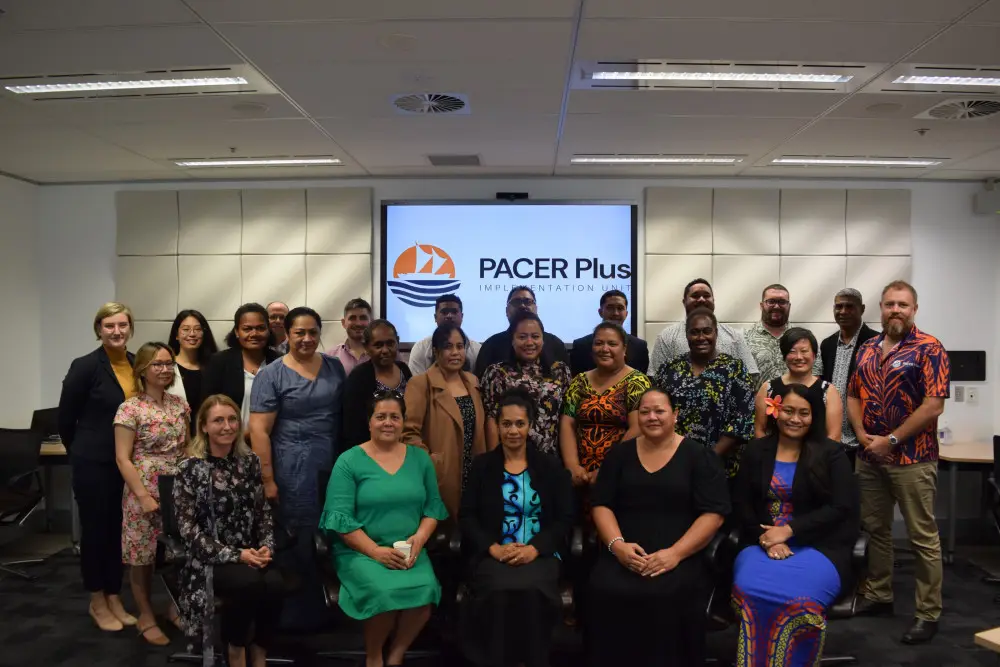
SYDNEY, Australia – Investment officials from the Pacific Agreement on Closer Economic Relations Plus (PACER Plus) countries gathered in Sydney, Australia from 27-29 March to learn from investment experts and from each other on the investment component of PACER Plus. This workshop is the first opportunity for officials to meet and discuss the commitments and obligations all parties have made and share progress on implementation and ideas on how they can use PACER Plus as mechanism to improve the investment environment in their home countries. “By implementing the provisions in the Investment Chapter of PACER Plus, countries are demonstrating their commitment to increasing inclusive investment, creating jobs, and delivering better outcomes for their people across the country,” says Alipate Tavo, Trade & Investment Adviser at the PACER Plus Implementation Unit (PPIU). “Each country will have a different approach, but the principles remain the same.” PACER Plus is a regional development-centered trade and investment agreement aligned with the Sustainable Development Goals. The Agreement is designed to support participating countries to stimulate economic growth by becoming more active partners in, and benefit from, regional and global trade. Ten countries are currently parties to the Agreement: Australia, Cook Islands, Kiribati, New Zealand, Niue, Samoa, Solomon Islands, Tonga, Tuvalu, and Vanuatu. With the exception of Tonga which has a bilateral agreement with the United Kingdom, PACER Plus is the first International Investment Agreement (IIA) that many Pacific countries have entered into, a key milestone in improving access to international investment. PACER Plus is also one of the world’s most innovative IIAs in that it was developed and designed specifically for the economic and cultural contexts of the Pacific and it’s regional partners. The Introductory Investment Workshop will familiarise Investment Contact Points with the rationale behind inclusion of investment provisions in PACER Plus and the role of IIAs in partnership with national investment and broader economic development strategy. All Parties have identified the attraction of foreign investment as a key growth strategy; however, this must be done in manner that respects each Parties’ priorities, the sectors they want to focus on, and the types of investors and investments they would like to encourage, based on their community needs. Co-organised with the Asian Development Bank (ADB) in Sydney, the three-day workshop will be funded by the PPIU. In the following days, the ADB will convene a Business Registry Workshop for Forum Island Countries from 29-31 March to discuss improving the investment admission processes and procedures across the region. -END- More articles like this one
PACER Plus an opportunity for regenerative development, trade, and investment in Vanuatu

PORT VILA, Vanuatu – Vanuatu has taken a major step to boost its economy and improve the livelihood of its people by ratifying the Pacific Agreement on Closer Economic Relations (PACER) Plus. PACER Plus, a unique development-centered trade and investment agreement between eight Pacific Island Countries and Australia and New Zealand, aims to reduce barriers to trade and investment, and promote economic development and prosperity in the region. Vanuatu’s ratification of PACER Plus marks a major milestone in the country’s commitment to trade and economic development. The agreement is expected to bring significant economic benefits to Vanuatu’s people and businesses but will require a change of mindset and a desire to change the way trade is implemented. It will reduce tariffs on goods traded with Australia and New Zealand, allowing for improved access to these markets. It will also provide the opportunity for Vanuatu to benefit from the services and investment markets of Australia and New Zealand, allowing for increased trade and foreign direct investment. In addition, the agreement will help Vanuatu to diversify its economy, providing a boost to its tourism and agricultural sectors. It will also provide improved access to technology and knowledge, allowing for more efficient and productive businesses. During the official launch of PACER Plus awareness workshop today, the Minister for Foreign Affairs, International Cooperation and External Trade, Hon. Jotham Napat said the benefits of ratifying PACER Plus are numerous. “It will provide better job opportunities for the people of Vanuatu. It will open new avenues of employment for our people, helping to reduce poverty and improve the overall wellbeing of our community,” said Mr. Napat. Head of PACER Plus Implementation Unit and Labour Mobility Secretariat, Roy Lagolago, welcomed Vanuatu to the PACER Plus family, the tenth country to ratify the agreement. “PACER Plus is unique compared to other trade agreements. Unique in that a dedicated secretariat – the PACER Plus Implementation Unit – has been set up to assist and support member parties to ensure the opportunities and benefits offered by PACER Plus are shared equally between all people by targeting and supporting more women, youth, and persons with disabilities to engage in trade. Ratifying PACER Plus is the easy part; the challenge for Vanuatu now is to unite and be clear on what they want to achieve to make the most of the opportunities that this agreement has to offer. We cannot continue to implement trade agreements in the same way and expect different results. That is why under PACER Plus, a different approach is required and we at the PACER Plus Implementation Unit stand ready to support Vanuatu towards that goal,” said Mr. Lagolago. Mr. Lagolago also announced that Vanuatu will be hosting the Pacific Labour Mobility Annual Meeting (PLMAM) this year, the first time for Vanuatu to do so. The event will bring together policymakers, researchers, and industry leaders from across the Pacific to discuss the ongoing challenges and opportunities in labour mobility. “The PLMAM is a vital platform for regional dialogue and cooperation on labour mobility, and we are delighted that Vanuatu will be hosting the event this year,” he said. The annual meeting aims to promote dialogue, collaboration, and innovation to improve the management of labour migration in the Pacific. More articles like this one