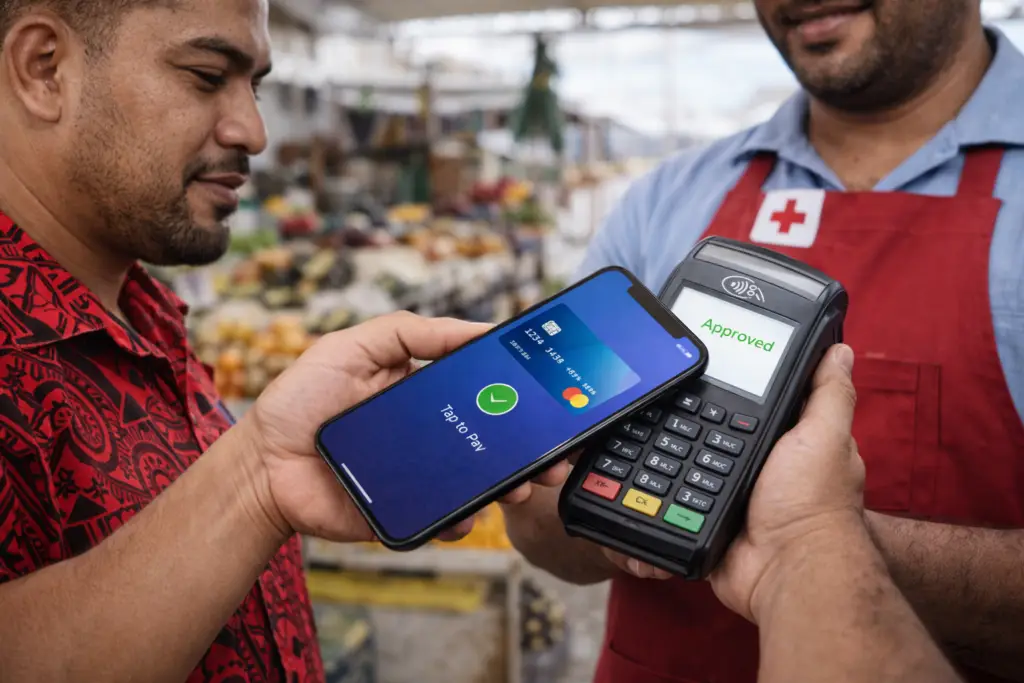
Across the Pacific, digital financial services are rapidly transforming the way people send money, make payments, and access financial services. For Tonga, where remittances form a vital part of household income and economic activity, secure and reliable payment systems are essential.
As digital payments grow in importance, countries must ensure their legal and regulatory frameworks keep pace with new technologies. Recognising this need, the PACER Plus Implementation Unit (PPIU) partnered with the National Reserve Bank of Tonga (NRBT) to support the development of the Tonga Payment Systems and Services Bill 2025.
The initiative represents a significant step toward strengthening Tonga’s financial infrastructure and building the legal foundations needed to support a modern digital economy.
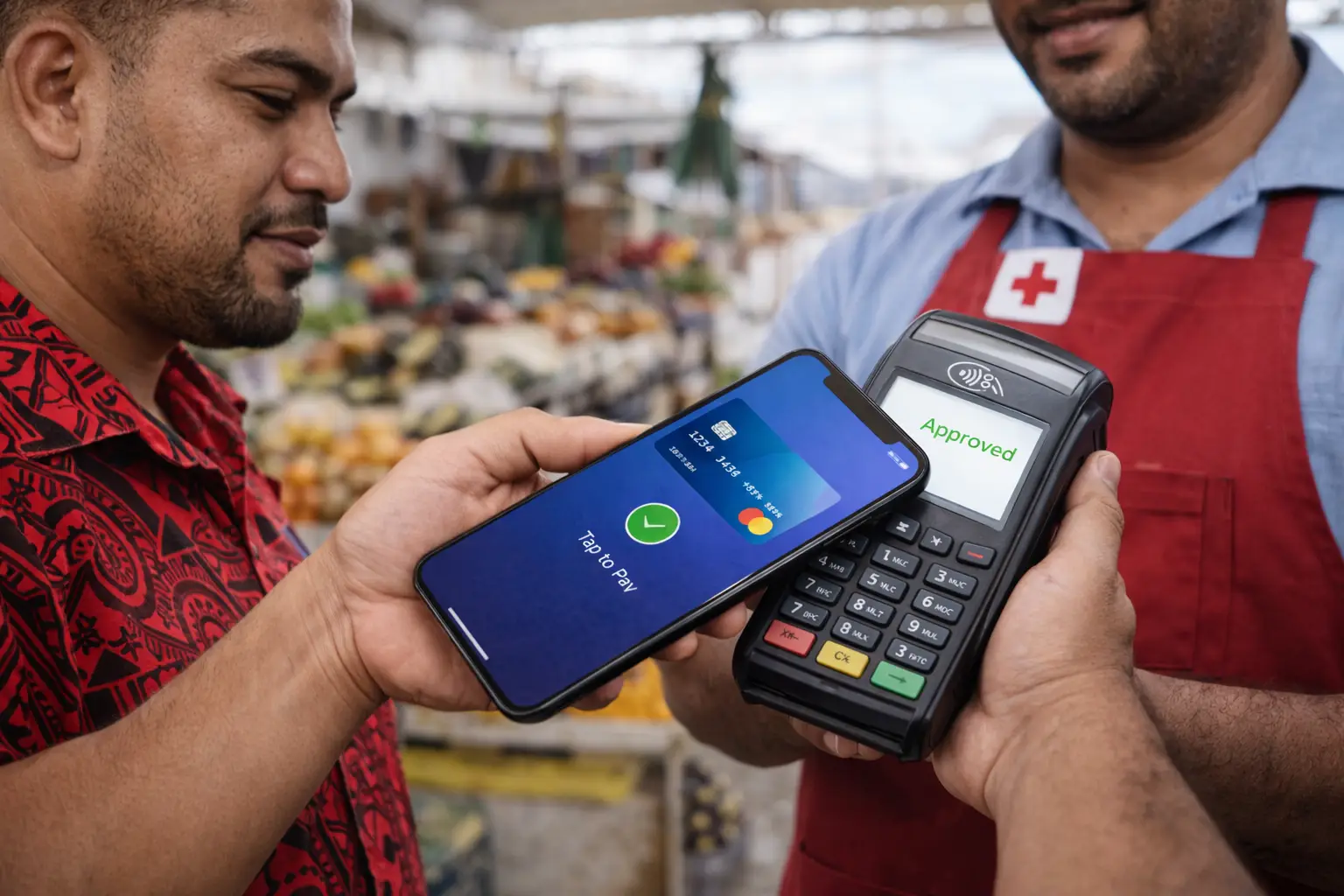
Digital payment services are expanding across Tonga, creating new opportunities for financial inclusion and economic participation.
In recent years, Tonga has seen growing use of electronic payments, mobile money services, and digital remittance platforms. These innovations create new opportunities for financial inclusion and economic participation.
However, before this project began, Tonga did not have a comprehensive legal framework governing electronic payment systems and digital financial services.
This gap created several challenges. While banks and licensed money transfer operators were subject to oversight, informal remittance channels and unregistered payment services operated with limited regulation. Existing legislation also did not adequately address emerging issues such as cybersecurity risks, data protection, and the interoperability of digital payment platforms.
Without a modern regulatory framework, it was increasingly difficult for regulators to supervise payment service providers effectively and ensure consumer protection in an evolving financial landscape.
To address these challenges, PACER Plus supported a technical consultancy to assist Tonga in developing a modern legal framework for electronic payment systems and services.
"Developing a modern legal framework for payment systems is a key step toward strengthening Tonga's digital economy and ensuring that financial innovation takes place within a safe and trusted environment."
The work began in April 2024 with a detailed assessment of Tonga’s payment ecosystem. This included legal analysis of existing legislation, institutional mapping of financial sector stakeholders, and a review of international best practices for payments regulation.
The assessment also examined the country’s financial landscape, including the role of commercial banks, microfinance institutions, and the growing importance of digital financial services.
Based on these findings, the project moved into a structured legislative drafting process that involved close collaboration with the National Reserve Bank of Tonga, the Ministry of Trade and Economic Development, and technical experts from the World Bank.
These consultations ensured the draft legislation reflected both Tonga’s national priorities and internationally recognised standards for payment systems regulation.
The resulting Payment Systems and Services Bill 2025 introduces a comprehensive framework for regulating digital payments and financial technology in Tonga.
The proposed legislation establishes clear rules for the licensing and supervision of payment service providers, including fintech operators and electronic money issuers. It also introduces safeguards to protect consumers and strengthen the resilience of Tonga’s financial system.
Key features of the bill include:
Together, these measures aim to ensure digital payment services operate safely, transparently, and in the interests of consumers.

Digital financial services are expanding access to financial tools for individuals and businesses in Tonga.
The legislation also supports innovation within Tonga’s financial sector. By introducing flexible regulatory mechanisms, such as the registration of low-risk fintech providers, the framework encourages the development of new financial technologies while maintaining appropriate oversight.
This approach helps balance innovation with financial stability, allowing Tonga’s digital payments ecosystem to grow in a secure and inclusive manner.
In April 2025, the final legislative package, including the draft bill, explanatory notes, and an implementation roadmap, was submitted to the National Reserve Bank of Tonga and the Ministry of Trade and Economic Development.
Once enacted, the legislation will provide Tonga with the regulatory tools needed to oversee payment service providers, protect consumers, and support the continued development of digital financial services.
-ENDS-