
Pacific Labour Mobility: A Pillar of Growth for Australian and New Zealand Industries

Labour mobility is activated by unmet labour demand by employers in labour receiving countries. Employers therefore play a critical role in the success of Pacific labour mobility. Kerry McCarthy, a Pacific Australia Labour Mobility (PALM) employer and Gary Jones of Mr. Apple, a leading New Zealand Recognised Seasonal Employer (RSE) employer, shared their perspectives. Kerry McCarthy and her family run a vegetable business on the Darling Downs, just under three hours west of Brisbane, Australia. They specialise in growing leafy greens and sell to both the Brisbane markets and big grocery chains in Australia. Mr. Apple is New Zealand’s largest integrated grower, packer, and exporter of apples. Both companies have relied on Pacific workers since the inception of the labour mobility schemes, 2007 for New Zealand and 2012 for Australia. Kerry began with two workers in 2012 and now recruits around 60 workers from Solomon Islands. Mr. Apple recruits up to 1,300 workers per season from across the Pacific. Mayor of Hastings District Council, To’asavili Sandra Hazlehurst (seated) who received a Samoan chiefly title from the Falealili District chiefs, along with Mr Apple staff and RSE workers from that district in May 2023. Despite the varying scale and nature of the two companies’ operations, labour shortages were equally a chronic constraint to the growth of their businesses. “We became involved in the Seasonal Worker Program due to necessity. At that time, we were an isolated farm and could not find reliable local labour to employ. We tried using labour hire companies from the Lockyer Valley but as we were on the end of the line in regard to location, we were always given last priority. If you hadn’t already heard, in regional Australia there is a major labour shortage,” said Kerry. Similarly in New Zealand, Gary explained, “In the 1990s in New Zealand, there was a lot of people that were in seasonal roles working for the freezing works, processing, fishing, fencing, and farming and there were lots of New Zealanders who were moving around and could do seasonal work. But our communities and our jobs are completely changed, and New Zealanders are now more focusing on permanent urban roles and have become less available.” For businesses like these, Pacific labour mobility schemes provide a critical labour solution to underpin growth. Kerry shared, “It (PALM) has given us the confidence to expand our business, knowing that we can plan ahead, as our workers are going to be there for us and are going to stay with us for the whole season.” For Mr. Apple, “RSE underpinned our ability to provide quality fruit to our consumer. It’s allowed us to provide far higher quality to our consumers and the market. It’s given New Zealand apples a brand of being the best apples in the world. And the Pacific people (workers) have been a pillar that’s made the whole industry successful.” But behind the business transactions lies another layer to the success of Pacific labour mobility – the robust partnership between employers and local Pacific communities. Gary elaborated on Mr. Apples’ partnerships in the Pacific stating that “we have a partnership with the governments and the peoples of the Pacific, which is very important to us. Those relations are quite critical and the opportunity for us to partner with the governments enables us to make sure that issues can be identified, and risks can be mitigated.” For smaller family businesses like Kerry’s, this partnership is very close to home. Since 2012, Kerry has mostly recruited from a remote rural village in the Solomon Islands which has no road access and no electricity. Through her recruitments, she and her family have built a close bond with the local community. “My family visits the village; to witness the changes firsthand is overwhelming. All of this positive change has come from our small business. It boggles the imagination as to what can be achieved on a broader scale,” Kerry stated. A few years ago, Kerry and her children’s local school in Australia organised a school trip to the village in Solomon Islands. About 20 Australian high school kids and teachers experienced village life and donated support to the local school. Kerry shared that the experience significantly impacted the kids, and some have gone on to university to study development with a focus on the development needs of the Pacific, all based on their experience in Solomon Islands. The strength of these partnerships has caused many employers to want to give back more. They see that their role extends beyond recruiting workers to being agents of change and development. Many employers, like Kerry, are interested in providing direct support to social services in Pacific countries. She stated that “I would keep lobbing the Australian Government and also personally try and get investment flowing into the Pacific, starting with the Solomons for early detection of preventable diseases for women, particularly breast cancer and uterine cancer, HPV vaccines. But it’s difficult to know where to go, who to trust so that you know the ‘boots are put on the ground’ in the right area. It would be good for employers who want to contribute, but don’t know how to do it to be guided towards reputable businesses that are already established on the ground in the Pacific.” Other employers, such as Mr. Apple, see the opportunity to support local private sectors to grow entrepreneurship and business development. Gary explained that many employers and communities in New Zealand are at the stage where they “would like to see how to partner communities where their workers have got some collective capital and who are saying where should we invest our money now. Can we create some commerce at scale that will help that whole community to deliver? A good example of this is Hastings District Council and Hawkes Bay Iwi Ngati Kahungunu signing a Sister District agreement with Falealili District in Samoa. Both these communities have benefited immensely from the RSE scheme. Now these communities are saying how can
Rethinking the Development “Wins” from Labour Mobility
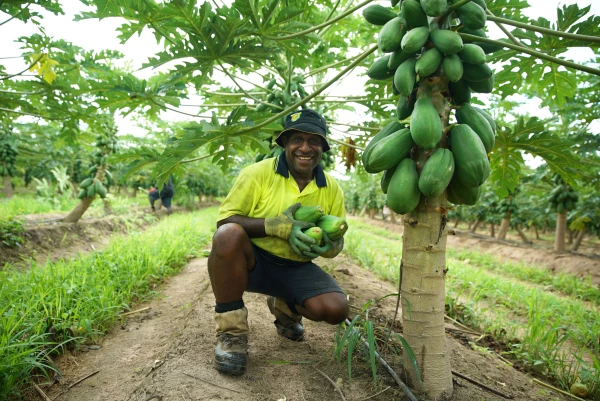
The development benefits of labour mobility are not as straight forward as we would like. Emeritus Professor Richard Bedford dwelled on the complexities of the labour mobility-development nexus saying “we’re just assuming that labour mobility is always good, or labour mobility is always bad. Labour mobility is a process and an option that individuals can exercise at different times in their lives, depending on the access they’ve got to other places to live in, and it’s not just a simple linear direct relationship”. Labour mobility generally refers to the movement of labour to deliver a service in an overseas labour market. It can cover movement for very short periods or a much longer or even permanent term. Similarly, development is defined by scale, and it is crucial to recognise the factors which enhance or mitigate development at every level. Labour migration can generate “triple wins” for migrants, their countries of origin and the countries that receive them. Photo: PALM Scheme Professor Bedford elaborated that “if you’re looking at mobility generally, you’re looking at decisions that people make about moving in order to achieve some particular goals or improvements perhaps in their lives or to escape something which they don’t like in the context they’re currently living in. So, development in that context is very much development of the individual and the social unit that they’re involved in and just by simply saying that what’s good for the individual is necessarily good for the community or good for the nation is a little bit simplistic”. The labour mobility-development nexus has also been captured in the proposal that temporary labour migration can generate ‘triple wins’ for migrants, their countries of origin and the countries that receive them. While there is consensus amongst labour mobility researchers on labour mobility generating multiple wins, there is not much convergence on who wins. Professor Bedford indicated that the “challenge with the triple win is that there are two parties that are definite — the employer who wants labour, and the workers who provide that labour. They are the people who are engaged in the process of seasonal movement, and they have to feel that they are benefiting from the interaction.” The third win, however, is unclear. Some scholars are questioning whether the “win” for individual workers effectively translates to sustainable socio-economic development in their countries of origin. Professor Bedford elaborated on the issue saying “people who come back year after year, their family becomes completely dependent on money earned offshore, and that’s not to contribute to development back home, that’s just simply to cover consumption. It (increased consumption) increases imports into the country because all they’re really doing is adding to consumer demand for, well, a mix of local produce and often more and more imported produce, which doesn’t do great things for the balance of trade necessarily for the country”. At the same time, the win for the labour receiving countries should not be discounted. Professor Bedford said that “the receiving country is getting an enormous amount of revenue from this as well, and we don’t really quantify that. We don’t ever address that, and so I actually think the triple win concept needs some quite careful rethinking”. The development benefits of labour mobility are also contingent on the type of labour mobility. Professor Bedford highlighted the critical importance of stakeholders understanding the contrasting impacts of short-term and long-term labour mobility programmes. “The biggest negative is taking away the skilled labour that the public and private sectors in the island countries need and have spent a lot of money training,” Professor Bedford stated. He further clarified that in the case of short-term labour mobility “you should be selecting people in villages who have few opportunities to earn a lot of money at home because their skills are very much the skills of agriculture and that’s where they will make their money, their skills. They’re people that work the land, and you’re going to bring them in to continue to work the land”. Long-term labour mobility can have a different type of impact and these contrasts should be considered in the design of labour mobility and development policies and strategies. The Pacific Labour Mobility Annual Meeting (PLMAM) provides a unique forum for rethinking of the different “wins” from labour mobility to inform policy formulation in the Pacific. Professor Bedford recognised the significance of PLMAM stating that it provides the “opportunity to share information, to acknowledge that we (countries) are in competition, but…we’re going to have to cooperate andcollaborate and work out standards and work out bottom lines, what we’re prepared to accept and what we’re not prepared to accept and not to undercut each other and not to have a race to the bottom”. With the theme of “harnessing the development benefits of labour mobility”, PLMAM 2023 seeks to bring together all relevant stakeholders to determine regional solutions that can enhance the wins for all those involved. More articles like this one
Regional Refresher Training on PACER Plus Rules of Origin Empowers Trainers
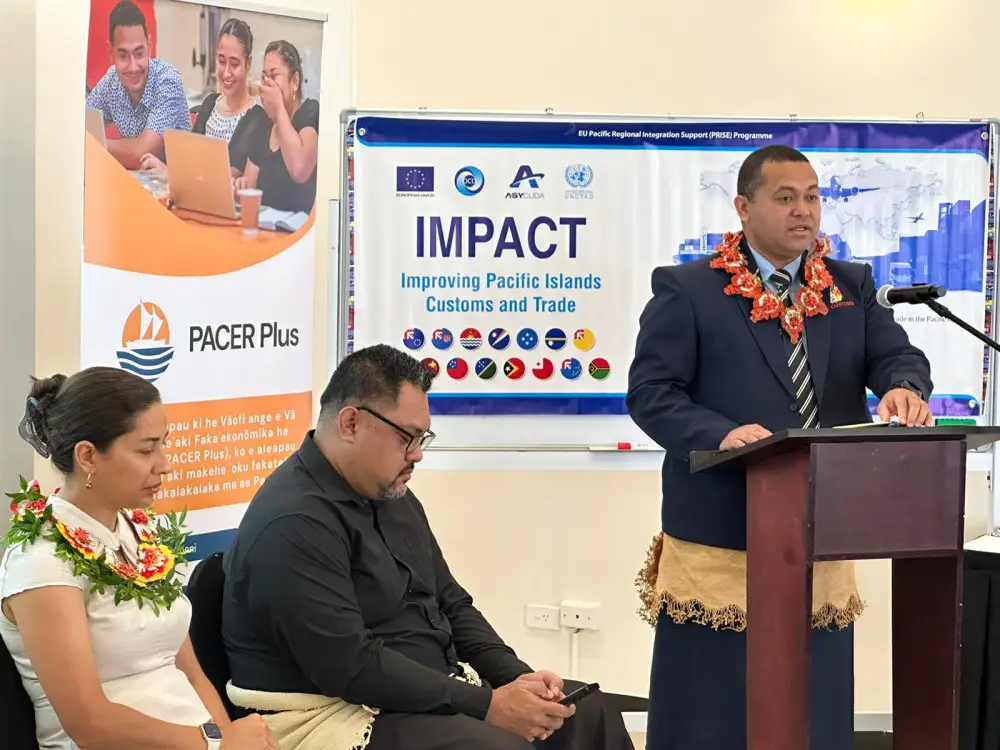
NUKU’ALOFA, Tonga – The Pacific Agreement on Closer Economic Relations Plus (PACER Plus) Implementation Unit (PPIU) successfully organised the Rules of Origin Train the Trainers Workshop in collaboration with key regional and international partners. The event took place in Nuku’alofa, Tonga, from 16-20 October 2023. The regional workshop’s goal was to equip trainers with the knowledge and skills necessary to bridge the existing gaps in training and ensure effective implementation of PACER Plus Rules of Origin. This initiative, co-funded by the PPIU and the Oceania Customs Organisation (OCO), aimed to enhance the capacity of trainers in the Pacific region to deliver national and regional capacity building on Rules of Origin (RoO). Partners involved in this initiative included the United Nations Conference on Trade and Development (UNCTAD), Charles Sturt University’s Center for Customs and Excise Studies (CCES), New Zealand Customs Service, United Kingdom’s Foreign, Commonwealth and Development Office (FCDO), Australian Government Department of Foreign Affairs and Trade, and the Tonga Ministry of Revenue and Customs and Ministry of Trade and Economic Development. Mr. Alipate Tavo, PPIU Trade in Goods Adviser, emphasised the significance of collaboration, saying, “This cooperation is imperative to ensure synergies in capacitating trainers in the Pacific to deliver national and regional capacity building on Rules of Origin under various trade agreements such as PACER Plus, Pacific Islands Countries Trade Agreement, Melanesian Spearhead Group Trade Agreement, Interim Economic Partnership Agreement, and the UK Developing Countries Trading Scheme.” PACER Plus holds enormous potential for the Pacific. However, realising these gains hinges on simplifying RoO for businesses and private sector stakeholders. Properly classifying products under the Harmonised System (HS) is a complex task, and the workshop focused on addressing these challenges. “Stakeholders can better utilise and benefit from duty free and quota free preferences when they understand the RoO, including how to access and undertake the necessary procedure,” said Mr. Tavo. The workshop’s goal was to equip trainers with the knowledge and skills necessary to bridge the existing gaps in training and ensure effective implementation of PACER Plus RoO, contributing to increased utilisation rates and benefits for the region. -END- More articles like this one
Empowering Families, Transforming Lives

The Famili i Redi Journey of Cleef Aru In the heart of Port Vila, Vanuatu, Cleef Aru, a 44-year-old father of two embarked on a transformative journey that reshaped not just his life but his entire family’s future. Like many Ni-Vanuatu, Cleef ventured abroad as a seasonal worker, seeking opportunities to provide for his young family. Like many young fathers, Cleef was confronted by the pressures to provide for his young family amidst rising cost of living at home yet restrained by the limited employment opportunities available to him. Labour mobility provided a rare opportunity for Cleef to overcome these constraints and to create a better future for his family. Prior to working overseas, Cleef earned an average of USD$162 fortnightly as a mechanic. On his farm job in Australia on his first trip overseas, working both as a mechanic, driver and grapefruit picker, Cleef earned USD$1,248 per fortnight, almost seven times more than his income at home. The monetary opportunities enticed Cleef to also encourage his wife Seri Kalotiti to join him in Australia, with the hope that together they can double their earnings to meet social obligations at home and create a better life for their young family. Cleef Aru and his wife, Seri Kalotiti, ventured abroad as seasonal workers, seeking opportunities to provide for their young family. But like all good things, there is also a downside to Cleef’s labour mobility story. Before his wife joined him in Australia, Cleef faced the harsh realities of his new life in a foreign environment, away from his family and his familiar way of living. Distance strained their family bonds, and the challenges of settling into a new environment took a toll on his well-being. Cleef began to turn to alcohol and drugs. “This affected my relationship with my wife and children,” he confessed, reflecting on the difficulties he encountered. After consecutive trips overseas and returning to Vanuatu with no progress on plans, Cleef realised that change was imperative. It was then that he and his wife had the chance to attend a Famili i Redi workshop, a pioneering program crafted by the World Vision Vanuatu, International Organisation for Migration, the Vanuatu Department of Labour and with seasonal workers and their families. This initiative aims to provide holistic tools, skills and strategies for labour migrants and their intimate partners, including modules on what to expect from overseas work, healthy relationships, nutrition, gender-based violence prevention and family financial management, which encompasses budgeting, saving, reducing the cost of remittance transfers and entrepreneurship upon reintegration in Vanuatu. Utilising what they had learnt from the Famili i Redi workshop, Cleef and Seri embarked on a transformative journey. They participated in training sessions that not only empowered them with valuable life skills but also helped them envision a brighter future. Together, they set ambitious long-term goals which included constructing a family home, starting a bakery business, investing in a fishing boat, and acquiring a truck. Driven by determination and newfound knowledge, Cleef made significant lifestyle changes. He relinquished alcohol and cigarettes, focusing on his family’s well-being and the pursuit of their goals. Both Seri and Cleef agreed that she will continue her work in Australia while Cleef managed their projects and cared for their children back home. Cleef Aru proudly smiles as he stands in front of his house which is currently under construction. Today, they stand proudly halfway through building their dream home – a testament to their unwavering dedication. The family’s bakery business has flourished, with Cleef’s freshly baked bread becoming a local favourite in Port Vila and beyond. The couple even acquired a van, enabling them to transport their baked goods to communities at each end of Efate Island. “Beyond accomplishing our family’s long-term goals, the Famili i Redi program helped my wife and I communicate better. In doing so, this has helped our relationship, especially with my wife working abroad,” shared Cleef, highlighting the impact Famili i Redi had on their communication and connection. As Jimmy Kawiel, Deputy Portfolio Manager, Climate and Resilience Livelihoods Portfolio expressed, “Cleef’s journey exemplifies the potential for positive change when families are equipped with the right tools and support. We are committed to empowering more families like Cleef’s, ensuring their dreams become reality.” Cleef Aru’s story is true for many labour mobility workers. Many started off with bright dreams and high hopes but only to be toppled by the harsh realities of life in a new environment, away from family and the familiarities of home. Initiatives such as Famili i Redi are critical in providing the necessary lifeline for workers and their families. The family’s bakery business has flourished, with Cleef’s freshly baked bread becoming a local favourite in Port Vila and beyond. Cleef’s labour mobility journey highlights the significance of the employment opportunities offered by labour mobility schemes but that the benefits of these opportunities can be overshadowed by the challenges of life away from home. These challenges do not discount or devalue the potential benefits of labour mobility, they only accentuate the need for lifelines to support workers and their families overcome these trials. Famili i Redi is a true example of the benefits of these lifelines to enable workers and their families to reap the full benefits of labour mobility. Thanks to the vision and dedication of initiatives like Famili i Redi, lives are transformed, families are strengthened, and communities thrive, one empowered family at a time. As the slogan for the training says: it’s not an individual journey but a family journey. More articles like this one
PACER Plus Implementation Unit Advocates for International Standards at the ISO Annual Meeting

BRISBANE, Australia – Mr. Roy Lagolago, Head of the PACER Plus Implementation Unit (PPIU), was among the participants at the International Organisation for Standardisation (ISO) Annual Meeting, held from 18-22 September 2023 in Brisbane, Australia. The event, hosted by Standards Australia, brought together global experts and leaders to discuss collaboration, innovation, and sustainable solutions for addressing pressing global challenges. It also explored the role of International Standards in achieving the 2030 Global Agenda’s Sustainable Development Goals. Mr. Roy Lagolago makes a presentation at the ISO Annual Meeting in Brisbane, Australia. Mr. Lagolago’s presence at the ISO Annual Meeting was marked by a talanoa focused on how the Pacific Agreement on Closer Economic Relations Plus (PACER Plus) could support Pacific parties in becoming more actively engaged with ISO standards and understanding their significance. PACER Plus, a unique development-based trade agreement between Australia, New Zealand and eight Pacific countries, aims to foster economic growth, trade liberalisation, and sustainable development among its parties. Mr. Lagolago’s discussion with interested delegates from the Pacific explored how PACER Plus could contribute to their ambitions to play a more significant role in ISO’s standardisation efforts. “We believe that embracing international standards is key to achieving economic growth, sustainability, and prosperity in the Pacific,” said Mr. Lagolago. “PACER Plus is committed to helping our member nations better understand and engage with ISO standards to enhance the quality of products and services they offer while facilitating trade with the broader international community.” The Pacific delegation’s attendance at the ISO Annual Meeting was made possible through the support of Standards Australia and the United Kingdom’s Foreign, Commonwealth and Development Office. Their contributions enabled officials from the Pacific to participate actively in discussions and share their perspectives on standards development. The United Kingdom is also committing AU$5.8 million to bolster the adoption of standards within Commonwealth countries. This investment aims to dismantle trade barriers, foster economic resilience, diminish reliance on aid, and pave the way for Pacific countries and other Commonwealth members to seize new opportunities for international businesses. Regional officials discuss how PACER Plus can support Pacific countries in becoming more actively engaged with ISO standards and understanding their significance. Hon. Crossley Tatui, Niue’s Minister for Finance and Infrastructure and the current chair of the PACER Plus Ministers Meeting, emphasized the significance of PACER Plus at both national and regional levels, highlighting its potential to deliver tangible benefits to Pacific countries. Ms. Leata Alaimoana, Queensland Trade Commissioner for the Pacific, discussed the close ties between the Australian state of Queensland and the Pacific, underscoring the opportunities for greater engagement with PACER Plus. Dr. Ulrich Diekmann, Regional Quality Infrastructure Coordination with the Pacific Islands Forum Secretariat, provided valuable insights into the Pacific’s ongoing efforts to strengthen its quality infrastructure, aligning with international standards to improve competitiveness and trade capabilities. The ISO Annual Meeting provided a vital platform for fostering global partnerships and advancing the adoption of international standards. The participation of Mr. Lagolago in facilitating discussions on PACER Plus and its connection to ISO standards underscored the Agreement’s commitment to quality, sustainability, and international collaboration. -END- More articles like this one
PACER Plus Regional Workshop on harnessing Pacific labour for sustainable economic development in the Pacific
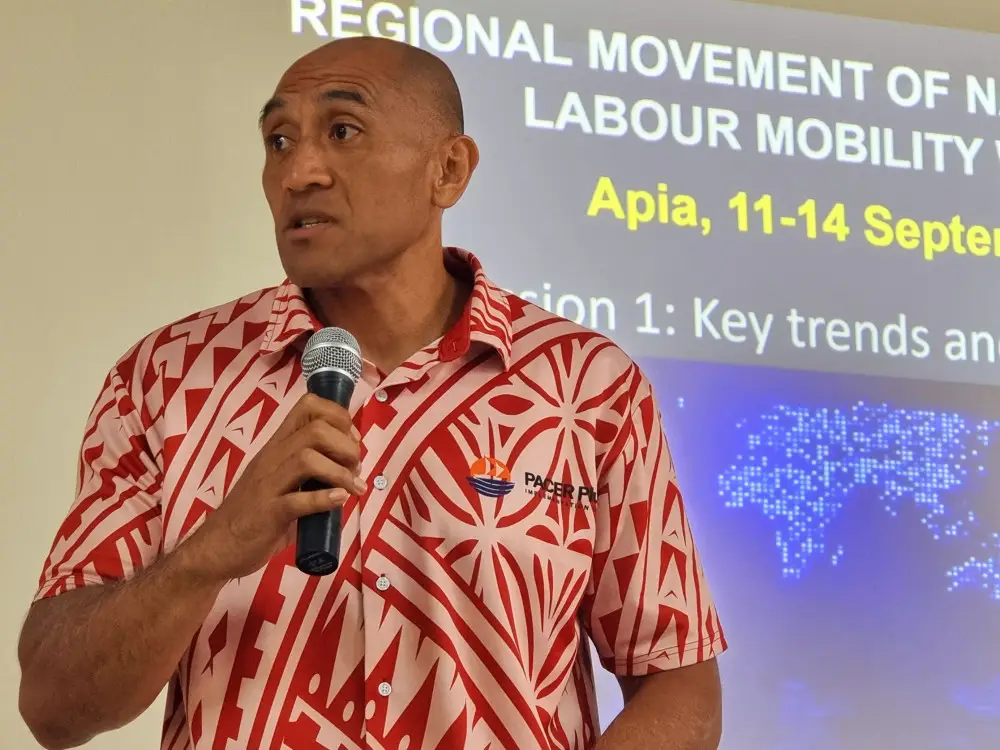
APIA, Samoa – The Pacific Agreement on Closer Economic Relations Plus (PACER Plus) Implementation Unit is set to host a regional workshop on Movement of Natural Persons and Labour Mobility in Apia, Samoa, from 11-14 September 2023. The “PACER Plus Regional Workshop on Movement of Natural Persons and Labour Mobility” aims to enhance understanding and explore the interconnections between Trade in Services and the Arrangement on Labour Mobility to maximise development benefits for PACER Plus parties. Experts, policymakers, and stakeholders from Australia, Cook Islands, Kiribati, Nauru, New Zealand, Niue, Samoa, Solomon Islands, Tonga, Tuvalu and Vanuatu met at the PACER Plus Implementation Unit in Apia, Samoa today for the four-day regional workshop. PACER Plus, a unique development-centered trade agreement, acknowledges the significance of human capital movement in fostering economic integration and sustainable development. The Movement of Natural Persons (MNP) Chapter of the agreement specifically focuses on facilitating the movement of service providers to promote services trade while excluding measures related to citizenship, residence, permanent employment, or access to foreign employment markets. The Arrangement on Labour Mobility (ALM) is a non-legally binding annex to the Agreement, which provides a framework for regional labour mobility cooperation to foster increased development benefits for participating countries. “PACER Plus recognises the potential of human capital mobility to drive regional development,” states Roy Lagolago, Head of the PACER Plus Implementation Unit. “This workshop provides a unique platform to address knowledge gaps and foster cooperation among PACER Plus parties in the realms of MNP and labour mobility, setting the stage for a more robust and interconnected regional trade ecosystem.” The objectives of the PACER Plus Regional Workshop on Movement of Natural Persons and Labour Mobility are as follows: Capacity building for government officials: Offer a focused capacity building programme for Pacific trade and labour mobility officials on the PACER Plus Movement of Natural Persons Chapter and Arrangement on Labour Mobility to understand how these components can be better utilised to support sustainable economic development in their countries. National Consultations for the Review of the Arrangement on Labour Mobility: Facilitate national consultations to gather valuable input for the ALM Review. The workshop promises to be a pivotal event in the ongoing efforts to maximise the benefits of PACER Plus for the Pacific. It will bring together experts, policymakers, and stakeholders from Australia, Cook Islands, Kiribati, Nauru, New Zealand, Niue, Samoa, Solomon Islands, Tonga, Tuvalu and Vanuatu, to foster a deeper understanding of the movement of natural persons and labour mobility, ultimately contributing to the region’s economic growth and sustainable development. For more information on the four-day workshop, please click here. -END- More articles like this one
Cook Islands New E-Commerce Work Plan to Drive Economic Growth and Innovation
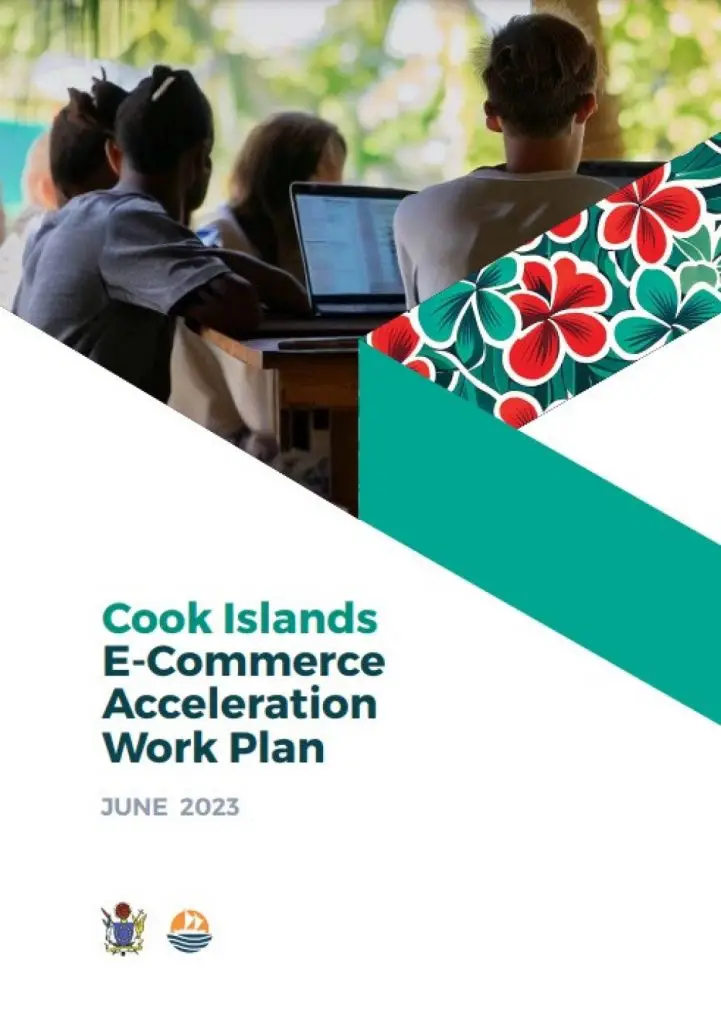
RAROTONGA, Cook Islands – The Cook Islands took a significant step towards fostering a dynamic e-commerce ecosystem with the launch of the Cook Islands E-Commerce Acceleration Work Plan. The strategy was funded by the Pacific Agreement on Closer Economic Relations Plus (PACER Plus) and aims to drive economic growth, innovation, and job creation in the digital age. Ms. Sally Wyatt (far right), Chief Economist and E-commerce Lead with the Cook Islands Ministry of Finance and Economic Development at the launch of the E-Commerce Acceleration Work Plan. The Cook Islands E-Commerce Acceleration Work Plan was unveiled by the Hon. Mark Brown, Prime Minister of the Cook Islands, in a ceremony held on 23 August 2023, in Avarua. The plan sets forth a comprehensive approach to enhancing the nation’s e-commerce landscape, focusing on collaboration between government and private sector stakeholders. Prime Minister Brown emphasized the transformative potential of the E-Commerce Acceleration Work Plan, stating that the Work Plan “is a significant milestone in our efforts to build a resilient and prosperous economy”. Mr. Roy Lagolago, Head of the PACER Plus Implementation Unit, expressed enthusiasm for the initiative: “PACER Plus is proud to support the Cook Islands in its journey towards a thriving e-commerce ecosystem. This work plan reflects a well-considered strategy that aligns with regional goals and priorities, and we are confident that it will have a positive and lasting impact on the Cook Islands’ economic development.” The Cook Islands E-Commerce Acceleration Work Plan is designed with a phased approach to implementation, focusing on key policy areas that include the legal and regulatory framework, online payments, policies and strategies, ICT infrastructure and services, logistics and trade facilitation, skills development, and access to finance. The work plan is the result of extensive consultations with industry stakeholders, government officials, consumers, and international partners. It also incorporates findings from a comprehensive legal and regulatory analysis, identifying priority reforms to support the growth of the e-commerce sector. The phased activities range from modernising payment systems and adopting cybercrime protections to expanding access to digital infrastructure and promoting consumer protection. The work plan aligns with the Pacific Regional E-Commerce Strategy and Roadmap, ensuring harmonisation with regional efforts. The Cook Islands E-Commerce Acceleration Work Plan aims to empower government, industry, and consumers to collectively contribute to the success of the e-commerce sector. By fostering consumer trust, enhancing digital skills, and driving innovation, the plan is poised to pave the way for a robust and prosperous e-commerce landscape that benefits emerging industries and all Cook Islanders. To read the Cook Islands E-Commerce Acceleration Work Plan click here. -END- More articles like this one
PACER Plus-funded Training to Boost Solomon Islands Tourism Sector

HONIARA, Solomon Islands – The Ministry of Culture and Tourism in the Solomon Islands, in partnership with the Pacific Agreement on Closer Economic Relations Plus (PACER Plus), is pleased to announce the successful completion of the first phase of the Finance Literacy Training for Beach Operators. This initiative, aimed at micro, small, and medium enterprises (MSMEs) in the tourism industry in Solomon Islands, marks a significant step towards enhancing financial literacy and business management skills among local tourism operators. Sol Grassroots’ Financial Literacy Trainer Mr. Calvin Charles (standing) with students. The training, held on 1-2 August, 15-16 August, and 22-23 August 2023, witnessed enthusiastic participation from beach operators near Honiara. This endeavour is part of a broader effort to foster sustainable growth in the Solomon Islands’ tourism industry, where micro and small locally owned businesses constitute about 70 percent of the sector. Mr. Philip Sukibuka, Deputy Secretary for the Ministry of Culture and Tourism, expressed his optimism about the project’s outcomes: “Many small business operators were not able to access loans or relief grants due to poor financial reporting. This workshop is a possible solution on how we can assist to address this challenge.” The Solomon Islands tourism industry, although vibrant, faces challenges due to the predominance of informal small-scale businesses. Many operators struggle with inadequate financial reporting and management practices, hindering their ability to access loans and grants. The survey conducted by the Department of Tourism in 2022 highlighted these hurdles and the need for targeted interventions. Phase 1 of the training focused on enhancing business practices and encouraging investment in preparation for the 2023 Pacific Games scheduled to be hosted in Honiara. This initiative is designed to enable local operators to capitalise on the tourist influx during the games while also promoting sustainable practices. Mr. Augusto Taraha, owner and manager of Eden Bay, Block 1 Beach. Mr. Augusto Taraha, owner and manager of Eden Bay and Block 1 Beach, who attended the training, shared: “The training is simple and easy for me to understand. I never thought of adding extra income streams to grow my business. I will start to think about how I can incorporate this.” The second phase of the training, scheduled from January – March 2024, will expand its reach to other key provinces, including Western, Central Island, Malaita, and Isabel Provinces. The comprehensive curriculum covers critical topics such as beach tourism, bookkeeping in tourism, cash management in tourism, and savings and budgeting in tourism. The training session are designed to be context-specific, practical and interactive, empowering participants to develop effective cash book records. As the Financial Literacy Training for Beach Operators continues its journey, it holds the promise of not only transforming individual businesses but also uplifting the tourism landscape in the Solomon Islands. -END- More articles like this one
Workshop Strengthens Regional Customs Administrations

APIA, Samoa – Today marks the commencement of the Regional Workshop on Harmonised System (HS) in Apia, Samoa. The workshop, jointly organised by the PACER Plus Implementation Unit (PPIU) and the Oceania Customs Organisation (OCO) under the European Union funded Improving Pacific Islands Customs and Trade project implemented in partnership with United Nations Conference on Trade and Development, will run from 21-25 August 2023. The five-day event aims to support Pacific countries in successfully implementing the Harmonised System Nomenclature 2022, the world’s global standard for classifying goods in international trade. Customs administrators and stakeholders from the Pacific met at the PACER Plus Implementation Unit in Apia, Samoa, for the five-day Regional Workshop on Harmonised System. The HS Nomenclature 2022 brought about 351 sets of amendments, posing significant challenges to customs administrations in the Pacific. Only a limited number of Pacific countries, including Fiji, French Polynesia, Nauru, New Caledonia, Niue, the Northern Mariana Islands, Palau, Papua New Guinea, Solomon Islands, Vanuatu, and Wallis and Futuna, have successfully implemented HS 2022 to date. This highlights the need for further assistance in the transposition of HS 2022 to retain historical concessions and ensure market access conditions remain unaffected by technical revisions to scheduled tariff commitments. Mr. Roy Lagolago, Head of the PPIU, stated, “The complexity and scale of the HS amendments have presented technical and time-consuming challenges for our members. This workshop is a crucial step in assisting Pacific countries to complete the HS 2022 transposition work by December 2023. It will enable us to enhance the uniformity in the interpretation and application of the HS Nomenclature 2022, fostering greater regional trade facilitation.” The workshop’s main objectives include providing an overview of the Harmonised System, HS 2022 Amendments, and the Pacific Harmonized Commodity Description and Coding System (PACHS 22) work. It will also facilitate discussions among members to share progress and experiences in implementing HS 2022 amendments and resolving outstanding issues that may hinder the process. Additionally, technical discussions and reviews will focus on the transposition of PACER Plus Tariff Schedules from HS 2012 to HS 2017. Moreover, the workshop will also raise awareness on the interim Economic Partnership Agreement and its requirements. Mr. John Sam (right), OCO’s Trade and Revenue Management Advisor, greets Mrs. Gianina Harris, Nauru Customs Officer, at the Regional Harmonised System Workshop in Apia, Samoa. Ms. Nancy Oraka, Head of OCO, emphasized, “Collaboration and capacity-building are essential in navigating the complexities of the HS amendments. By working together, we can enhance the efficiency and transparency of customs administrations in the region, ultimately benefiting businesses and consumers alike.” Attending the five-day workshop are customs administrators and stakeholders from the Cook Islands, Fiji, Guam, Kiribati, Nauru, Niue, the Northern Mariana Islands, Palau, Samoa, Solomon Islands, Timor-Leste, Tonga, Tuvalu, and Vanuatu. The Regional Workshop on Harmonised System marks a significant step forward in promoting regional economic cooperation and fostering sustainable development in the Pacific. By overcoming challenges and enhancing customs practices, the workshop seeks to create a conducive environment for trade in the region. -END- More articles like this one
PACER Plus Empowers Farmers in Solomon Islands’ Malaita Province
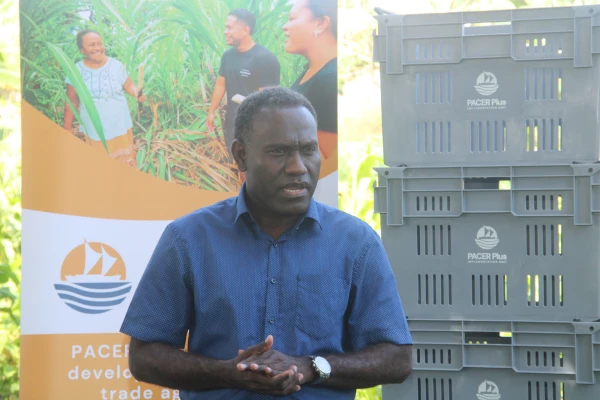
PACER Plus has assisted Goshen Enterprise Ltd with the provision of 500 harvest bins to assist the company in its efforts to support farmers on Malaita Province, Solomon Islands. The harvest bins were handed over by the Trade Commissioner in the Ministry of Foreign Affairs and External Trade (MFAET) Solomon Islands, Mr. Barrett Salato to Goshen Enterprise representative at the Ministry of Agriculture and Livestock Biosecurity area at Henderson, Solomon Islands yesterday (17 August 2023). MFAET Trade Commissioner Mr. Barrett Salato (left) handing over the harvest bins to Goshen’s Mr. Levite Maesimae (right) and witnessed by Ministry of Agriculture and Livestock Deputy Director of Biosecurity Solomon Islands, Mr. Crispus Fanai (center). The bins will be used to assist farmers in the post-harvest process where products will be harvested and transported to Goshen’s newly operated pack-house on Malaita for storage and eventual distribution to the domestic and international markets. Mr. Salato acknowledged the support from PACER Plus Implementation Unit (PPIU) in providing the bins that would go a long way in assisting Goshen and farmers on Malaita. He said Goshen has been working together with farmers on Malaita to encourage them to go into taro farming and increase productivity. He stressed that the bins are useful for harvest and transport to the processing facility. “I trust that Goshen will distribute the bins to their farmers and will be made useful for its intended purpose,” he added. Goshen Enterprises Limited was the beneficiary of a Taro Pack House on Malaita with funding support from the World Trade Organisation’s Enhanced Integrated Framework (EIF) Programme. Under EIF-Enhanced Capabilities of Agriculture Trade (ECAT) project in the Solomon Islands, emphasis was made on the development of taro products with focus on two provinces, Temotu and Malaita. Trade Commissioner Salato said that the Solomon Islands Government is keen to export taro to the international market soon. Trade Commissioner Salato said the Ministry of Foreign Affairs and External Trade would like to see that at some stage, Solomon Islands will be able to export taro to the international market, especially Australia and New Zealand with the Pacific diaspora. “I understand that the supply of taro is high at both markets and therefore this is where our target should be. With the close of the EIF-ECAT Project in June 2023, PACER Plus is coming on board to assist the Country with some of its programs. The delivery of these harvesting bins is a testimony of the support by PACER Plus,” he added. In receiving the harvesting bins, Goshen’s Levite Maesimae said farmers on Malaita have expressed concerns about the quality of their products when reaching the processing facility, hence the bins would greatly assist in the storage and handling of the products. He thanked PACER Plus for providing the bins to Goshen Enterprise. “It’s a delight to witness the tangible impact of PACER Plus in action, as it contributes to the growth and development of enterprises like Goshen on Malaita. These harvest bins serve as a testament to the collaborative efforts between PACER Plus and the Solomon Islands’ government as well as local businesses, uplifting farmers and enhancing the post-harvest processes. This initiative showcases the commitment to fostering agricultural prosperity and trade within Solomon Islands and the Pacific,” said Mr. Alipate Tavo, the PPIU Trade and Investment Adviser. -END- More articles like this one