
PACER Plus Trade in Services Workshop Fuels Capacity Development in the Region
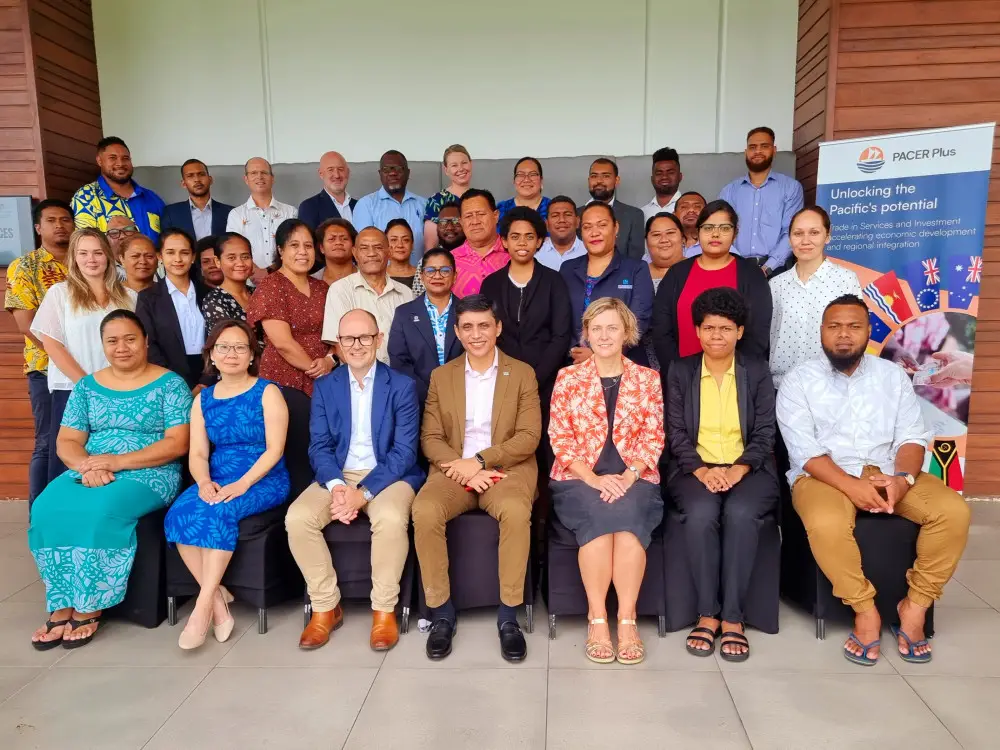
SUVA, Fiji – The PACER Plus Implementation Unit (PPIU) in collaboration with the Australian Department of Foreign Affairs and Trade (DFAT) successfully conducted the Pacific Regional Advanced Trade in Services (TIS) and Project Proposal Workshop from 16-19 January 2024, in Suva, Fiji. This event marks a pivotal point in advancing regional cooperation and empowering Pacific nations to navigate the complexities of services trade. The workshop builds on the foundation of the PPIU’s Introductory TIS Workshop in Samoa in May 2023, and the Pacific Regional Introductory TIS Workshop and Proposal Clinic in Suva in September 2023. Regional participants attend the PACER Plus Advanced Pacific Regional Trade in Services and Project Proposal Workshop in Suva, Fiji. Ms. Olivia Phongkham, PPIU’s Trade in Services and Investment Adviser, expressed enthusiasm about the workshops impact. “This workshop is an exciting event for Pacific Island Countries to maximise the opportunities services trade and investment provides the region. It also allows participants to share their experiences and knowledge with other countries, so that they can learn from each other and help build a community of practice. The discussions on scheduled commitments and digitally enabled services provide valuable insights for our ongoing efforts in the Pacific,” she said. The objective of the Advanced Pacific Regional TIS Workshop is to increase the participants’ understanding of, and capacity to negotiate and implement, Services commitments under PACER Plus and International Trade Agreements. In addition, participants further developed their skills in drafting and finalising bankable project proposals on trade in services, e-commerce, and investment for PACER Plus and international organisations. Mr. Shaheen Ali, Permanent Secretary to the Fijian Ministry of Trade, Co-operatives, SMEs, and Communications. Mr. Shaheen Ali, Permanent Secretary to the Fijian Ministry of Trade, Co-operatives, SMEs, and Communications, emphasised the significance of the initiative. “To grow our trade in services, our private sector needs secure, consistent, and guaranteed access to markets in our region and beyond. Regional and bilateral trade agreements will play an important role in extending the services export market of the Pacific and the world,” he said. Mr. Andrew Shepherd, Acting Deputy High Commissioner at the Australian High Commission in Fiji, highlighted the collaborative efforts involved, saying, “Australia values its partnership with Pacific nations in trade development. The success of this workshop reflects the shared commitment to fostering economic growth and prosperity in the region.” Following the successful conclusion of this workshop, there are tentative plans to run another event later in 2024. -END- More articles like this one
PACER Plus Parties Emphasise Regional Economic Integration at the 2023 Forum Trade Ministers Meeting

SUVA, Fiji – The 2023 Forum Trade Ministers Meeting (FTMM) convened on 6 October 2023 in Suva, Fiji where delegates engaged in discussions on key priorities that will shape the future of trade and investment in the region. (L-R) Ms. Sovaia Marawa, Melaneasian Spearhead Group Secretariat; Mr. Esala Nayasi, Pacific Islands Forum’s Deputy Secretary General; Mrs. Laisiana Tugaga, PPIU’s Operations and Secretariat Manager; H.E. Ambassador Mere Falemaka, Permanent Delegation of the Pacific Islands Forum to the United Nations, World Trade Organisation. The meeting was chaired by the Cook Islands, and attended by PACER Plus Parties Australia, Cook Islands, Kiribati, New Zealand, Niue, Samoa, Solomon Islands, Tonga, Tuvalu, and Vanuatu as well as the Federated States of Micronesia, Fiji, French Polynesia, Nauru, New Caledonia, Palau, Papua New Guinea, and Marshall Islands. Key priorities discussed during the meeting included the current Regional Trade and Investment Landscape, the implementation of the 2050 Strategy for the Blue Pacific Continent, the Pacific Aid for Trade Strategy, private sector development priorities, and labour mobility. Representatives from the Pacific Agreement on Closer Economic Relations Plus (PACER Plus) Parties emphasised the pivotal role of PACER Plus as a mechanism for regional economic integration. The discussions underscored the commitment to principles of regionalism and sustainable socio-economic development, highlighting the importance of collaboration among Pacific nations. The 2023 FTMM recognised the need for alignment across regional frameworks to increase efficiency gains and enhance development returns to member countries. Participants acknowledged the significance of fostering cooperation and solidarity in addressing shared challenges and pursing common goals for the Pacific. Mrs. Laisiana Tugaga, Operations and Secretariat Manager of the PACER Plus Implementation Unit (PPIU) stated, “The 2023 FTMM provided a valuable platform for PACER Plus Parties to strengthen their commitment to regional economic integration. The discussions reflected a shared vision for the sustainable development of the Pacific, and the PACER Plus Implementation Unit is eager to work collaboratively with the Pacific Islands Forum on common initiatives for the region.” -END- More articles like this one
PACER Plus Trade in Services and Investment Clinic Boosts Vanuatu’s Capacity for Economic Development
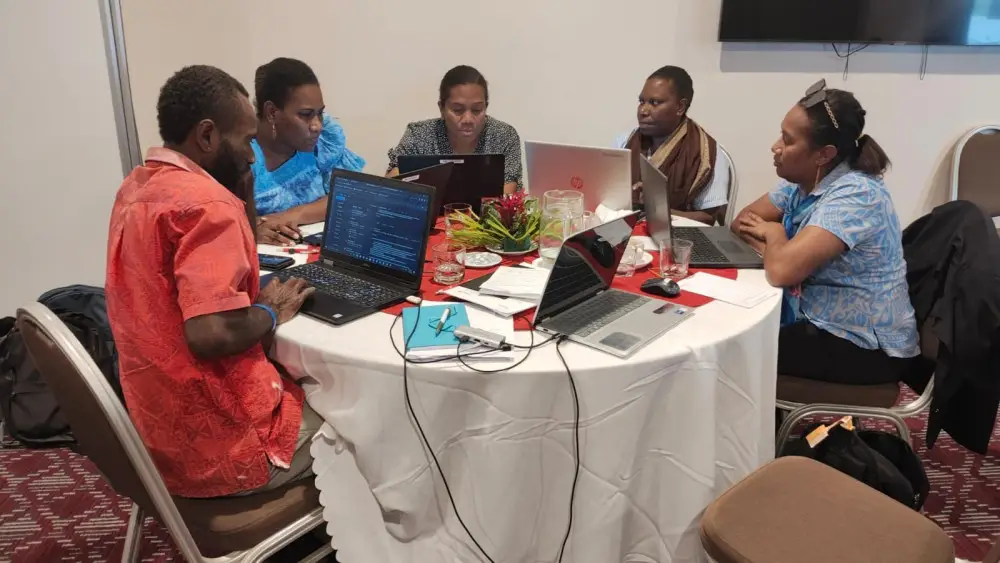
PORT VILA, Vanuatu – Services play a pivotal role in driving trade integration and fostering economic development in the Pacific, offering unique opportunities for growth. Recognising the potential, the PACER Plus Implementation Unit (PPIU) conducted a Trade in Services and Investment Proposal Clinic in Port Vila, Vanuatu from 16-17 November 2023. The clinic aimed to address the identified capacity gap in Vanuatu, providing crucial support to understand their obligations and maximise the benefits of trade in services and investment. The PACER Plus Trade in Services and Investment Proposal Clinic aimed to address the identified capacity gap in Vanuatu, providing crucial support to understand their obligations and maximise the benefits of trade in services and investment. Preliminary assessments by the PPIU revealed the need for further capacity development to expedite the implementation of the PACER Plus Trade in Services and Investment Chapter. To bridge this gap, the Trade in Services and Investment Proposal Clinic built on the success of the previous clinic held in Apia, Samoa, in May. The Port Vila clinic had a broader focus, facilitating the development of bankable, high-quality, demand-driven project proposals on priority issues at national level. The clinic welcomed Vanuatu officials representing various relevant agencies responsible for trade in services policy, negotiation, and implementation of services commitments. The sessions focused on the critical need to strengthen Vanuatu’s capacity within the framework of PACER Plus. This involved developing strategic, practical, and attainable activity proposals that align with both national priorities and the obligations outlined in PACER Plus Services. Ms. Olivia Phongkham, PPIU Trade in Services and Investment Adviser, highlighted the significances of the initiative: “Services are key to unlocking the full potential of trade and economic development in the Pacific. The Trade in Services and Investment Proposal Clinic exemplifies our commitment to empowering Vanuatu and other PACER Plus parties with the knowledge and skills to enhance trade in services and investment for sustainable growth.” The PACER Plus Trade in Services and Investment Proposal Clinic in Port Vila marked a crucial step forward for Vanuatu in realising the full potential of the PACER Plus agreement. -END- More articles like this one
From Ocean Depths to International Tables
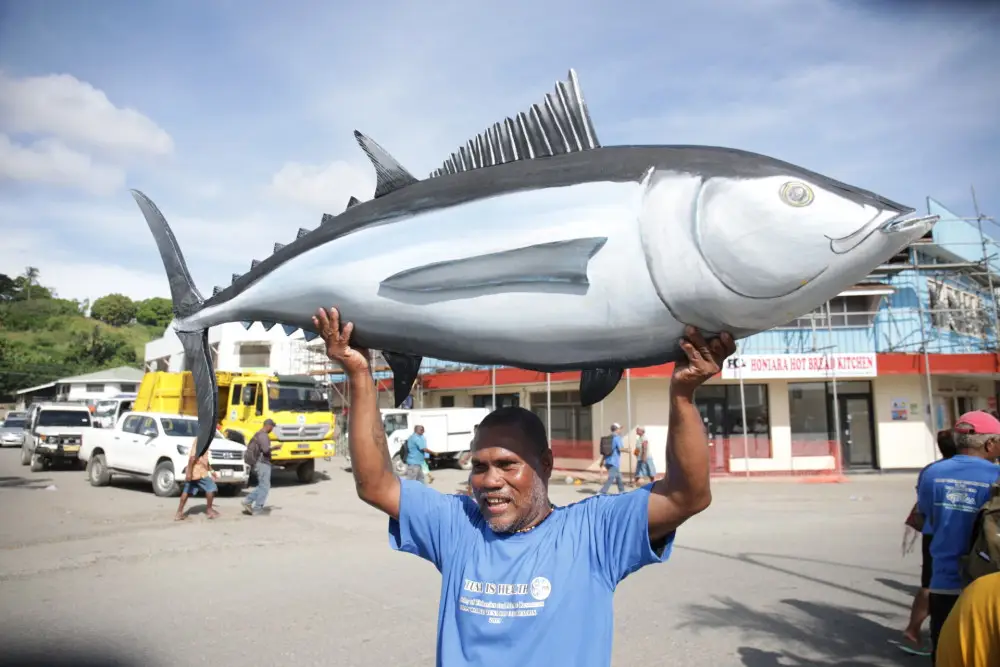
SolTuna’s Journey of Triumph with PACER Plus HONIARA, Solomon Islands – For years, the Solomon Islands’ pristine waters have cradled SolTuna, a leading tuna company, in their cerulean embrace. Amidst the ebb and flow of the tides, SolTuna battled daunting challenges, determined to deliver their prized tuna to the plates of Australians and New Zealanders. Their odyssey took a historic turn in 2020, when the Solomon Islands ratified the Pacific Agreement on Closer Economic Relations Plus or PACER Plus, a unique development-centered trade agreement that transformed SolTuna’s struggles into triumphs. Fish unloading at the wharf in Noro, Solomon Islands. (Photo: SIBC) “Before PACER Plus, SolTuna faced significant hurdles in exporting our tuna to Australia and New Zealand. Burdened by import duties, we found it hard to compete in these markets,” recalled Mr. Mark Gibble, SolTuna’s Business Development Manager. Despite these barriers, SolTuna’s spirit remained unyielding. Their commitment to quality and sustainability buoyed them through turbulent waters. With the ratification of PACER Plus, their efforts were not in vain. The agreement ushered in a new era, one where import duties were but a memory, paving the way for tariff-free exports. “PACER Plus has been a game-changer. It ensures we no longer pay import duties, revitalising our exports to Australia and New Zealand,” beamed Mr. Gribble. In the wake of tariff liberation, SolTuna’s exports soared. The aroma of freshly caught Solomon Islands tuna began gracing kitchens across Australia and New Zealand. But the impact transcended the realms of the market; it seeped into the heart of the Solomon Islands. With increased demand, SolTuna blossomed, sowing seeds of economic prosperity and job creation for the Pacific Island country. SolTuna’s surge in exports to Australia and New Zealand did more than boost the company’s bottom line. It became a beacon of hope for the people of the Solomon Islands, heralding a wave of employment opportunities. As SolTuna expanded its operations to meet the rising demand, a ripple effect of prosperity washed over the local communities. The increased production at SolTuna meant more hands were needed to harvest, process, and package the prized tuna, creating a surge in employment opportunities for the people. “Our success is not just measured in tons of tuna exported; it’s measured in the lives we touch and the communities we uplift in Solomon Islands. The positive impact of SolTuna’s growth goes beyond economic numbers. It’s about people, their dreams, and the collective progress of the Solomon Islands,” shared Mr. Gribble. “The effects of PACER Plus are profound. It ensures sustainable growth for our industry. With rising demands, we’re adopting eco-friendly practices, safeguarding our marine resources for generations to come,” added Mr. Gribble. “The future is promising. PACER Plus has granted us a competitive edge. We envision expanding our operations, generating employment, and continuing to offer sustainable, high-quality tuna worldwide.” Through tariff-free exports, SolTuna not only propels the economy forward but also safeguards the rich marine ecosystem that sustains countless livelihoods in the Solomon Islands. In every can of tuna exported, there is a story of resilience, collaboration, and a brighter future for a nation and its people. -END- More articles like this one
Solomon Islands Successful Transition to HS 2022

PACER Plus Supports Solomon Islands Boosts Trade Confidence In June 2020, Solomon Islands took a significant step toward economic integration by ratifying the Pacific Agreement on Closer Economic Relations (PACER) Plus trade agreement. This decision would play a pivotal role in navigating a crucial challenge – the transition to the Harmonised System (HS) 2022. The Harmonised System, a standardised numerical method of classifying traded products, serves as a global economic language, facilitating customs procedures, and ensuring consistency in the assessment of duties and taxes. With the latest update effective from 1 January 2022, more than 200 countries and economies, including Solomon Islands, were faced with the task of aligning their systems with HS 2022 standards. Mr. Michael Ligo (left), PPIU Consultant, with Ms. Alice Saefo’oa, from the Solomon Islands Ministry of Finance and Treasury. Recognising the importance of compliance with the PACER Plus Trade in Goods component, Solomon Islands sought assistance from the PACER Plus Implementation Unit (PPIU). Mr. Michael Ligo, the PPIU consultant who was responsible for supporting Solomon Islands in their transition to the Harmonised System 2022, shared, “The transition to HS 2022 is not merely an administrative task; it’s a testament to the commitment of Pacific countries to adhere to international standards. PACER Plus has been instrumental in providing the necessary technical assistance to ensure a seamless integration for the Solomon Islands.” Commencing in September 2022, the collaborative effort between PPIU and Solomon Islands aimed to peer-review existing practices, ensuring they adhered to the rigorous international standards set by HS 2022. This process took shape over three months, concluding in December 2022, paving the way for a seamless integration of HS 2022 into Solomon Islands’ customs procedures. Ms. Alice Saefo’oa, from the Solomon Islands Ministry of Finance and Treasury, described the significance of this collaboration, “The compliance with HS 2022 international standards is not only a regulatory milestone but a critical assurance for investors and the private sector. It signifies to the world that Solomon Islands is dedicated to maintaining international trade standards, fostering confidence among stakeholders involved in importing and exporting goods.” On 1 July 2023, Solomon Islands officially went live with HS 2022. Marking a historic moment in their commitment to international trade standards. The compliance not only benefits the government in streamlining customs operations but also provides a crucial signal to the global community, indicating that Solomon Islands is open for business and committed to facilitating international trade. PACER Plus emphasises the use of HS 2022 for tracking goods data entering and leaving the Pacific, creating a unified approach that fosters transparency and efficiency in regional trade. The successful collaboration between PPIU and Solomon Islands showcases the power of partnerships in addressing challenges and unlocking new opportunities for economic growth. Pacific PACER Plus countries, including Cook Islands, Kiribati, Samoa, Tonga, and Tuvalu, are currently undergoing their national approval processes, with plans to implement HS 2022 starting January 2024, thanks to the support of PPIU partners such as the Oceania Customs Organisation, United Nations Conference on Trade and Development, the Australian Government Department of Foreign Affairs and Trade, and New Zealand Customs Service. As Solomon Islands looks forward, the successful transition to HS 2022 positions the nation as a reliable and compliant partner on the global stage, reinforcing investor confidence and contributing to the overall economic prosperity of the Pacific region. -END- More articles like this one
PACER Plus Empowers Pacific Economies Through E-Commerce Initiatives

Ms. Olivia Phongkham, the Trade in Services and Investment Adviser with the PACER Plus Implementation Unit (PPIU), shared insights on PACER Plus and its e-commerce initiatives at the United Nations Conference on Trade and Development (UNCTAD) E-Commerce Week in Geneva, Switzerland. Ms. Phongkham’s presentation emphasised the transformative potential of e-commerce, digital trade, and the broader digital economy in accelerating economic recovery, fostering resilience, and promoting inclusive development in Pacific Island Countries. The COVID-19 pandemic has underscored the pivotal role of technology in enabling businesses to sustain trade operations. E-commerce is a vital tool for businesses, enabling them to surmount physical and economic challenges, foster diversification in goods and services, and enhance market access. Digital and ICT technologies empower micro-, small and medium-sized enterprises and women entrepreneurs to connect with global customers, improve communication within the global and regional value chains, access government e-services, information, and online business training. PPIU’s Trade in Services and Investment Adviser, Ms. Olivia Phongkham (far right), joins other partners on a panel to speak on “Enhancing the Transition from Offline to Online for Small Businesses in the Pacific” at the UNCTAD E-Commerce Week in Geneva. Despite its immense potential, Pacific Island Countries encounter challenges such as weak infrastructure, limited inclusive access to ICT and finance, policy and regulatory gaps, skills shortages, and inefficient trade facilitation. The PACER Plus AUD$25 million Development and Economic Cooperation (DEC) work program aims to address these constraints and bolster regional economic integration and connectivity. The PACER Plus Implementation Unit is actively engaged in collaborative efforts with partner governments, private sectors, and development partners to enhance capacity in the e-commerce sphere. The PACER Plus E-Commerce activities for the financial year 2022-23 include: Cook Islands: Conducted an e-commerce regulatory gap analysis in 2022 and launched the E-Commerce Acceleration Work Plan in September 2023. Kiribati: Validated Kiribati’s E-Commerce Policy in January 2023 through a national consultation involving 47 participants. Samoa: Launched Samoa’s National E-Commerce Strategy in September 2023 in the islands of Upolu and Savai’i. Tuvalu: Undertook an assessment and options analysis for expanding the payment ecosystem for e-commerce in Tuvalu in May 2023. Regional: Collaborated with the Asian Development Bank on a Regional Workshop on Cross Border E-Commerce in in September 2022. Regional: Supported the development and rollout of E-Commerce Business Toolkits to strengthen the start-up ecosystem for MSMEs E-Commerce business ventures in Niue, Tonga, Tuvalu, and Vanuatu in November 2023. E-commerce and digital trade are pivotal areas for PACER Plus countries to collaborate with regional and global development partners, fostering productivity, entrepreneurship, innovation, job creation, and access to new markets. PACER Plus is committed to supporting stable, secure, and prosperous Pacific economies through deeper regional economic integration, support diversification and access to new trade opportunities. -END- More articles like this one
Seventh Pacific Annual Labour Mobility Meeting Taking Regional Labour Mobility Cooperation to the Next Level

PORT VILA, Vanuatu – The Government of Vanuatu successfully hosted the seventh Pacific Labour Mobility Annual Meeting (PLMAM) from 20-24 November 2023, bringing together nearly 350 delegates from across the Pacific, Australia, New Zealand, and Timor Leste. The PLMAM serves as a crucial platform for increasing regional labour mobility cooperation on labour mobility priorities in the region and is a key initiative under the Pacific Agreement on Closer Economic Relations (PACER) Plus Arrangement on Labour Mobility. PLMAM 2023 has taken the regional forum to a new level of inclusivity, attracting more stakeholders than ever before, including workers, employers, trade unions, private sector, civil society, and government officials. This year’s meeting was convened under the theme “Harnessing the Development Benefits of Labour Mobility” reflecting the commitment of participating nations to explore avenues for maximising the positive impact of labour mobility on the economic and social development of the region. Ms. Murielle Meltenoven, Commissioner of Labour with Vanuatu’s Department of Labour and Employment Services, expressed enthusiasm about the outcomes of the PLMAM 2023, stating, “The seventh Pacific Annual Labour Mobility Meeting has been a success, fostering collaboration among nations to harness the development benefits of labour mobility. The discussions and initiatives unveiled during the meeting will contribute significantly to the prosperity and growth of our region.” The meeting addressed a wide range of issues, including measures to enhance the impact of return migration and reintegration in Pacific economies and societies, improving worker welfare and wellbeing, and improving the effectiveness of the Arrangement on Labour Mobility (ALM). The PLMAM 2023 also featured an Employer Forum where employers have made strong commitments to supporting the success of Pacific labour mobility schemes and its contribution to sustainable development in the Pacific. Mr. Roy Lagolago, Head of the PACER Plus Implementation Unit and Labour Mobility Secretariat, emphasised the importance of collaborative efforts: “Labour mobility is a powerful driver of economic development in the Pacific. The PLMAM serves as a vital forum to strengthen partnerships, share best practices, and explore innovative solutions. The commitment demonstrated by all participants reinforces the shared vision of advancing regional prosperity through responsible and sustainable labour mobility.” Mr. Lagolago also expressed his gratitude to the Approved Employers for their commitment to fostering labour mobility in the Pacific. “The inaugural Employer Forum during the PLMAM 2023 was a significant milestone, highlighting the collaborative efforts of our Approved Employers from Australia and New Zealand,” he said. Australia has been announced as the host for the next PLMAM in 2024. The PLMAM is funded by the Governments of Australia and New Zealand, with facilitation provided by the PACER Plus Implementation Unit, in its role as the Labour Mobility Secretariat. -END- More articles like this one
Pacific Labour Mobility Annual Meeting Officially Opens in Vanuatu

PORT VILA, Vanuatu – The Pacific Labour Mobility Annual Meeting (PLMAM) 2023 was officially opened today in Port Vila, Vanuatu by the Prime Minister of Vanuatu, Hon. Charlot Salwai. PLMAM is the preeminent regional forum for labour mobility for the Pacific and is established under the PACER Plus Arrangement on Labour Mobility (ALM) to promote regional cooperation and a platform for inclusive dialogue to inform labour mobility policies. PLMAM 2023 takes place from 20-24 November 2023 at the Warwick Le-Lagon Resort in Port Vila, Vanuatu. Prime Minister of Vanuatu, Hon. Charlot Salwai (seated, second from right) with Deputy Prime Minister and Minister of Foreign Affairs, Hon. Matai Seremaiah (seated, far right), Minister of Internal Affairs, Hon. Rick Tchamako (seated, far left) with members of the diplomatic corps and PLMAM 2023 participants from Vanuatu and the region. The Meeting brings together nearly 350 participants including workers, employers, government officials, private sector, unions, civil society, academics and regional organisations, to discuss the theme of “harnessing the development benefits of labour mobility”. “The success of this event would be a testament to the strength of our partnerships and commitment to advancing labour mobility initiatives and addressing the issues collectively in the Pacific region,” said Prime Minister Hon. Salwai. A notable addition to this year’s PLMAM is the Pacific Regional Sustainable Reintegration Workshop, a pioneering initiative aimed at exploring and determining a regional approach to leveraging labour mobility to increase the development impact of return migration and reintegration. Reintegration is recongised as a relatively new concept for the Pacific and the workshop provides an opportunity for countries to better understand the dynamics of reintegration, learn from best practices within the Pacific region as well as other regions and determine a regional way forward that can work for the Pacific. Mr. Roy Lagolago (left), Head of the PACER Plus Implementation Unit and Labour Mobility Secretariat shakes hands with the Prime Minister of Vanuatu, Hon. Charlot Salwai. “This year’s theme of ‘harnessing the development benefits of labour mobility’ underscores the positive impact that a well-managed labour mobility program can have on participating countries. As we celebrate this collaboration, it is also timely that we reflect on our collective commitments to ensure we maximise our benefits while minimising our challenges,” said Prime Minister Salwai. The Workshop is also supported by the International Labour Organization (ILO), International Office for Migration (IOM) and the World Bank. The PLMAM 2023 will also feature speakers from all key stakeholder groups including workers, private sector, skills development providers, union and government ensuring the inclusivity of PLMAM to address regional labour mobility issues and enhance the development benefits of labour mobility for the Pacific. For more information on PLMAM 2023, please visit pacerplus.org/events/plmam2023. -END- More articles like this one
Vanuatu Prepares to Host Pacific Labour Mobility Annual Meeting

PORT VILA, Vanuatu – The Pacific Labour Mobility Annual Meeting (PLMAM) will be held in Port Vila, Vanuatu for the very first time on 20-24 November 2023. The annual meeting, which is provided under the PACER Plus Arrangement on Labour Mobility, is touted as the pre-eminent regional forum for labour mobility in the Pacific. It brings together all key stakeholders from across the region including government officials, workers, employers, private sector, union representatives, civil society, academics and regional organisations. PLMAM 2023 is expected to attract over 300 participants to discuss topics related to the theme of “harnessing the development benefits of labour mobility” in the Pacific. For many Pacific Island Countries, sustainable development is constrained by their smallness, remoteness from key markets, and vulnerability to natural disasters and climate change. These are often coupled by the challenges of rapid population growth local formal economies being unable to absorb the high number of school leavers each year. Labour mobility exists as a critical employment creation strategy for many of our Pacific countries. Vanuatu is the top labour sending country for both the Pacific Australia Labour Mobility (PALM) and New Zealand Recognised Seasonal Employer (RSE) schemes and has over 10,000 PALM workers in Australia and over 6,000 in New Zealand. The Vanuatu Commissioner for Labour, Ms. Murielle Meltenoven stated that Vanuatu’s participation in labour mobility schemes have generated significant economic benefits for Vanuatu particularly through the remittances and skills acquired by workers. “We see benefits in skills development especially around employability skills. We’ve received a lot of positive feedback for received from businesses around the conduct of workers including in communication, specifically customer service around servicing, and their ability to speak English. When you travel around the six provinces (in Vanuatu), you see the real positive impact within the very remote and rural communities around the new buildings, new businesses, so many banana boats which improve transportation helping many people residing in little islands to access crucial services,” Commissioner Meltenoven elaborated. But with these economic benefits, also comes negative development impacts particularly with the loss of skilled labour and increasing social problems such as broken homes and domestic violence. “The private sector is suffering because they’re losing their skilled workers, of which they have invested so much money, so much time to train up. For example, in the tourism and hospitality industry, I can see that the current services have dropped a lot, the quality is no longer there.” Vanuatu, which has been hit by three major tropical cyclones since the beginning of 2023 is also facing the impacts of the loss of able-bodied men in communities on community resilience to natural disasters. While the money from labour mobility have helped to build more cyclone-resistant housing, villages have less able-bodied men for post-cyclone recovery and rebuild. “Now you only see old people, women and kids, who are the most vulnerable during a period of natural disaster and in the recovery stage. They (villages) don’t have strong people to help for the recovery and to rebuild the community and the homes so for them the recovery will be very slow,” Commissioner Meltenoven explained. Commissioner Meltenoven believes that these negative impacts emphasise the importance of establishing conducive policies and support programmes in both labour sending and labour receiving countries. The Pacific Labour Mobility Annual Meeting provides a critical platform for Pacific countries to not only discuss issues but to determine policy solutions to address these issues. For more details on PLMAM 2023, please click here. -END- More articles like this one
Enhancing the Positives and Mitigating the Negatives of Labour Mobility for Vanuatu
Vanuatu, like many other Pacific Island Countries, are confronted with the inherent development challenges of their smallness, remoteness from key markets, and vulnerability to natural disasters and climate change. These development constraints are coupled by a rapidly growing population the the local formal economy cannot absorb. A high number of school leavers are consequently left unemployed each year resulting in added social and economic pressures on the local economy and society. Labour mobility has provided a critical employment creation strategy to generate growth dividends for Vanuatu. These positive development impacts are the key drivers for Vanuatu’s participation in labour mobility and has propagated its status as the top labour sending country for both the Pacific Australia Labour Mobility (PALM) and New Zealand Recognised Seasonal Employer (RSE) schemes. According to the Vanuatu Commissioner for Labour, Ms. Murielle Meltenoven, Vanuatu now has over 10,000 PALM workers in Australia and over 6,000 in New Zealand. The economic benefits of labour mobility for Vanuatu are largely transferred through the remittances and skills acquired by workers. “We see benefits in skills development especially around employability skills. We’ve received a lot of positive feedback from businesses around the conduct of workers including in communication, specifically customer service around servicing, and their ability to speak English,” Commissioner Meltenoven elaborated. She also highlighted the positive impacts on community development particularly in the rural areas including in upholding peace and order as unemployment is reduced. “When you travel around the six provinces (in Vanuatu), you see the real positive impact within the remote and rural communities around the new buildings, new businesses, so many banana boats which improve transportation helping many people residing in little islands to access crucial services,” Meltenoven stated. However, when it comes to building resilience against natural disasters, labour mobility has delivered mixed effects. In one hand, families and communities have more cyclone-resistant housing, but on the other, villages have less able-bodied men for post-cyclone recovery and rebuild. “Now you only see old people and kids, who are the most vulnerable during a period of natural disaster and in the recovery stage. They (villages) don’t have strong people to help for the recovery and to rebuild the community and the homes so for them the recovery will be very slow,” Commissioner Meltenoven explained. The loss of skilled employable people is also impacting local private sector development. “The private sector is suffering because they’re losing their skilled workers, of which they have invested so much money, so much time to train up. For example, in the tourism and hospitality industry, I can see that the current services has dropped a lot, the quality is no longer there,” Meltenoven stated. At the home front, she highlighted that social problems such as broken homes and domestic violence are rampant. Commissioner Meltenoven believes that these negative impacts emphasise the importance of conducive policies and support programmes in both labour sending and labour receiving countries. She highlighted that the PACER Plus Implementation Unit (PPIU) has funded a review of their labour mobility policy which will govern their labour mobility programmes in Vanuatu. The World Bank is also conducting a study to assess the impacts on private sector and the ILO is assisting with regulatory reforms to address issues. Vanuatu is also engaged in discussions with Australia and New Zealand to reconsider visa conditions and the length of work contracts in an effort to address social issues at home. Vanuatu, as host country of the 2023 Pacific Labour Mobility Annual Meeting (PLMAM) is also looking to optimise the opportunity to dialogue with key stakeholders on issues and to determine practical solutions. The PLMAM provides an opportunity for labour receiving and labour sending countries as well as other relevant organisations to come together to determine collective solutions that can maximise the positive impacts of labour mobility in the region whilst mitigating the negatives. More articles like this one