
Vanuatu graduate ventures into online business
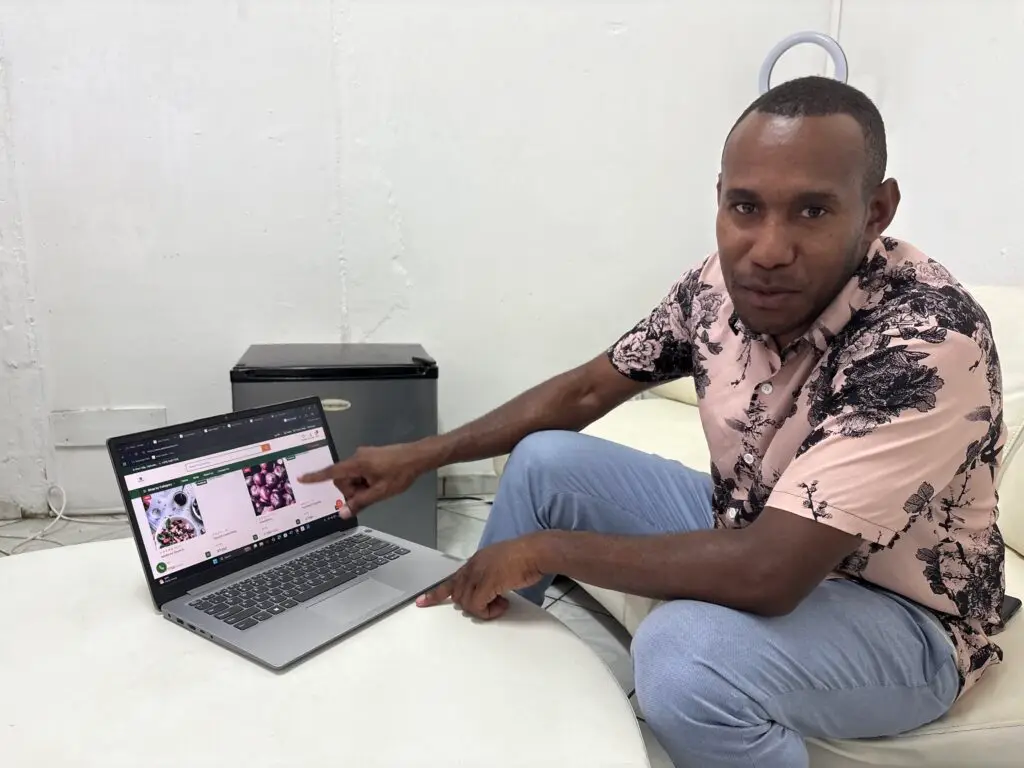
PORT VILA, Vanuatu — A young entrepreneur from Vanuatu is redefining what employment can look like after university. Instead of seeking a traditional job, Rexta Abraham, an economics and business graduate from the University of the South Pacific, is building his own opportunities through online business, also thanks to what he learnt at the Training Workshop component of the Pacific Island Forum Secretariat’s (PIFS) E‑Biz program which was funded by the Pacific Agreement on Closer Economic Relations Plus or PACER Plus. From Sarete Village in Espiritu Santo, Rexta first came across the program through a Facebook advert and applied mostly out of curiosity. Though he was not new to business and entrepreneurship, the training opened his eye to something new: how e‑commerce can expand reach, reduce marketing costs, and help him find clients faster. When asked to share his testimony about the E-Biz training program, Rexta explained: “I had planned to start a business in Port Vila and import second-hand clothes to resell here. However, after taking the course, I discovered two things: first, the power of the internet when used correctly to create business opportunities; and second, how effective it is to reach customers through digital marketing without needing to leave my home.” Rexta Abraham Rexta Abraham is building his own opportunities through online business. Just a year after completing the course, Rexta has already set up two growing businesses: 1. Aelan Basket (under development) An online shopping platform designed to connect customers with key supermarkets in Vanuatu. It will also allow drop‑shipping from platforms such as Alibaba and Shein. Drop-shipping is a business model where you can sell products online without keeping any stock. When someone buys from you, you place the order with a supplier, and the supplier ships the item straight to the customer. The service is especially useful for seasonal workers abroad, giving them a simple way to shop for their families back home from abroad, cutting down on remittance misuse, saving time, and ensuring essential items reach households directly. 2. City Cars Vanuatu (operational via Facebook) An online marketplace for second‑hand vehicle set up in late 2025 and with already over 11,000 followers. Currently, it is operating on Facebook only. To date, the company has sold, on average, three vehicles per month. The business targets both domestic buyers and Ni‑Vanuatu living abroad who want a trusted seller for vehicles in country. Rexta Abraham has set up Aelan Basket, an online shopping platform designed to connect customers with key supermarkets in Vanuatu. Rexta is currently in discussion with the two telecommunication companies in Vanuatu to integrate both his business platforms with mobile payment solutions, namely M-Vatu (Vodafone) and MyCash (Digicel). Allowing customer payments via mobile wallet addresses two common barriers: the limited number of people in Vanuatu who own a Visa card and the lack of trust in buying goods online. By using familiar mobile wallets and having a physical presence in Vanuatu, he hopes to reduce perceived risks and increase consumer confidence to buying online. The PIFS E-Biz Plus program aims at supporting MSMEs in starting their business journey online, and Rexta’s experience is a powerful testament to what the program aims to positively impact. It demonstrates how digital skills can open new opportunities for youth, foster innovation and contribute to Vanuatu’s growing digital economy. The implementation of the PIFS E-Biz Plus program was kindly supported by the PACER Plus Implementation Unit. Story and images provided by PIFS E-Biz Plus Program More articles like this one
Built on the Lagoon, Bound for the World
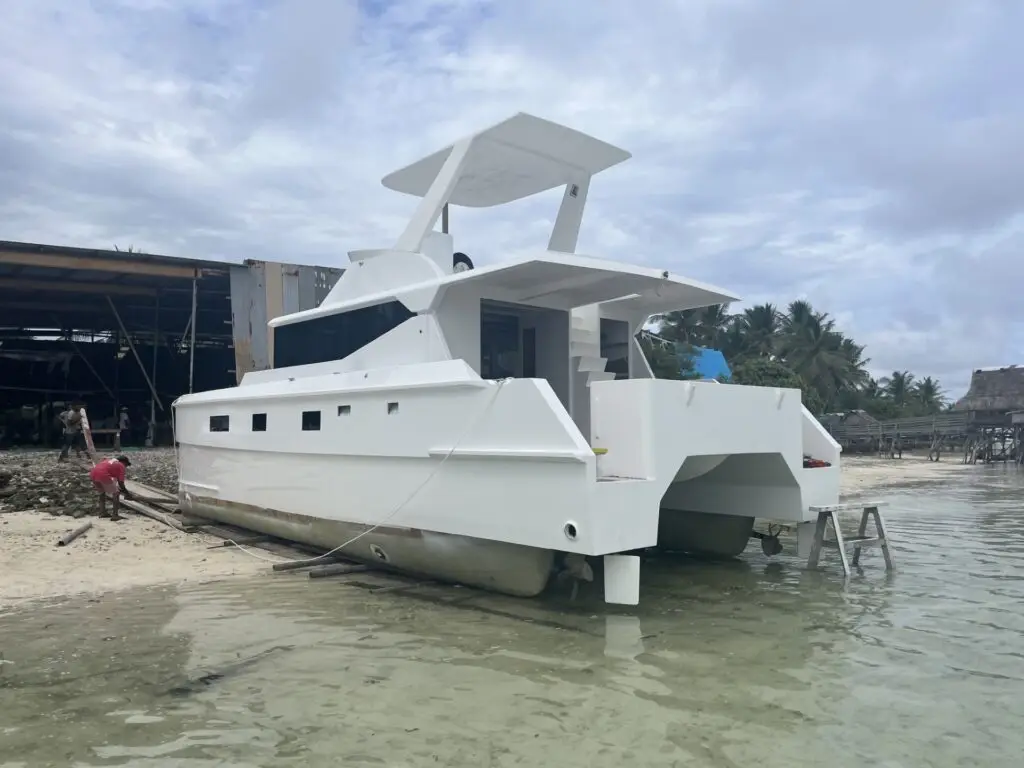
Steering Kiribati’s Boatbuilding Industry into Global Markets, Tariff-free On a quiet stretch of shoreline in Kiribati, sleek catamarans take shape by hand. Molds are developed, sanded, sealed. Fibreglass is laid with care. What emerges from KiriCraft Central Pacific’s workshop is not mass-produced machinery, but finely crafted vessels designed for open water. For Michael Savins, Founder and CEO of KiriCraft Central Pacific, boatbuilding in Kiribati was never meant to be small or insular. From the beginning, his ambition was outward-looking: to prove that world-class marine manufacturing could come from a low-lying Pacific island nation better known internationally for its vulnerability to climate change than for high-end exports. “The quality was never the issue,” Savins says. “Our boats have always been built to a very high standard. The challenge was getting them into the market on equal footing.” That challenge, for years, partly came down to tariffs. KiriCraft Central Pacific is a high-quality boatbuilding factory in Kiribati. Before the breakthrough Before Kiribati ratified the Pacific Agreement on Closer Economic Relations Plus or the PACER Plus trade agreement, exporting KiriCraft’s handcrafted catamarans to Australia came at a cost. Every vessel entering the Australian market was subject to a five per cent import duty, an expense that quickly added up for a product as large and high-value as a boat. “It doesn’t sound like much on paper,” Savins explains. “But when you’re exporting catamarans, five per cent is significant. It affects your pricing, your competitiveness, and ultimately your business’s ability to grow.” In a competitive marine industry where buyers weigh quality against cost, that extra tariff often meant KiriCraft had to absorb losses or risk pricing itself out of the market. Then PACER Plus came into force. Tariff-free waters “Before PACER Plus, we were paying five per cent in tariffs on our exports to Australia. But since Kiribati ratified PACER Plus in 2020, we no longer pay any import duties in Australia,” Savins says. That single shift — tariff-free access — has had a cascading effect. Without the added cost of import duties, KiriCraft’s catamarans are now more competitive in Australia’s marine market. Pricing is clearer. Margins are healthier. And KiriCraft’s plans for growth are no longer speculative. “With tariff-free access to the Australian market, we can expand our operations, create more job opportunities, and drive economic growth in Kiribati.” Michael Savins, Founder and CEO of KiriCraft For Kiribati, a country with limited land, resources, and export pathways, those words carry weight. More than paperwork At the heart of this shift is PACER Plus’ Rules of Origin and Tariffs Component, often misunderstood as technical trade jargon, but in practice, deeply practical. Rules of Origin are the criteria that determine whether a product is genuinely made in a PACER Plus country and therefore eligible for preferential treatment, such as tariff-free entry. For KiriCraft, meeting these rules means demonstrating that their catamarans are substantially built in Kiribati, from skilled local labour to production processes. These rules do more than unlock tariff savings. They protect Pacific producers from unfair competition and ensure that the benefits of trade agreements flow to local industries. “For us, it validates the work we’re doing here,” Savins says. “We’re not just assembling parts. We’re building boats in Kiribati, employing local people, transferring skills, and creating something of lasting value.” PACER Plus’ tariff commitments then do the rest — removing import duties in Australia and New Zealand for qualifying Pacific goods. The result is a clear, predictable trading environment where Pacific businesses like KiriCraft can invest in confidence. KiriCraft employee works on a boat inside KiriCraft’s workshop. Jobs, skills, and pride Inside KiriCraft’s workshop, the benefits of tariff-free access are tangible. More orders mean more hands on deck. More hands mean more training, more apprenticeships, and more specialised skills staying in Kiribati rather than leaving it. Boatbuilding is not a short-term industry. It requires precision and experience. PACER Plus, by reducing barriers to export, helps create exactly that. “This isn’t just about selling boats,” Savins reflects. “It’s about building an industry. When we grow, our people grow with us.” That growth ripples outward. Wages circulate locally. Skills are passed on. Young i-Kiribati workers see pathways beyond subsistence or overseas migration. In a country often framed by external narratives of limitation, KiriCraft tells a different story, one of capability. A model for the Pacific KiriCraft’s experience highlights something often overlooked in discussion about trade agreements: PACER Plus is not designed to benefit only large economies or commodity exporters. It’s Rules of Origin and tariff commitments are especially powerful for niche, high-value Pacific industries — manufacturing, processing, and craftsmanship that rely on quality rather than volume. From boatbuilding in Kiribati to food processing, fisheries, and specialised manufacturing across the region, the principle is the same. When Pacific products can enter major markets without tariffs, they stand a fairer chance of success. “This agreement gives us certainty,” Savins says. “And certainty is everything when you’re building something long-term. We’re building something that lasts and PACER Plus has helped make that possible, not just for KiriCraft, but for Kiribati.” And for a small island nation surrounded by ocean, that is no small achievement. -ENDS- More articles like this one
New Five-Year PACER Plus Support Agreed by Pacific Ministers
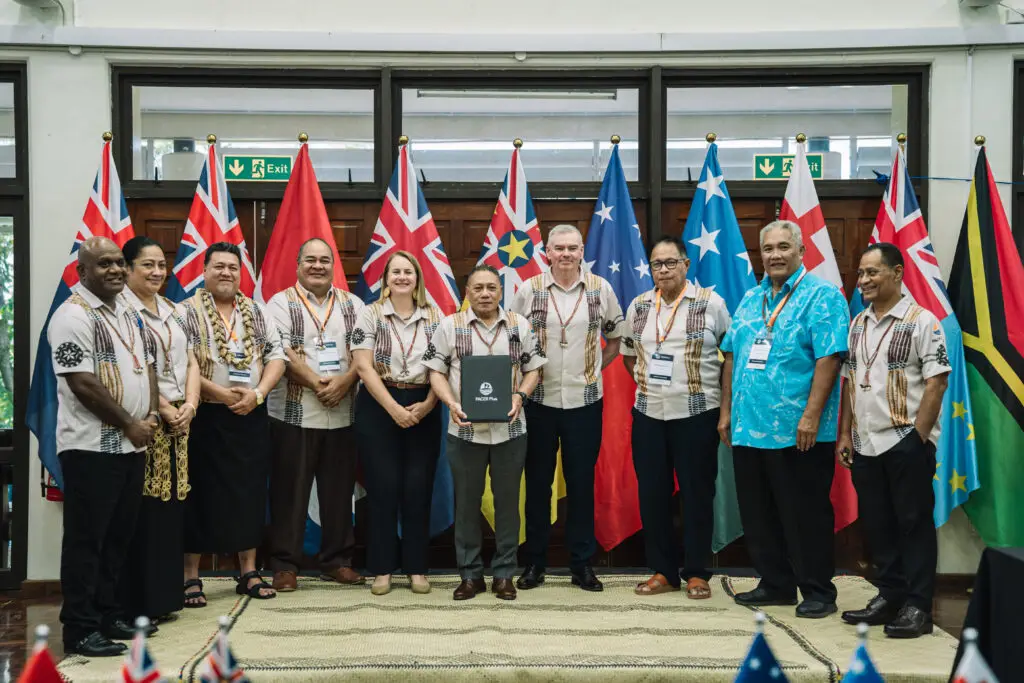
HONIARA, Solomon Islands – Pacific trade ministers met in Honiara, Solomon Islands yesterday and agreed on a renewed push to strengthen trade, investment, and labour mobility across the region under the Pacific Agreement on Closer Economic Relations Plus or PACER Plus. Ministers and ministerial representatives from Australia, Cook Islands, Kiribati, New Zealand, Niue, Samoa, Solomon Islands, Tonga, Tuvalu, and Vanuatu came together for the 2025 PACER Plus Ministerial Meeting, chaired by Hon. Peter Shanel Agovaka, Solomon Islands Minister of Foreign Affairs and External Trade. Ministers and ministerial representatives from the 10 PACER Plus parties came together for the 2025 PACER Plus Ministerial Meeting in Honiara on Thursday 27 November. Opening the meeting, Prime Minister Hon. Jeremiah Manele highlighted the progress made since PACER Plus entered into force in 2020. PACER Plus is grounded in a rules-based system. The Agreement embodies these multilateral principles that respects sovereignty while promoting shared benefits of trade and economic integration. It also addresses the unique and diverse economic vulnerabilities of Pacific small island developing states and offers a structured path for our people to integrate and adapt to the global trading system. It remains an important framework to grow regional peace, progress and prosperity in the region. Prime Minister Jeremiah Manele Ministers reviewed the first five years of the Development and Economic Cooperation (DEC) Work Programme and acknowledged how the work programme had supported policy reforms and institutional capacity building, while also responding to specific national needs, especially for small island economies facing ongoing economic and climate pressures. Looking ahead, the ministers endorsed the strategic priorities for the next phase of the DEC Work Programme (2025-2030). The new priorities will focus on legislation and policy reform, public sector capacity building, private sector development, and automation and data systems. The next phase aims to create a more predictable trading environment, help businesses become more competitive, and ensure Pacific countries have the tools they need to meet their PACER Plus commitments. The ministers also acknowledged the central role played by the PACER Plus Implementation Unit (PPIU) in driving the significant progress achieved under the DEC Work Programme 2020-2025. They understood the importance of the PPIU as a standalone, member-driven regional entity, one that supports Parties to build economic resilience, deepen cooperation, and advance sustainable development across the Pacific. Ministers also reaffirmed the Pacific Labour Mobility Annual Meeting as the region’s main forum for advancing labour mobility issues. Australia and New Zealand announced major new support for the next five-year DEC Work Programme – AUD 23.2 million from Australia and NZD 10 million from New Zealand. A key highlight from yesterday’s meeting was the joint announcement by Australia and New Zealand of renewed funding for the next five-year cycle of the DEC Work Programme – AUD 23.2 million from Australia and NZD 10 million from New Zealand. Ministers welcomed this commitment and proceeded to sign the Phase II Implementing Arrangement for Development and Economic Cooperation (2025-2030). The meeting also agreed to increase their engagement with other Forum Island Countries that have expressed interest in joining PACER Plus. Ministers endorsed the development of a structured advocacy strategy under the next phase of the DEC Work Programme to support future accessions, with a commitment from Australia and New Zealand to provide additional assistance as membership expands. Finally, ministers expressed their deep appreciation to the government and people of Solomon Islands for hosting the meeting and for their warm hospitality. Tonga will chair the next PACER Plus Joint Committee and Ministerial Meetings in 2026. The full PACER Plus Ministerial Communique can be accessed here. -ENDS- More articles like this one
Seventh Annual Vanuatu Made Week Wraps Up in Port Vila
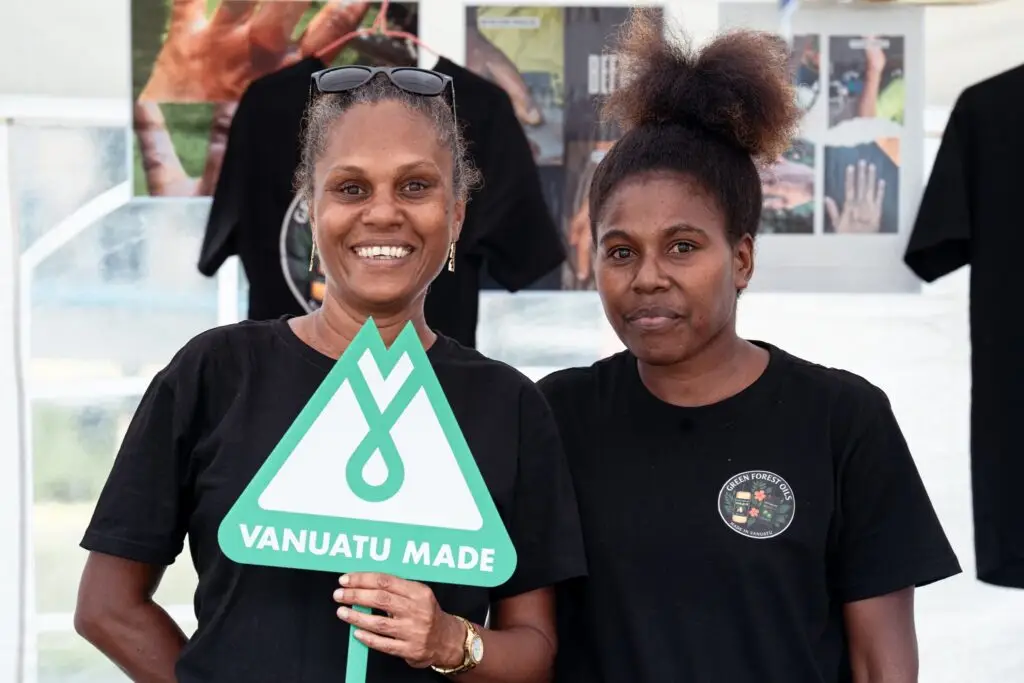
PORT VILA, Vanuatu – The Seventh Vanuatu Made Week concluded today after four days (23-26 September) of showcasing the very best of Vanuatu’s locally made products, crafts, and services. Bringing together micro, small and medium enterprises (MSMEs), producers, and stakeholders from all six provinces, the event has become a flagship platform for promoting the creativity, innovation, and resilience of Vanuatu’s people. The Pacific Agreement on Closer Economic Relations Plus or PACER Plus is a Gold Sponsor of the event. This year the event featured a trade fair, the Vanuatu Made Toktok B2B Forum, a garments and textiles fashion show, All-Vanuatu-Made products cooking demonstrations by the Vanuatu Chef Association, and an awards night. Together, these activities provided an important space for producers to connect directly with domestic consumers and international buyers. Mr. Noel Kalo, Director of the Department of Industry, says that the event is about creating sustainable livelihoods. “Vanuatu Made Week is not just an exhibition, it’s an economic driver. By supporting this event, PACER Plus is helping our MSMEs tap into new markets, strengthen business networks, and reinforce the Vanuatu Made brand at home and abroad. It’s about creating sustainable livelihoods while proudly promoting what is authentically ours.” Mr. Noel Kalo, Director of the Department of Industry For many vendors, the opportunity to showcase their products to a larger audience was invaluable. Ms. Esmie Jimmy, owner of Green Forest Oils, a natural oil producer from Nguna Island, said: “This week I sold what I would normally sell in a month. But more importantly, I’ve connected with new buyers as well.” The PACER Plus Vanuatu National Coordinator, Mr. Michael Ligo, noted that supporting events like Vanuatu Made Week directly aligns with PACER Plus’s mission to strengthen trade and economic opportunities in Vanuatu. By helping local producers gain visibility, build networks, and access information, PACER Plus contributes to sustainable private sector growth while encouraging value addition export readiness. Ms. Esmie Jimmy (left), owner of Green Forest Oils, a natural oil producer from Nguna Island at the event. “Supporting Vanuatu Made Week matters because it’s not only about showcasing products, but it’s also about building confidence, creating opportunities, and ensuring that Vanuatu-made goods find their rightful place in both regional and global markets,” said Mr. Ligo. -ENDS- More articles like this one
Cultivating More Than Crops in Samoa

The first rays of sunlight hit the taro fields of Lefaga village in Samoa, and 33-year-old Kent Onesemo is already at work. The morning air is alive with low hum of a brush cutter, the chatter of farmhands, and the occasional call of cattle grazing nearby. It’s a familiar routine for Kent, a father of six who has learned that farming, like life, demands patience, grit and vision. “I have a full-time job,” Kent says, wiping sweat from his brow. “But it wasn’t enough to support my family. I knew I had to do something more.” Kent Onesemo at his farm in Lefaga, Samoa. Four years ago, he turned to farming, planting taro and raising cattle on six acres of land. What began as a side effort to ease financial strain soon grew into something bigger. After two years of supplying Samoa’s local markets, Kent ventured into exports. His very first month abroad brought in WST$12,000 (AU$6,700). “It was exciting but overwhelming,” he admits. “The demand was there, but I couldn’t keep up with it.” Rather than risk burning out, Kent made the bold choice to pause exports while he focused on expanding and strengthening his farm. That expansion was given a boost in July 2025 when the Pacific Agreement on Closer Economic Relations Plus (PACER Plus), through the Samoa Farmers Association, provided over WST$89,000 (AU$50,000) worth of farming and processing equipment to local farmers. Kent was among the 1,000 beneficiaries. The support included taro chippers, multi-use grinders, tillers, ground drillers, brush cutters, and chainsaws — all tools that turned Kent’s ambitions into achievable plans. “The equipment from PACER Plus came just when I needed it most,” Kent says. “It has lifted the pressure and helped me prepare for the next stage of exports.” But Kent’s story isn’t just about farming. It’s also about redefining what it means to be a farmer in the Pacific. Under the name Samoan Farmer, Kent has carved out a space online where he documents his journey. His YouTube channel has almost 17,000 subscribers, with thousands more following him on Facebook and Instagram. His videos blend farm tutorials with moments of candid honesty. They’ve struck a chord so much so that six Samoans have launched their own farms after watching Kent’s content. “That’s the best part. Knowing my story is inspiring others to start their own.” Kent Onesemo After a hard day’s work at the farm, Kent Onesemo is ready to transport some of his produce to the local market. What began as a way to share knowledge has also grown into a business. With his video production skills, Kent has created commercials for local companies, bringing in more than WST$50,000 in revenue. His website, www.samoanfarmer.com, now sells branded merchandise. Still, Kent’s focus remains on the bigger picture: using his journey to encourage young Samoan and Pacific people to embrace technology as a tool for growth. “We’re great at using social media for fun, but not enough for building skills or learning about financial literacy,” he says. “I want young Samoans to have a vision for themselves. To step out of their comfort zones and take chances.” Of course, farming isn’t without its challenges. There are days when the work feels too heavy, the market too demanding, or the weather too unforgiving. “But that’s when I push harder,” Kent explains. “It’s like driving up a steep hill — you’ve got to press the accelerator a little more to get over the top. Once you’re there, the view makes it worth it.” For Kent, the view is more than financial stability. It’s the pride of seeing his children run through the taro rows, the satisfaction of exporting Samoan produce to the world, and the knowledge that he is building something that others can follow. “You can never do this alone,” he says. “It takes family, community, and support like PACER Plus to make it possible.” -ENDS- More articles like this one
PACER Plus Delivers Over $89,000 in Farming Equipment to Boost Agriculture Sector
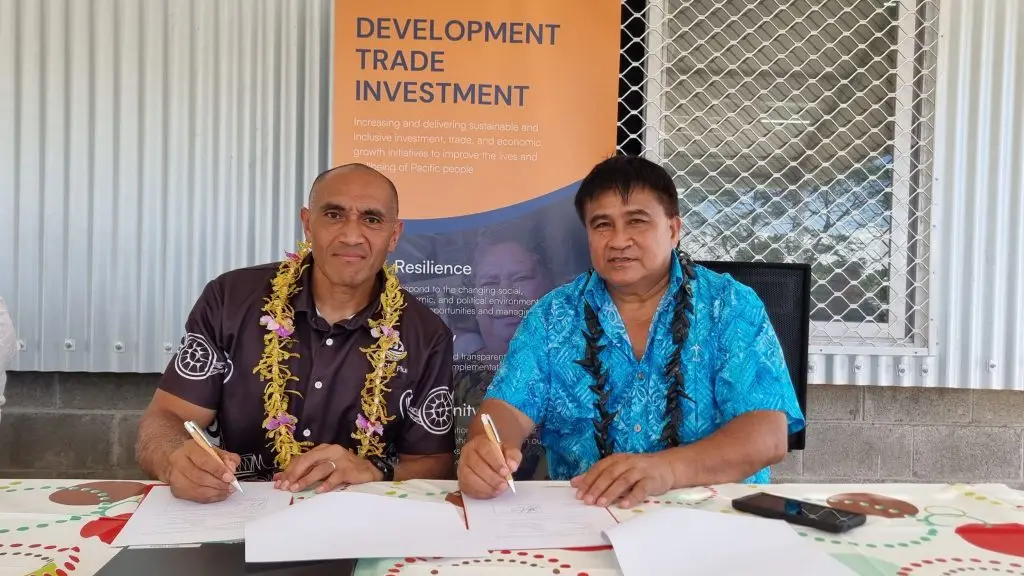
APIA, Samoa – Samoan farmers received a major boost today with the official handover of more than WST$89,000 (AU$50,000) worth of farming and processing equipment to the Samoa Farmers Association (SFA), thanks to support from the Pacific Agreement on Closer Economic Relations (PACER) Plus. The new equipment – ranging from coffee bean roasters and electric winnowers to taro chippers, multi-use grinders, tillers, ground drillers, brushcutters and chainsaws – is part of the broader project aimed at empowering Samoa’s farming community through increased productivity, improved livelihoods, and stronger market linkages. Minister for Agriculture and Fisheries, Hon. Niuava Eti Malolo. SFA, which represents more than 1,000 farmers across Samoa – including women’s groups, church-based farming collectives, and youth enterprises – will roll out this support through its Empowering Agriculture Project. The project focuses on equipping farmers with the tools they need to improve both the quantity and quality of their produce, enabling greater access to domestic, regional, and international markets. Speaking at the handover ceremony, the Minister for Agriculture and Fisheries, Hon. Niuava Eti Malolo, acknowledged the significance of the initiative, highlighting its alignment with Samoa’s broader trade and development aspirations. “For Samoa, the PACER Plus Agreement opens doors to new avenues in trade and investment. It aids in refining our systems and standards, enabling more of our local products to meet international market requirements. This is especially significant for agriculture – a sector that remains the backbone of our economy and a vital source of income for many Samoan families.” Hon. Niuava Eti Malolo, Minister for Agriculture and Fisheries. Mr. Roy Lagolago, Head of the PACER Plus Implementation Unit (PPIU), said the initiative aligns with PACER Plus’s development goals of enabling Pacific farmers and small businesses to participate more effectively in trade. “PACER Plus was designed with a vision of driving economic growth and improving the livelihoods of people in the Pacific Island nations,” said Mr. Lagolago. “Through fostering an environment conducive to trade and investment, it enhances regional cooperation and broadens our access to international markets. Today’s handover is a reflection of that mission in action.” PACER Plus supported the project through its Development and Economic Cooperation (DEC) Work Programme, funded by the Australian and New Zealand governments, which assists Pacific Island countries in implementing the PACER Plus Agreement and unlocking trade-related development benefits. Samoa Farmers Association president, Sala Sagato Tuiafiso. SFA President Mr. Sala Sagato Tuiafiso expressed his appreciation for the support and said it will have a lasting impact on the agricultural sector. “Our farmers are the backbone of Samoa’s economy, and this equipment is timely,” said Mr. Sagato. “It will improve how we process, preserve, and present our crops for market. We are especially proud that this support will reach those who need it most – women, youth, and rural farmers – ensuring no one is left behind.” The SFA will work closely with the PPIU to monitor the use and impact of the equipment, supported by a quarterly reporting process and follow-up surveys with farmers and stakeholders. This collaborative approach will help measure tangible outcomes such as increased productivity, improved quality, and access to new markets. The Empowering Agriculture Project also includes plans for future capacity building initiatives, strengthening farmers’ knowledge in sustainable farming practices, post-harvest handling, and business development. -ENDS- More articles like this one
New Biosecurity Equipment to Support Tonga’s Trade and Food Safety Systems

NUKU’ALOFA, Tonga – Tonga’s ability to protect its people, environment, and trade is set to strengthen with the official handover of vital biosecurity and quarantine equipment funded by the PACER Plus trade agreement’s Development and Economic Cooperation (DEC) Work Program. The new tools — valued at AU$185,350 or TOP$288,003 — are designed to enhance Tonga’s sanitary and phytosanitary (SPS) systems and include a digitised Quarantine Management Information System with IT infrastructure, a state-of-the-art fumigation chamber, protective gear, inspection tools, and an incinerator to safely manage imports and exports. Tonga’s Minister for Agriculture, Food and Forests, Hon. Siosiua Moala Halavatau (left) and the Head of the PACER Plus Implementation Unit, Mr. Roy Lagolago signs the Contribution Agreement during the official handover in Nuku’alofa, Tonga. This equipment will help Tonga meet international SPS standards, ensuring continued and expanded access to key export markets such as Australia and New Zealand. Minister for Agriculture, Food and Forests, Hon. Siosiua Moala Halavatau, welcomed the handover, describing it as a step forward for Tonga’s agricultural and trade sectors. “This is not just a handover of tools. It’s a handover of confidence for our farmers, for our exporters, and for our consumers. Tonga is committed to meeting the highest international standards for food safety and plant and animal health. With this support from PACER Plus, we are better equipped to ensure the quality and safety of our exports, protect our environment, and grow our economy.” Hon. Siosiua Moala Halavatau, Minister for Agriculture, Food and Forests Head of the PACER Plus Implementation Unit (PPIU), Mr. Roy Lagolago, praised the collaborative nature of the initiative. “The PPIU is proud to partner with PHAMA Plus in delivering the fumigation chamber, an important piece of infrastructure that will directly benefit Tongan exporters. This partnership recognises the work that PHAMA Plus is already doing in Tonga and also avoids duplication of efforts and resources. The PHAMA Plus work in facilitating market access for Pacific produce to Australia and New Zealand is important and is a conduit for increased trade under PACER Plus,” said Mr. Lagolago. Tonga’s Minister for Agriculture, Food and Forests, Hon. Siosiua Moala Halavatau (left) with the Head of the PACER Plus Implementation Unit, Mr. Roy Lagolago at the official handover in Nuku’alofa, Tonga. Tongan exporters, many of whom face strict market access requirements, say the equipment couldn’t come at a better time. “Our work involves exporting watermelon to New Zealand. Previously, we faced significant challenges with fumigation, often having to collaborate with another exporter for this process. This new equipment is a considerable asset because its large fumigation chamber will greatly expedite the fumigation process, making our work much more efficient.” Ms. Seini Tu’ivai, Senior Assistant Secretary for the Exporter Division at Tonga’s Ministry of Trade and Economic Development The handover forms part of PACER Plus’s mission to build sustainable capacity across the region, ensuring Pacific Island countries are not only connected to markets but also equipped to meet the standards and seize the opportunities that come with it. -ENDS- More articles like this one
The Woman Behind Vanuatu’s First Certified Kava Export
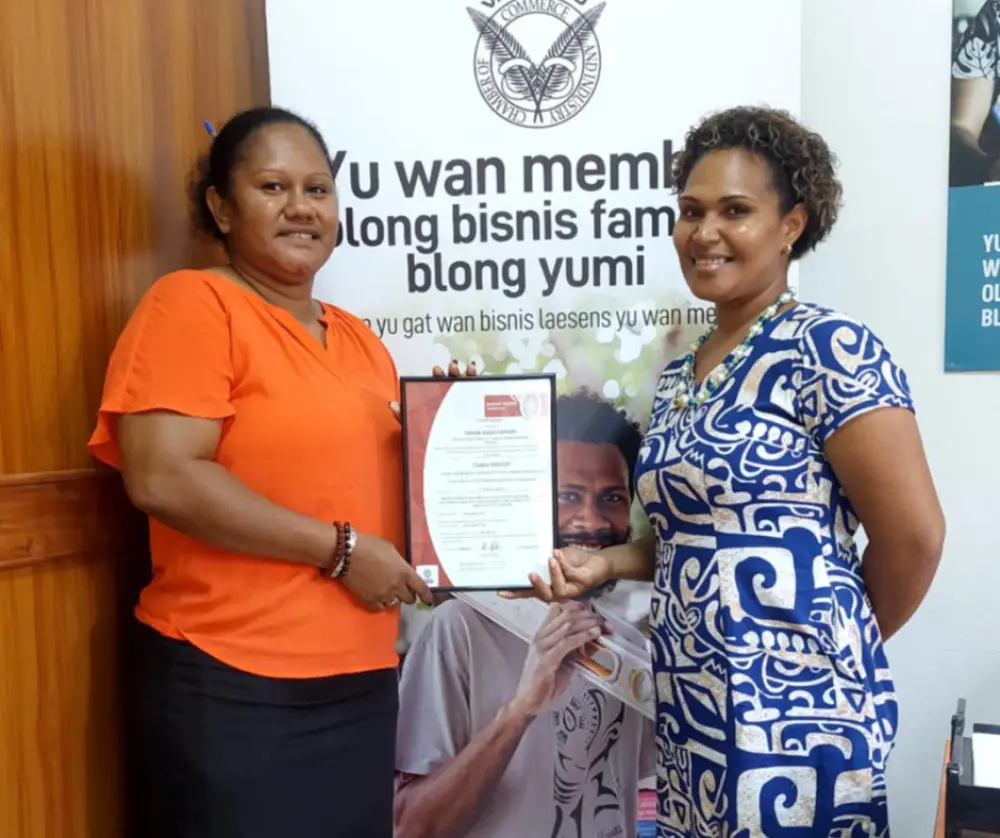
PORT VILA, Vanuatu – In the highlands of Espiritu Santo, Vanuatu’s largest island, where kava farming has long been a man’s world, Sergine Tahun is rewriting the rules. The determined entrepreneur behind Tahun Kava Exports Limited has not only carved out a space for herself in a competitive industry but has also become the first woman-owned kava exporter in Santo to achieve the internationally recognised HACCP certification – a milestone that promises to open doors to global markets. For Sergine, the journey began with a simple frustration. “I used to source kava directly from farmers to resell locally, but I found myself constantly waiting for customers to pay,” she recalls. “I knew there had to be a better way.” That realisation led her to explore exporting – a path that required navigating complex regulations, building relationships with overseas buyers, and elevating her business to meet international standards. From Local Trade to Global Ambitions Determined to succeed, Sergine sought guidance from biosecurity officials to understand export requirements – everything from proper cleaning techniques to packaging standards. She also connected with families in New Caledonia who run nakamals (traditional kava bars), planting the seeds for future trade. “I wanted them to know my kava was different – premium quality, handled with care,” she says. Tahun Kava Exports Limited owner, Ms. Sergine Tahun (left), receives her HACCP Certificate from VCCI SANMA Provincial Officer, Ms. Candyce Simeon. But breaking into the industry wasn’t easy. “When I started, the market was tough. There was lots of competitors, few opportunities,” she admits. Yet, through persistence, Sergine refined her products, expanded her network, and gradually built trust with farmers in remote areas, where weather and logistics often disrupted supply chains. Her secret weapon? A dedicated farm manager, Govany Maleb, who bridges the gap between her and the predominantly male farming community. “He reassures them that even though a woman owns the business, I know what I’m doing,” Sergine laughs. Maleb doesn’t just collect kava – he supports farmers with nursery management and equipment, fostering loyalty in an industry where relationships are everything. The Balancing Act Running a business in a male-dominated field while raising a family hasn’t been simple. “As a wife and mother, there are days when it feels overwhelming,” Sergine confesses. Yet, her resolve never wavers. “I want to prove that women can thrive in this space – and that collaboration, not competition, is the way forward.” Kava farmers in Espiritu Santo. Running a business in a man-dominated industry comes with it’s challenges, says Sergine. “Even though a woman owns the business, I like to reassure the farmers that I know what I’m doing,” she laughs. Her perseverance paid off when PACER Plus, through the Vanuatu Chamber of Commerce and Industry (VCCI), supported her in securing Hazard Analysis and Critical Control Points (HACCP) certification – a game-changer for her business.. “This certification means everything,” Sergine says. “Before, buyers didn’t know us. Now, the enquiries are pouring in.” Since November 2024, she’s sent samples to international buyers, with eight shipments already dispatched between December 2024 and February 2025. Mr. Alipate Tavo, Trade Adviser with the PACER Plus Implementation Unit (PPIU), emphasises the significance of Tahun Kava’s achievement. “Sergine’s success isn’t just about one business – it’s a testament to what Pacific women can accomplish with the right support. Her certification lifts the entire sector, showing that Vanuatu’s kava can compete globally.” A Message to Pacific Women: “Dream Boldly” Sergine’s advice to other women is simple but powerful: “Don’t let social or cultural limits stop you. If you want something, go for it. Yes, it’s hard, but if I can do it, so can you.” With her eyes set on expanding into new markets and diversifying her product range, Tahun Kava Exports is proof that tradition and innovation can blend as smoothly as the drink she sells. And for the farmers of Espiritu Santo, that’s something worth raising a shell to. -ENDS- More articles like this one
Bottling the Fragrance of Samoa
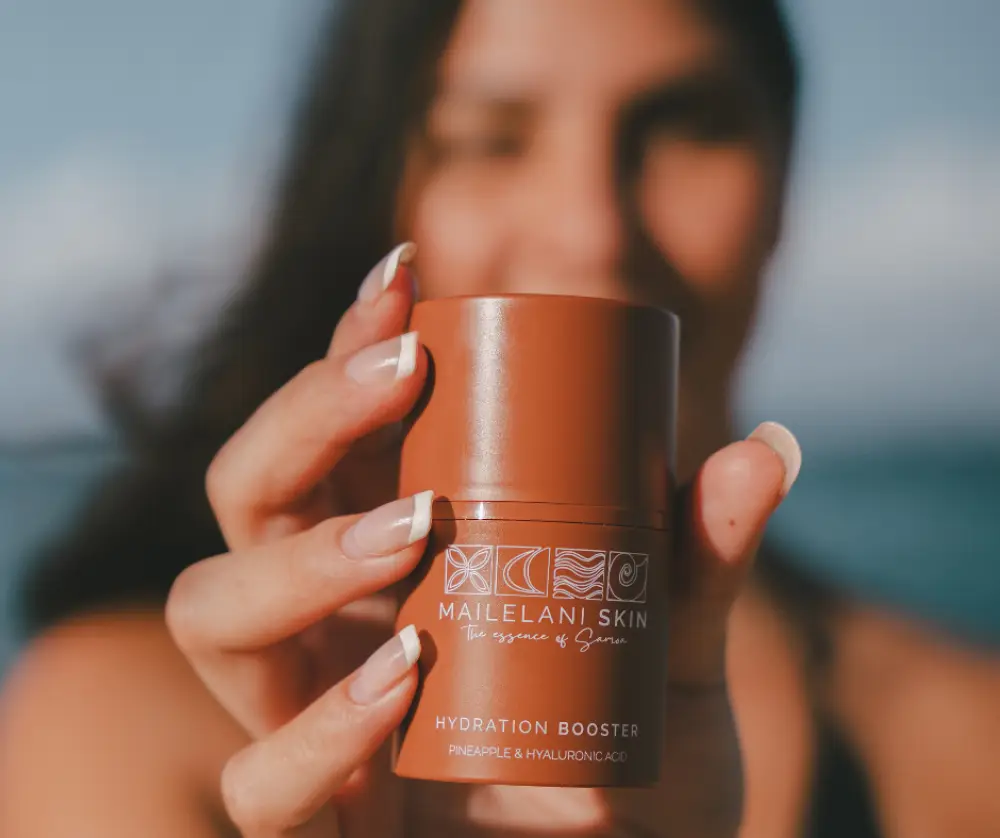
How Mailelani is Turning Coconuts into Global Success The sweet scent of moso’oi (ylang-ylang) and rich cocoa butter hangs in the air as Sylvie Salanoa carefully inspects a fresh batch of coconut oil soap at her Mailelani Samoa Body Care gift shop outside Apia, Samoa. It’s a far cry from the humble beginnings 25 years ago when she and her husband Kitiona first dreamed of creating soap from Samoan coconuts in their family kitchen. “We started with one simple question,” Sylvie recalls, her hands holding a bar of their signature frangipani-scented soap. “How can we share the true essence of Samoa with the world?” Today, that question has blossomed into a thriving business with eight varieties of artisan soaps, luxurious body oils, exfoliating scrubs, and their newest triumph — a premium facial care line launched in early 2024 with support from the PACER Plus Agreement. From Kitchen Experiments to International Shelves The journey wasn’t without its challenges. “Oh, we wanted to give up many times!” Sylvie laughs. Early batches didn’t set properly. Supply chains were unpredictable. Export regulations seemed impossible to navigate. But through perseverance and community support, what began as a cottage industry now supplies retailers across Samoa, Australia, New Zealand and beyond. Each product tells a distinctly Samoan story. The cocoa range pays homage to the islands’ national drink. The delicate frangipani line celebrates the flower Samoan women traditionally wear behind their ears. The moso’oi captures the islands’ signature fragrance. “What makes Mailelani special is that we’re not just making products — we’re preserving culture,” Sylvie explains. “When someone uses our cocoa body butter, we want them to feel connected to Samoa’s rich traditions.” Rooted in Community, Growing Through Trade The business model is as sustainable as their ingredients. Mailelani sources raw materials from rural villages across Samoa, creating economic opportunities while maintaining authentic island recipes. This community-focused approach caught the attention of the PACER Plus Implementation Unit (PPIU). “Mailelani represents exactly what PACER Plus was designed to support. By assisting with their packaging clearance costs, we’re helping a homegrown business scale up while maintaining its cultural integrity. Their success shows how regional trade agreements can empower Pacific entrepreneurs to compete globally without compromising local values.” Alipate Tavo, PPIU Trade Adviser For Sylvie, the PACER Plus support came at the perfect moment. “That new facial line was our dream for years, but the import costs for proper packaging seemed impossible. When PACER Plus stepped in, it was confirmation from God telling us to ‘keep going’.” The Sweet Smell of Success While setting up her products, Sylvie reflects on the unexpected rewards of their quarter-century journey. “The creativity we’ve discovered, the people we’ve met, the places our little soaps have traveled — it’s more than we ever imagined.” She gently places a newly wrapped moso’oi soap into a gift box, ready for its journey to a boutique in Auckland. “Every time someone opens one of our products, they’re experiencing a piece of Samoa. That makes every challenge worthwhile.” With their expanded product line and growing international presence, Mailelani Samoa Body Care continues to prove that traditional wisdom and modern entrepreneurship can create something truly beautiful. Or as Sylvie puts it: “We’re not just selling soap — we’re sharing alofa (love) from our islands to the world.” Mailelani Samoa Body Care products are available at select retailers in Samoa and online by clicking here. Did You Know? Mailelani means “from heaven” in Samoan. All products are made with sustainably sourced local ingredients. The business supports dozens of rural Samoan families through its supply chain. -ENDS- More articles like this one
Customs officers upskill to improve cross border e-commerce

NADI, Fiji – Customs officials from 16 Pacific countries are gathering in Nadi, Fiji this week for a five-day workshop (17-21 March) to understand the World Customs Organisation (WCO) tools and initiatives aimed at facilitating and securing cross-border e-commerce. The workshop, co-hosted by the Oceania Customs Organisation (OCO) and the PACER Plus Implementation Unit (PPIU), brings together 25 participants from American Samoa, Australia, Cook Islands, Fiji, Papua New Guinea, Northern Marianas, Federated States of Micronesia, Kiribati, Niue, Nauru, Samoa, Solomon Islands, New Caledonia, Guam, Tonga and Tuvalu. Experts from Japan Customs are also co-facilitating the sessions. Customs officials from 16 Pacific countries are Fiji this week for a five-day workshop to understand the WCO tools and initiatives aimed at facilitating and securing cross-border e-commerce. “This workshop directly supports our mission to enhance economic integration and sustainable development in the Pacific through PACER Plus. While customs administrations address the regulatory aspects, PACER Plus is also focused on helping Parties to enhance legislative framework on ecommerce and support Pacific businesses seize the opportunities of digital trade. We are helping customs officers understand both sides of e-commerce thereby creating pathways for Pacific products to reach global markets while maintaining appropriate safeguards.” Roy Lagolago, Head of the PPIU E-commerce in the Pacific has grown by over fifty per cent since 2020, with around thirty per cent of Pacific Islanders now regularly shopping online, according to the Pacific E-commerce Assessment Report and the Pacific Regional E-commerce Strategy and Roadmap. A 2024 OCO Gap Analysis, supported by the United Nations Conference on Trade and Development (UNCTAD) and funded by the European Union, showed that small parcel shipments to the region have increased by over 200 per cent in the past three years. Approximately 85 per cent of these packages are valued under US$100, posing challenges for customs administrations. Some major ports now process up to 5,000 small e-commerce parcels daily, as per WCO regional data. “As customs officials, our primary concern is implementing international standards that facilitate legitimate trade while protecting our borders. This workshop focuses on the eight guiding principles of the WCO Framework of Standards for Cross-Border E-Commerce, which provides our members with a harmonised approach to this growing trade channel.” Nancy T. Oraka, Head of Secretariat for OCO Participants visited the DHL facility in Nadi gaining a better understanding of e-commerce logistics and the partnership between customs and private sector players. This is the first regional workshop focused on building capacity for implementing the WCO Framework of Standards for Cross-Border E-Commerce in the Pacific context. Both PPIU and OCO are one of the implementing agencies of the Pacific Regional E-Commerce Strategy and Roadmap, under Priority Area Three on Trade Logistics and Trade Facilitation. Participants explored advanced processing systems to manage the surge in small consignments and targeted risk assessment methods to identify potentially dangerous or illegal shipments while ensuring the smooth flow of legitimate goods. They also examined strategies for applying effective, efficient, scalable and flexible revenue collection models for low-value imports, tailored to national circumstances – a key challenge for Pacific nations. The workshop featured insights from key stakeholders, including the WCO, Pacific Islands Forum Secretariat, UNCTAD, DHL Express, and Siuhuu Online Marketplace, highlighting the importance of public-private collaboration in cross-border e-commerce. Participants also visited the DHL facility in Nadi gaining a better understanding of e-commerce logistics and the partnership between customs and private sector players. Drawing from their experiences and challenges, participants will develop national and regional action plans to guide OCO members in their implementation of international standards for cross-border e-commerce. “The knowledge and strategies developed during this workshop will strengthen not just individual administration but our collective regional approach to e-commerce,” added Ms. Oraka. “As our digital economy continues to grow, customs administrations must evolve to facilitate legitimate trade while addressing emerging risks.” -ENDS- More articles like this one