
Strengthening Samoa’s Biosecurity Systems
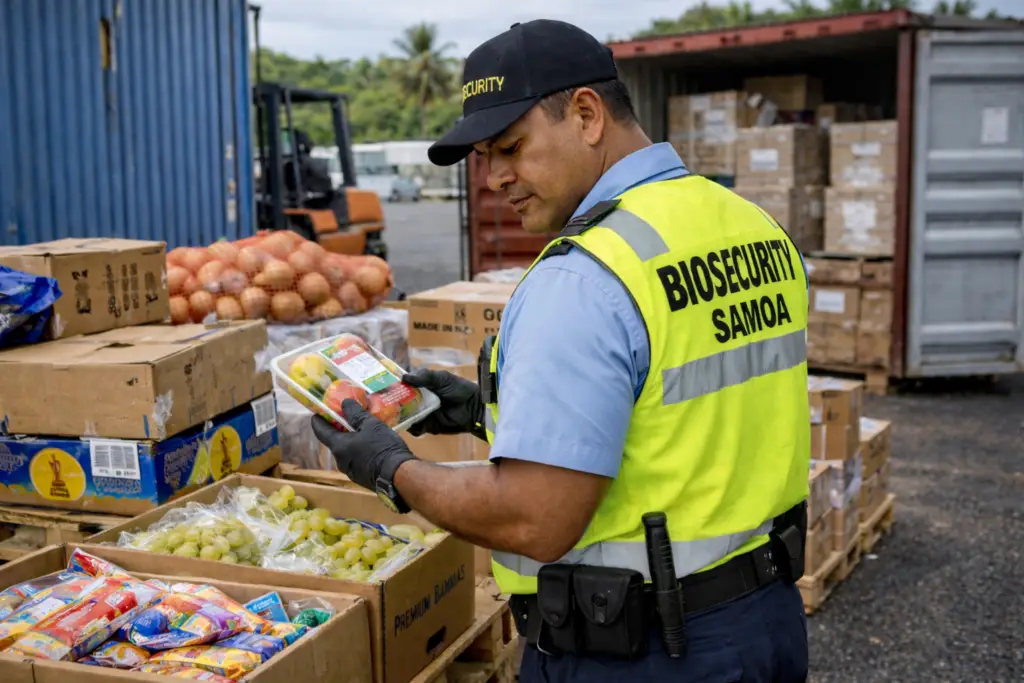
Every day, ships and aircraft bring goods into Samoa from around the world. These shipments carry everything from food and agricultural products to machinery, construction materials, and consumer goods. While trade is essential for Samoa’s economy, it also brings risks. Invasive pests, plant diseases, and animal health threats can arrive at the country’s borders hidden within cargo, posing serious dangers to agriculture, ecosystems, and public health. For Samoa’s Biosecurity Division within the Ministry of Agriculture and Fisheries, managing these risks is part of a complex daily operation. Officers inspect cargo, issue import permits, process quarantine certificates, and monitor compliance with international biosecurity standards. Behind these activities sits an important digital tool that has quietly supported this work for nearly two decades: the Samoa Quarantine Information Database, better known as the SQUID system. Today, with support from PACER Plus, Samoa is taking an important step toward modernising this system to ensure it continues protecting the country’s borders while facilitating safe and efficient trade. Inspections help prevent invasive pests and diseases from entering Samoa. The SQUID system was introduced in 2006 to help biosecurity officers manage quarantine processes and maintain records for imports, inspections, and certification. The system plays a crucial role in Samoa’s border management and supports the country’s obligations under international trade standards, including the World Trade Organisation’s Sanitary and Phytosanitary (SPS) Agreement. Through SQUID, officers record information about cargo arrivals, issue permits and certificates, and track inspections of goods entering Samoa. These processes help ensure that imported products comply with national regulations designed to prevent harmful pests and diseases from entering the country. Over the years, the system has become the technological backbone of Samoa’s biosecurity operations. However, like many long-standing systems, it has begun to show its age. Built using Microsoft Access 2007, the platform relies on software that is no longer supported by modern operating systems. This creates challenges for security, compatibility, and performance. The system also operates primarily from a single location, meaning biosecurity officers working at remote ports of entry often need to rely on manual processes before data can be entered into the central system. “The SQUID platform is a critical part of Samoa’s biosecurity system, helping ensure that goods entering the country meet quarantine standards and protect Samoa’s agriculture and environment.” These limitations not only slow down daily workflows but also highlight the need for a modern digital solution that can keep pace with Samoa’s evolving biosecurity requirements. Recognising the importance of strong biosecurity systems for safe trade, the PACER Plus Implementation Unit supported a comprehensive review of the SQUID platform. The review examined the system’s architecture, security, infrastructure, and operational workflows. It also assessed how the system could be modernised to better meet the needs of biosecurity officers and improve the efficiency of border processes. The findings confirmed that while the existing system continues to function, it requires significant upgrades to address cybersecurity vulnerabilities, outdated technologies, and operational inefficiencies. The review therefore recommended developing a modern web-based platform supported by secure cloud infrastructure. Such a system would allow biosecurity officers to access the platform from multiple devices and locations, while strengthening security and improving overall performance. Importantly, the new system would connect key biosecurity locations across Samoa, including Matautu Wharf, Faleolo International Airport, and Fagalii Airport, allowing officers to enter and access data in real time. 27% faster permit processing T43% faster certificate processingT1,150+ hours saved annuallyT Beyond improving system security, the new platform is expected to deliver tangible operational benefits. Currently, processing an import permit takes an average of around eleven minutes, while issuing a certificate requires approximately seven minutes. With a modernised digital system, these processes are expected to become significantly faster, reducing permit processing times to around eight minutes and certificate processing times to approximately four minutes. While these time savings may appear small on an individual transaction, they add up across hundreds of monthly processes. Overall, the improved system is projected to save more than 1,150 hours of staff time each year, allowing biosecurity officers to focus more on inspection and compliance activities that protect Samoa’s borders. The upgraded platform will also strengthen cybersecurity protections, introduce modern password and data security policies, and enable more reliable backup and recovery systems. Strong biosecurity systems play a vital role in protecting Samoa’s economy and environment. Agriculture remains an important part of Samoa’s livelihood and food security. At the same time, the country’s pristine natural environment and marine ecosystems underpin its tourism industry. Preventing the introduction of invasive pests and diseases is therefore critical to safeguarding these national assets. By improving the digital systems that support quarantine and inspection processes, PACER Plus is helping Samoa strengthen its capacity to manage these risks while ensuring trade continues to flow efficiently. ….. The modernisation of the SQUID system represents more than just a technology upgrade. It reflects a broader commitment to building stronger trade systems and modern regulatory infrastructure in the Pacific. With a secure and connected digital platform, Samoa’s biosecurity officers will be better equipped to monitor goods entering the country, respond to emerging threats, and meet international trade obligations. As trade continues to expand across the region, investments in systems like SQUID help ensure that Pacific economies can grow while protecting their unique environments and communities. Through targeted technical support such as this system review, PACER Plus continues to support Pacific Island countries in strengthening the institutions and infrastructure that underpin safe and sustainable trade. -ENDS- More articles like this one
Seventh Annual Vanuatu Made Week Wraps Up in Port Vila
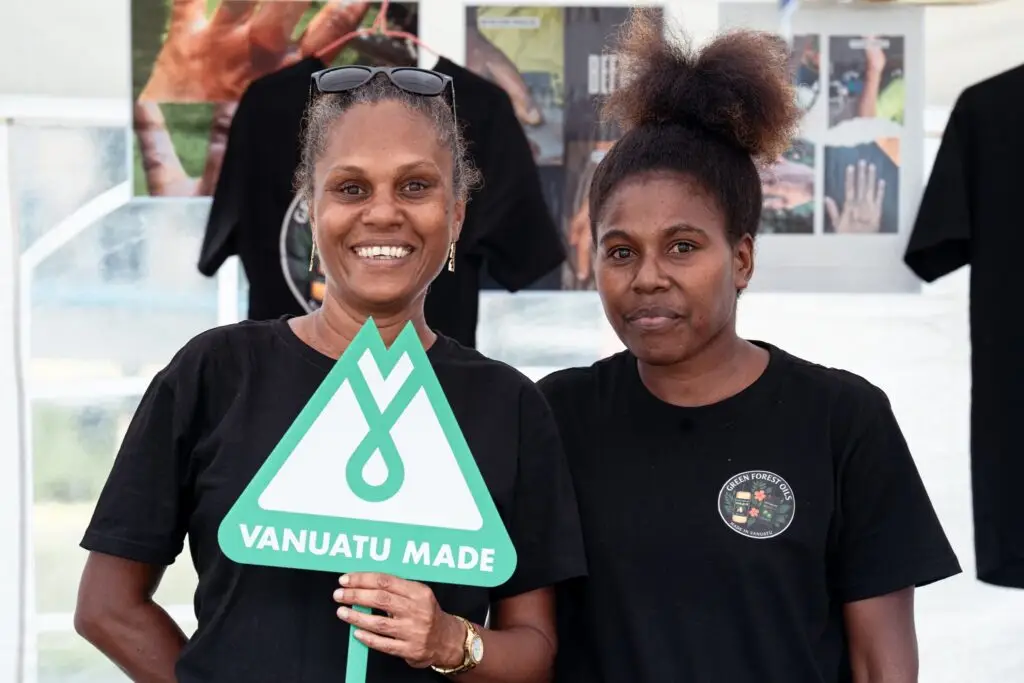
PORT VILA, Vanuatu – The Seventh Vanuatu Made Week concluded today after four days (23-26 September) of showcasing the very best of Vanuatu’s locally made products, crafts, and services. Bringing together micro, small and medium enterprises (MSMEs), producers, and stakeholders from all six provinces, the event has become a flagship platform for promoting the creativity, innovation, and resilience of Vanuatu’s people. The Pacific Agreement on Closer Economic Relations Plus or PACER Plus is a Gold Sponsor of the event. This year the event featured a trade fair, the Vanuatu Made Toktok B2B Forum, a garments and textiles fashion show, All-Vanuatu-Made products cooking demonstrations by the Vanuatu Chef Association, and an awards night. Together, these activities provided an important space for producers to connect directly with domestic consumers and international buyers. Mr. Noel Kalo, Director of the Department of Industry, says that the event is about creating sustainable livelihoods. “Vanuatu Made Week is not just an exhibition, it’s an economic driver. By supporting this event, PACER Plus is helping our MSMEs tap into new markets, strengthen business networks, and reinforce the Vanuatu Made brand at home and abroad. It’s about creating sustainable livelihoods while proudly promoting what is authentically ours.” Mr. Noel Kalo, Director of the Department of Industry For many vendors, the opportunity to showcase their products to a larger audience was invaluable. Ms. Esmie Jimmy, owner of Green Forest Oils, a natural oil producer from Nguna Island, said: “This week I sold what I would normally sell in a month. But more importantly, I’ve connected with new buyers as well.” The PACER Plus Vanuatu National Coordinator, Mr. Michael Ligo, noted that supporting events like Vanuatu Made Week directly aligns with PACER Plus’s mission to strengthen trade and economic opportunities in Vanuatu. By helping local producers gain visibility, build networks, and access information, PACER Plus contributes to sustainable private sector growth while encouraging value addition export readiness. Ms. Esmie Jimmy (left), owner of Green Forest Oils, a natural oil producer from Nguna Island at the event. “Supporting Vanuatu Made Week matters because it’s not only about showcasing products, but it’s also about building confidence, creating opportunities, and ensuring that Vanuatu-made goods find their rightful place in both regional and global markets,” said Mr. Ligo. -ENDS- More articles like this one
Cultivating More Than Crops in Samoa

The first rays of sunlight hit the taro fields of Lefaga village in Samoa, and 33-year-old Kent Onesemo is already at work. The morning air is alive with low hum of a brush cutter, the chatter of farmhands, and the occasional call of cattle grazing nearby. It’s a familiar routine for Kent, a father of six who has learned that farming, like life, demands patience, grit and vision. “I have a full-time job,” Kent says, wiping sweat from his brow. “But it wasn’t enough to support my family. I knew I had to do something more.” Kent Onesemo at his farm in Lefaga, Samoa. Four years ago, he turned to farming, planting taro and raising cattle on six acres of land. What began as a side effort to ease financial strain soon grew into something bigger. After two years of supplying Samoa’s local markets, Kent ventured into exports. His very first month abroad brought in WST$12,000 (AU$6,700). “It was exciting but overwhelming,” he admits. “The demand was there, but I couldn’t keep up with it.” Rather than risk burning out, Kent made the bold choice to pause exports while he focused on expanding and strengthening his farm. That expansion was given a boost in July 2025 when the Pacific Agreement on Closer Economic Relations Plus (PACER Plus), through the Samoa Farmers Association, provided over WST$89,000 (AU$50,000) worth of farming and processing equipment to local farmers. Kent was among the 1,000 beneficiaries. The support included taro chippers, multi-use grinders, tillers, ground drillers, brush cutters, and chainsaws — all tools that turned Kent’s ambitions into achievable plans. “The equipment from PACER Plus came just when I needed it most,” Kent says. “It has lifted the pressure and helped me prepare for the next stage of exports.” But Kent’s story isn’t just about farming. It’s also about redefining what it means to be a farmer in the Pacific. Under the name Samoan Farmer, Kent has carved out a space online where he documents his journey. His YouTube channel has almost 17,000 subscribers, with thousands more following him on Facebook and Instagram. His videos blend farm tutorials with moments of candid honesty. They’ve struck a chord so much so that six Samoans have launched their own farms after watching Kent’s content. “That’s the best part. Knowing my story is inspiring others to start their own.” Kent Onesemo After a hard day’s work at the farm, Kent Onesemo is ready to transport some of his produce to the local market. What began as a way to share knowledge has also grown into a business. With his video production skills, Kent has created commercials for local companies, bringing in more than WST$50,000 in revenue. His website, www.samoanfarmer.com, now sells branded merchandise. Still, Kent’s focus remains on the bigger picture: using his journey to encourage young Samoan and Pacific people to embrace technology as a tool for growth. “We’re great at using social media for fun, but not enough for building skills or learning about financial literacy,” he says. “I want young Samoans to have a vision for themselves. To step out of their comfort zones and take chances.” Of course, farming isn’t without its challenges. There are days when the work feels too heavy, the market too demanding, or the weather too unforgiving. “But that’s when I push harder,” Kent explains. “It’s like driving up a steep hill — you’ve got to press the accelerator a little more to get over the top. Once you’re there, the view makes it worth it.” For Kent, the view is more than financial stability. It’s the pride of seeing his children run through the taro rows, the satisfaction of exporting Samoan produce to the world, and the knowledge that he is building something that others can follow. “You can never do this alone,” he says. “It takes family, community, and support like PACER Plus to make it possible.” -ENDS- More articles like this one
PACER Plus Delivers Over $89,000 in Farming Equipment to Boost Agriculture Sector
APIA, Samoa – Samoan farmers received a major boost today with the official handover of more than WST$89,000 (AU$50,000) worth of farming and processing equipment to the Samoa Farmers Association (SFA), thanks to support from the Pacific Agreement on Closer Economic Relations (PACER) Plus. The new equipment – ranging from coffee bean roasters and electric winnowers to taro chippers, multi-use grinders, tillers, ground drillers, brushcutters and chainsaws – is part of the broader project aimed at empowering Samoa’s farming community through increased productivity, improved livelihoods, and stronger market linkages. Minister for Agriculture and Fisheries, Hon. Niuava Eti Malolo. SFA, which represents more than 1,000 farmers across Samoa – including women’s groups, church-based farming collectives, and youth enterprises – will roll out this support through its Empowering Agriculture Project. The project focuses on equipping farmers with the tools they need to improve both the quantity and quality of their produce, enabling greater access to domestic, regional, and international markets. Speaking at the handover ceremony, the Minister for Agriculture and Fisheries, Hon. Niuava Eti Malolo, acknowledged the significance of the initiative, highlighting its alignment with Samoa’s broader trade and development aspirations. “For Samoa, the PACER Plus Agreement opens doors to new avenues in trade and investment. It aids in refining our systems and standards, enabling more of our local products to meet international market requirements. This is especially significant for agriculture – a sector that remains the backbone of our economy and a vital source of income for many Samoan families.” Hon. Niuava Eti Malolo, Minister for Agriculture and Fisheries. Mr. Roy Lagolago, Head of the PACER Plus Implementation Unit (PPIU), said the initiative aligns with PACER Plus’s development goals of enabling Pacific farmers and small businesses to participate more effectively in trade. “PACER Plus was designed with a vision of driving economic growth and improving the livelihoods of people in the Pacific Island nations,” said Mr. Lagolago. “Through fostering an environment conducive to trade and investment, it enhances regional cooperation and broadens our access to international markets. Today’s handover is a reflection of that mission in action.” PACER Plus supported the project through its Development and Economic Cooperation (DEC) Work Programme, funded by the Australian and New Zealand governments, which assists Pacific Island countries in implementing the PACER Plus Agreement and unlocking trade-related development benefits. Samoa Farmers Association president, Sala Sagato Tuiafiso. SFA President Mr. Sala Sagato Tuiafiso expressed his appreciation for the support and said it will have a lasting impact on the agricultural sector. “Our farmers are the backbone of Samoa’s economy, and this equipment is timely,” said Mr. Sagato. “It will improve how we process, preserve, and present our crops for market. We are especially proud that this support will reach those who need it most – women, youth, and rural farmers – ensuring no one is left behind.” The SFA will work closely with the PPIU to monitor the use and impact of the equipment, supported by a quarterly reporting process and follow-up surveys with farmers and stakeholders. This collaborative approach will help measure tangible outcomes such as increased productivity, improved quality, and access to new markets. The Empowering Agriculture Project also includes plans for future capacity building initiatives, strengthening farmers’ knowledge in sustainable farming practices, post-harvest handling, and business development. -ENDS- More articles like this one
New Biosecurity Equipment to Support Tonga’s Trade and Food Safety Systems

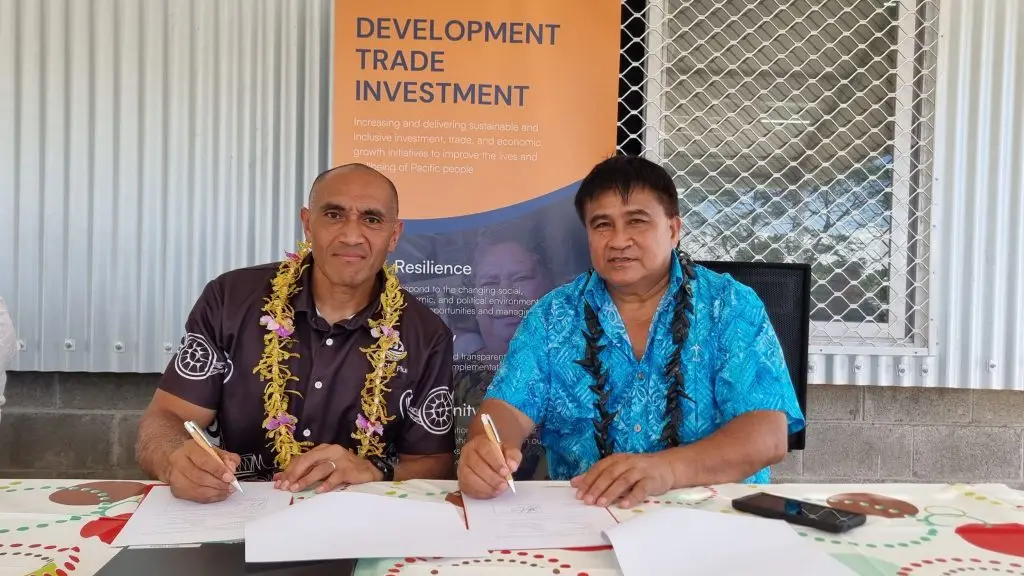
NUKU’ALOFA, Tonga – Tonga’s ability to protect its people, environment, and trade is set to strengthen with the official handover of vital biosecurity and quarantine equipment funded by the PACER Plus trade agreement’s Development and Economic Cooperation (DEC) Work Program. The new tools — valued at AU$185,350 or TOP$288,003 — are designed to enhance Tonga’s sanitary and phytosanitary (SPS) systems and include a digitised Quarantine Management Information System with IT infrastructure, a state-of-the-art fumigation chamber, protective gear, inspection tools, and an incinerator to safely manage imports and exports. Tonga’s Minister for Agriculture, Food and Forests, Hon. Siosiua Moala Halavatau (left) and the Head of the PACER Plus Implementation Unit, Mr. Roy Lagolago signs the Contribution Agreement during the official handover in Nuku’alofa, Tonga. This equipment will help Tonga meet international SPS standards, ensuring continued and expanded access to key export markets such as Australia and New Zealand. Minister for Agriculture, Food and Forests, Hon. Siosiua Moala Halavatau, welcomed the handover, describing it as a step forward for Tonga’s agricultural and trade sectors. “This is not just a handover of tools. It’s a handover of confidence for our farmers, for our exporters, and for our consumers. Tonga is committed to meeting the highest international standards for food safety and plant and animal health. With this support from PACER Plus, we are better equipped to ensure the quality and safety of our exports, protect our environment, and grow our economy.” Hon. Siosiua Moala Halavatau, Minister for Agriculture, Food and Forests Head of the PACER Plus Implementation Unit (PPIU), Mr. Roy Lagolago, praised the collaborative nature of the initiative. “The PPIU is proud to partner with PHAMA Plus in delivering the fumigation chamber, an important piece of infrastructure that will directly benefit Tongan exporters. This partnership recognises the work that PHAMA Plus is already doing in Tonga and also avoids duplication of efforts and resources. The PHAMA Plus work in facilitating market access for Pacific produce to Australia and New Zealand is important and is a conduit for increased trade under PACER Plus,” said Mr. Lagolago. Tonga’s Minister for Agriculture, Food and Forests, Hon. Siosiua Moala Halavatau (left) with the Head of the PACER Plus Implementation Unit, Mr. Roy Lagolago at the official handover in Nuku’alofa, Tonga. Tongan exporters, many of whom face strict market access requirements, say the equipment couldn’t come at a better time. “Our work involves exporting watermelon to New Zealand. Previously, we faced significant challenges with fumigation, often having to collaborate with another exporter for this process. This new equipment is a considerable asset because its large fumigation chamber will greatly expedite the fumigation process, making our work much more efficient.” Ms. Seini Tu’ivai, Senior Assistant Secretary for the Exporter Division at Tonga’s Ministry of Trade and Economic Development The handover forms part of PACER Plus’s mission to build sustainable capacity across the region, ensuring Pacific Island countries are not only connected to markets but also equipped to meet the standards and seize the opportunities that come with it. -ENDS- More articles like this one
PACER Plus Joint Committee Charts Strategic Path Forward for Pacific Trade and Development

HONIARA, Solomon Islands – The Eighth Meeting of the PACER Plus Joint Committee concluded on Tuesday 6 May 2025 in Honiara, Solomon Islands, bringing together senior government officials from Australia, Cook Islands, Kiribati, New Zealand, Niue, Samoa, Solomon Islands, Tonga, Tuvalu, and Vanuatu. Chaired by Ambassador Collin Beck, Permanent Secretary of the Solomon Islands Ministry of Foreign Affairs and External Trade, the two-day meeting provided a crucial platform for Parties to review progress, reimagine the future of PACER Plus, and strengthen regional economic integration. Senior government officials from the ten PACER Plus Parties gathered in Honiara, Solomon Islands for the Eighth PACER Plus Joint Committee Meeting. Ambassador Beck underscored the significance of PACER Plus in navigating today’s uncertain global trade environment. “PACER Plus was envisioned as a pathway toward deepening economic integration across the Blue Pacific Continent by creating a predictable, rules-based trade environment and unlocking targeted development assistance through the PACER Plus Development and Economic Cooperation (DEC) Work Programme. This meeting was an opportunity to reflect on the past, reimagine the Agreement’s next phase, and ensure it delivers meaningful impact for our people.” Ambassador Collin Beck, Permanent Secretary of the Solomon Islands Ministry of Foreign Affairs and External Trade The DEC Work Programme, funded by Australia and New Zealand, is a cornerstone of PACER Plus implementation, designed to support Pacific Island countries in building trade capacity, strengthening industries, and overcoming barriers to economic growth. It provides targeted assistance in areas such as export development, trade facilitation, and skills training, ensuring that Pacific Parties can fully benefit from regional and global trade opportunities. Ms. Natalia Patternot, Director, Department of External Trade with the Ministry of Foreign Affairs and External Trade in Solomon Islands speaks at the PACER Plus Joint Committee Meeting. The meeting approved high-level strategic priorities for the next DEC Work Programme cycle (2025-2030) commencing the work towards confirming arrangements required for continuation of the DEC Work Programme beyond 2025. Discussions emphasised the need for a sharper focus on export development, value chain strengthening, reducing shipping and logistics costs, and targeted skills development. The meeting also highlighted the importance of private sector engagement, digital trade as a key economic driver, and the alignment of strategic priorities with measurable 2030 targets under the Monitoring, Evaluation, Learning and Adaptation (MELA) Framework. Parties reaffirmed PACER Plus as a vital mechanism for regional economic integration, in line with the 2050 Strategy for the Blue Pacific Continent. Expanding membership remains a key priority, with commitments to advocate for new members to join the Agreement. Mr. Alan Armistead, Director of International and Trade Affairs Division with the Ministry of Foreign Affairs and Immigration Cook Islands speaks at the PACER Plus Joint Committee Meeting. Australia and New Zealand provided updates on the current internal governance reviews required to confirm resourcing for the next DEC Work Programme (2025-2030). Ambassador Beck expressed gratitude on behalf of all Parties: “We deeply appreciate the ongoing commitment of Australia and New Zealand to PACER Plus, both through their current funding and their expressed support for the next phase. Their partnership is instrumental in ensuring Pacific nations can harness trade for sustainable development.” The Joint Committee reaffirmed Parties’ commitment to the rules-based multilateral trading system, with the World Trade Organisation at its core. A joint statement was adopted as follows: “We affirm our commitment to a transparent, non-discriminatory, and open rules-based multilateral trading system which provides certainty and predictability for businesses, builds trust and confidence among consumers, and underpins the growth of international trade and development. In the face of mounting challenges, including disruptions in global supply chains, rising protectionism and climate change, our collective commitment to these principles and the maintenance of trade openness is more crucial than ever,” the statement read. Parties also pledged to uphold a special and differential treatment for Small Island Developing States, ensuring tailored support to safeguard food security, livelihoods, and effective participation in global trade. The outcomes of this meeting will guide the next phase of PACER Plus, ensuring it remains responsive to the needs of the Pacific and delivers tangible benefits for the region. To read the full Eighth PACER Plus Joint Committee Outcome Summary, please click here. -ENDS- More articles like this one
The Woman Behind Vanuatu’s First Certified Kava Export
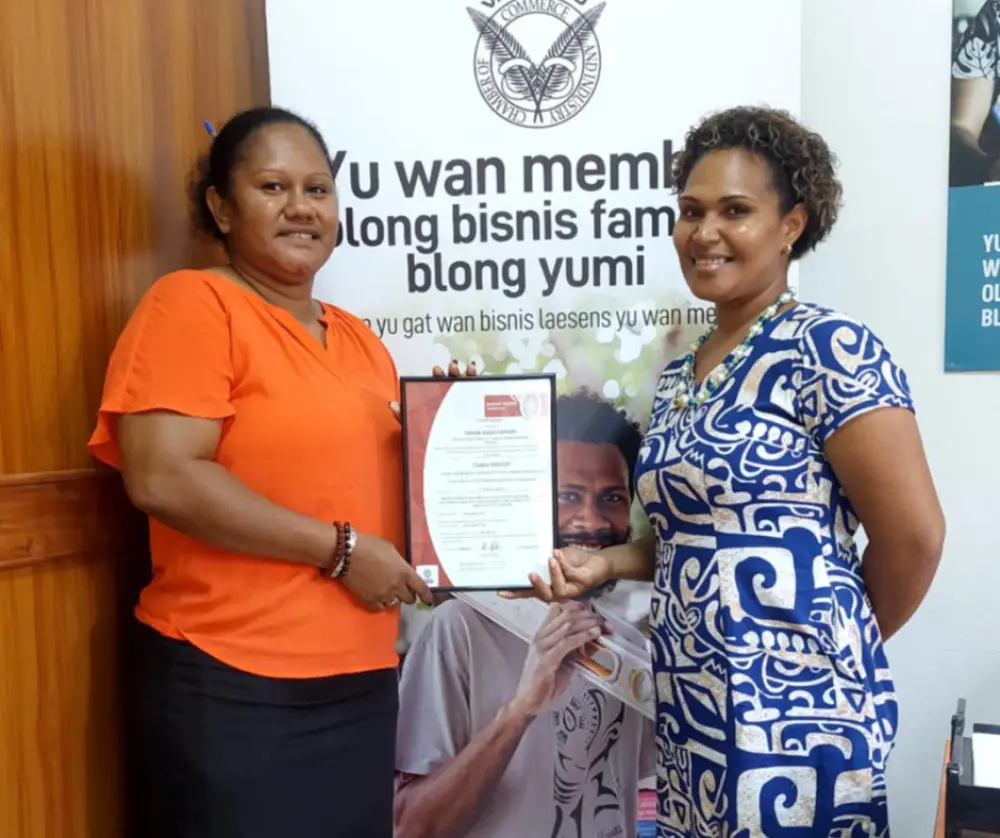
PORT VILA, Vanuatu – In the highlands of Espiritu Santo, Vanuatu’s largest island, where kava farming has long been a man’s world, Sergine Tahun is rewriting the rules. The determined entrepreneur behind Tahun Kava Exports Limited has not only carved out a space for herself in a competitive industry but has also become the first woman-owned kava exporter in Santo to achieve the internationally recognised HACCP certification – a milestone that promises to open doors to global markets. For Sergine, the journey began with a simple frustration. “I used to source kava directly from farmers to resell locally, but I found myself constantly waiting for customers to pay,” she recalls. “I knew there had to be a better way.” That realisation led her to explore exporting – a path that required navigating complex regulations, building relationships with overseas buyers, and elevating her business to meet international standards. From Local Trade to Global Ambitions Determined to succeed, Sergine sought guidance from biosecurity officials to understand export requirements – everything from proper cleaning techniques to packaging standards. She also connected with families in New Caledonia who run nakamals (traditional kava bars), planting the seeds for future trade. “I wanted them to know my kava was different – premium quality, handled with care,” she says. Tahun Kava Exports Limited owner, Ms. Sergine Tahun (left), receives her HACCP Certificate from VCCI SANMA Provincial Officer, Ms. Candyce Simeon. But breaking into the industry wasn’t easy. “When I started, the market was tough. There was lots of competitors, few opportunities,” she admits. Yet, through persistence, Sergine refined her products, expanded her network, and gradually built trust with farmers in remote areas, where weather and logistics often disrupted supply chains. Her secret weapon? A dedicated farm manager, Govany Maleb, who bridges the gap between her and the predominantly male farming community. “He reassures them that even though a woman owns the business, I know what I’m doing,” Sergine laughs. Maleb doesn’t just collect kava – he supports farmers with nursery management and equipment, fostering loyalty in an industry where relationships are everything. The Balancing Act Running a business in a male-dominated field while raising a family hasn’t been simple. “As a wife and mother, there are days when it feels overwhelming,” Sergine confesses. Yet, her resolve never wavers. “I want to prove that women can thrive in this space – and that collaboration, not competition, is the way forward.” Kava farmers in Espiritu Santo. Running a business in a man-dominated industry comes with it’s challenges, says Sergine. “Even though a woman owns the business, I like to reassure the farmers that I know what I’m doing,” she laughs. Her perseverance paid off when PACER Plus, through the Vanuatu Chamber of Commerce and Industry (VCCI), supported her in securing Hazard Analysis and Critical Control Points (HACCP) certification – a game-changer for her business.. “This certification means everything,” Sergine says. “Before, buyers didn’t know us. Now, the enquiries are pouring in.” Since November 2024, she’s sent samples to international buyers, with eight shipments already dispatched between December 2024 and February 2025. Mr. Alipate Tavo, Trade Adviser with the PACER Plus Implementation Unit (PPIU), emphasises the significance of Tahun Kava’s achievement. “Sergine’s success isn’t just about one business – it’s a testament to what Pacific women can accomplish with the right support. Her certification lifts the entire sector, showing that Vanuatu’s kava can compete globally.” A Message to Pacific Women: “Dream Boldly” Sergine’s advice to other women is simple but powerful: “Don’t let social or cultural limits stop you. If you want something, go for it. Yes, it’s hard, but if I can do it, so can you.” With her eyes set on expanding into new markets and diversifying her product range, Tahun Kava Exports is proof that tradition and innovation can blend as smoothly as the drink she sells. And for the farmers of Espiritu Santo, that’s something worth raising a shell to. -ENDS- More articles like this one
Bottling the Fragrance of Samoa
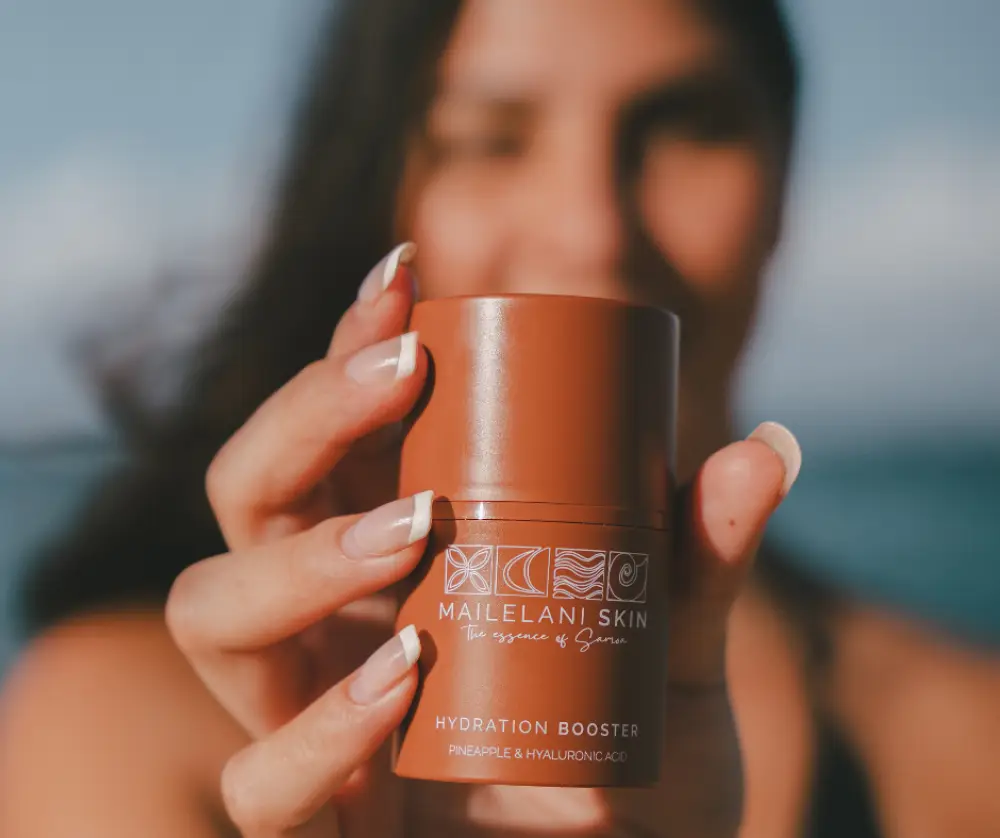
How Mailelani is Turning Coconuts into Global Success The sweet scent of moso’oi (ylang-ylang) and rich cocoa butter hangs in the air as Sylvie Salanoa carefully inspects a fresh batch of coconut oil soap at her Mailelani Samoa Body Care gift shop outside Apia, Samoa. It’s a far cry from the humble beginnings 25 years ago when she and her husband Kitiona first dreamed of creating soap from Samoan coconuts in their family kitchen. “We started with one simple question,” Sylvie recalls, her hands holding a bar of their signature frangipani-scented soap. “How can we share the true essence of Samoa with the world?” Today, that question has blossomed into a thriving business with eight varieties of artisan soaps, luxurious body oils, exfoliating scrubs, and their newest triumph — a premium facial care line launched in early 2024 with support from the PACER Plus Agreement. From Kitchen Experiments to International Shelves The journey wasn’t without its challenges. “Oh, we wanted to give up many times!” Sylvie laughs. Early batches didn’t set properly. Supply chains were unpredictable. Export regulations seemed impossible to navigate. But through perseverance and community support, what began as a cottage industry now supplies retailers across Samoa, Australia, New Zealand and beyond. Each product tells a distinctly Samoan story. The cocoa range pays homage to the islands’ national drink. The delicate frangipani line celebrates the flower Samoan women traditionally wear behind their ears. The moso’oi captures the islands’ signature fragrance. “What makes Mailelani special is that we’re not just making products — we’re preserving culture,” Sylvie explains. “When someone uses our cocoa body butter, we want them to feel connected to Samoa’s rich traditions.” Rooted in Community, Growing Through Trade The business model is as sustainable as their ingredients. Mailelani sources raw materials from rural villages across Samoa, creating economic opportunities while maintaining authentic island recipes. This community-focused approach caught the attention of the PACER Plus Implementation Unit (PPIU). “Mailelani represents exactly what PACER Plus was designed to support. By assisting with their packaging clearance costs, we’re helping a homegrown business scale up while maintaining its cultural integrity. Their success shows how regional trade agreements can empower Pacific entrepreneurs to compete globally without compromising local values.” Alipate Tavo, PPIU Trade Adviser For Sylvie, the PACER Plus support came at the perfect moment. “That new facial line was our dream for years, but the import costs for proper packaging seemed impossible. When PACER Plus stepped in, it was confirmation from God telling us to ‘keep going’.” The Sweet Smell of Success While setting up her products, Sylvie reflects on the unexpected rewards of their quarter-century journey. “The creativity we’ve discovered, the people we’ve met, the places our little soaps have traveled — it’s more than we ever imagined.” She gently places a newly wrapped moso’oi soap into a gift box, ready for its journey to a boutique in Auckland. “Every time someone opens one of our products, they’re experiencing a piece of Samoa. That makes every challenge worthwhile.” With their expanded product line and growing international presence, Mailelani Samoa Body Care continues to prove that traditional wisdom and modern entrepreneurship can create something truly beautiful. Or as Sylvie puts it: “We’re not just selling soap — we’re sharing alofa (love) from our islands to the world.” Mailelani Samoa Body Care products are available at select retailers in Samoa and online by clicking here. Did You Know? Mailelani means “from heaven” in Samoan. All products are made with sustainably sourced local ingredients. The business supports dozens of rural Samoan families through its supply chain. -ENDS- More articles like this one
Vanuatu’s Cacao Revolution
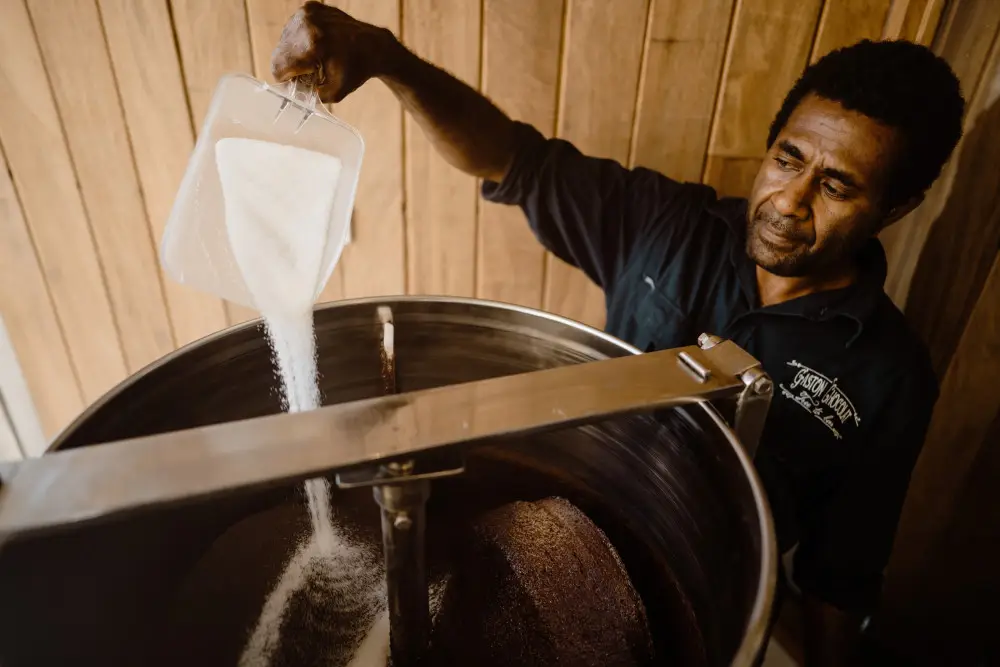
What started as a passion project to highlight Vanuatu’s rich cacao heritage has transformed into a thriving business for Gaston Chocolat exporting award-winning chocolate to Australia and New Zealand. But behind the success of Gaston Chocolat is a story of hard work, dedication, and the support provided by PACER Plus. Founded by Olivier Gaston, Gaston Chocolat was born from a simple idea: to produce world-class chocolate locally in Vanuatu while showcasing the country as a premium origin for fine cacao. But turning that vision into reality came with its challenges, especially when it came to meeting international food safety standards—a necessary step to export to larger markets. That’s where PACER Plus stepped in. In 2023, Gaston Chocolat exported 17 tonnes of dried cacao. This year, they’re on track to export 60 tonnes—almost a fourfold increase. In collaboration with the Vanuatu Chamber of Commerce and Industry and the Australia Vanuatu Governance for Growth program, PACER Plus engaged local consulting firm Quality Solutions to help Gaston Chocolat develop food safety systems. The goal was to achieve Hazard Analysis and Critical Control Point (HACCP) certification—a globally recognised standard that would open the doors to international trade. For Olivier Gaston and his team, the certification was a game-changer. “The HACCP certification shows that our operation is up to international standards,” says Mr. Gaston. “This way, people can trust the product. Because our chocolate can now travel to Australia and New Zealand, we can sell the cacao on a much larger scale to chocolate makers.” And the results speak for themselves. In 2023, Gaston Chocolat exported 17 tonnes of dried cacao. This year, they’re on track to export 60 tonnes—almost a fourfold increase. “That’s almost fifteen percent of the national market, and we’re quite proud of that achievement,” Mr. Gaston adds. But Gaston Chocolat’s impact goes beyond just business success. The company has built a network of 367 Ni-Vanuatu farmers, training them over the last decade to grow and harvest high-quality cacao. In 2024 alone, the farmers have been harvesting for a total of 57 days. And the rewards have been significant. Gaston Chocolat has built a network of 367 Ni-Vanuatu farmers, training them over the last decade to grow and harvest high-quality cacao. “Our farmers now earn the equivalent of twice the minimum wage by working just one day a week,” says Mr. Gaston. “Because we create jobs in the islands that pay more than the jobs in Vanuatu’s capital, Port Vila, we are fighting the urban drift. We’ve proven that rural jobs can pay better than city jobs.” Gaston is driven by more than just profits. “We are always conscious about looking after our staff well, respecting the culture, and considering our environmental impact,” he explains. “I want to run Gaston Chocolat sustainably, and I want everyone in the supply chain to benefit from the business and improve their standard of living.” More articles like this one
From Cacao Beans to Fruity Bars

Cathliro Commodities, a women-led, locally owned cocoa producer and exporter in Solomon Islands, has taken a significant step forward in its operations with the recent handover of a food dehydrator machine. The equipment, officially delivered in September 2024 and funded by the PACER Plus Development and Economic Cooperation (DEC) Work Programme, is set to enhance the company’s ability to produce value-added cocoa products and diversify into dried fruits. This support marks a turning point for the small business, which has become a beacon of hope for local farmers and a rising player in the international cocoa market. Diana Yates (far left), Cathliro Commodities founder, with Collin Beck (second from left), Permanent Secretary of Solomon Islands’ Ministry of Foreign Affairs and External Trade at the dehydrator handover along with Natalia Patternot (third from left), Director of Department of External Trade and Tristein Zutu, PACER Plus National Coordinator Solomon Islands. Cathliro Commodities was founded by Ms. Diana Yates, a determined entrepreneur with a vision to elevate Solomon Islands’ cocoa industry. Her 99-hectare cocoa farm, based in Guadalcanal, has been instrumental in connecting local farmers from nearby provinces, including Isabel and Makira, to international markets. The company purchases cocoa beans from over 200 local growers, transforming these raw materials into high-quality cocoa products for export. But the company’s ambition doesn’t stop there—Cathliro is diversifying its product line to include dried fruits like pineapple, banana, and pawpaw, a move that the new dehydrator will help realise. Speaking at the handover ceremony, Permanent Secretary of the Ministry of Foreign Affairs and External Trade (MFAET), Mr. Collin Beck, emphasised the significance of empowering local producers like Cathliro Commodities. The PACER Plus-funded food dehydrator machine is set to enhance Cathliro’s ability to produce value-added cocoa products and diversify into dried fruits. “Cathliro’s progress demonstrates the potential of Solomon Islands’ agricultural sector, not only to enhance food security but also to build wealth from within. By empowering local farmers, Cathliro is helping them integrate meaningfully into the formal economy,” said Mr. Beck. “We encourage everyone to support local producers—whether by drinking cocoa tea, using cocoa powder in your baking, or purchasing our new fruit-infused cocoa bars.” The new dehydrator, Mr. Beck explained, will enable Cathliro to sustain and expand its production of high-value cocoa products, providing a boost to both domestic markets and international exports. The equipment is also expected to enhance the company’s capacity to process fruits, tapping into a growing niche market for dried tropical fruits and cocoa-based products in boutique overseas markets. For Ms. Diana Yates, the founder of Cathliro Commodities, the new equipment is a game-changer. “This support from PACER Plus is a big win for us. We’ve been working tirelessly to grow our business and help local farmers, but this dehydrator opens up a new world of opportunities,” she said. “Now, we can diversify our products and ensure sustainability in our operations, whatever the weather. We’re able to expand our drying techniques and process a larger volume of both cocoa and fruit, which is crucial for entering new markets.” The dehydrator will enable Cathliro to boost the production of cocoa paste, cocoa nibs, cocoa powder, cocoa tea, fruity chocolate bars, and a range of dried fruit products. These innovations are part of the company’s broader effort to move from raw material exports to high-value, finished goods that meet international standards. PACER Plus’s support extended beyond equipment, including valuable capacity-building initiatives for Cathliro’s staff. Ms. Yates shared that staff members received both online and hands-on training, some of which took place in Australia. The Cathliro team after the completion of the PACER Plus-funded five-day chocolate training program with South Pacific Cacao trainer (center). “Our team has grown so much thanks to the training provided by PACER Plus. It’s been transformative,” she said. “The capacity-building workshops helped our staff develop new products like our fruity cocoa bars, and we’re even working on launching nutty bars soon. This progress wouldn’t have been possible without PACER Plus’s support.” Looking ahead, Cathliro is set to improve the quality of its offerings and scale its operations to meet international export requirements. With the help of PACER Plus, Cathliro Commodities is not only elevating Solomon Islands’ cocoa industry but also providing a blueprint for local businesses to grow, innovate, and thrive in regional and global markets. More articles like this one