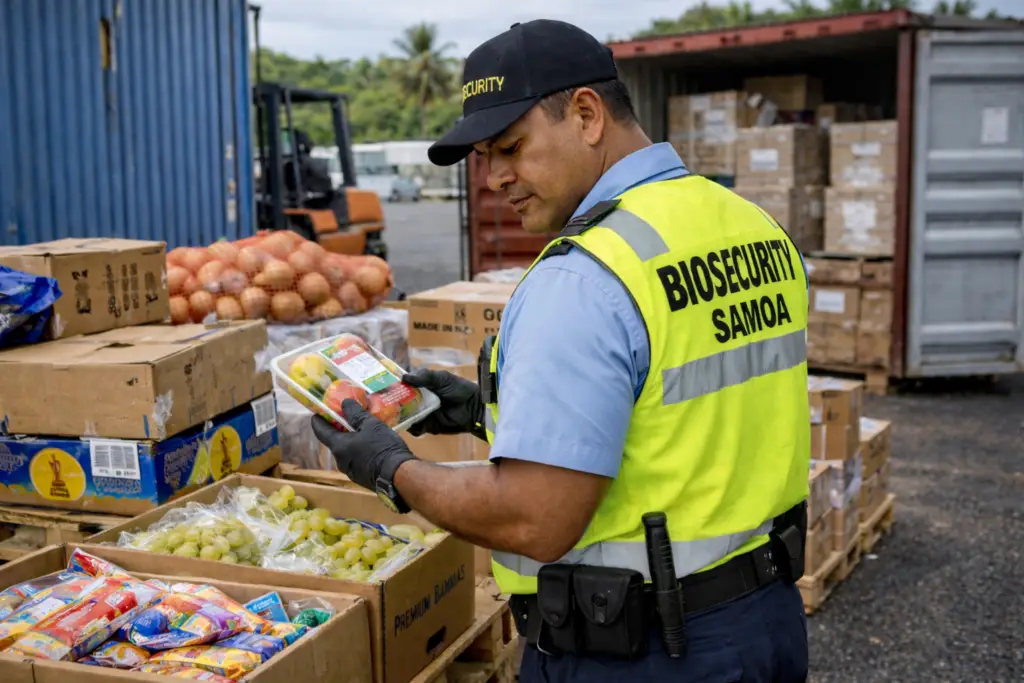
Every day, ships and aircraft bring goods into Samoa from around the world. These shipments carry everything from food and agricultural products to machinery, construction materials, and consumer goods. While trade is essential for Samoa’s economy, it also brings risks. Invasive pests, plant diseases, and animal health threats can arrive at the country’s borders hidden within cargo, posing serious dangers to agriculture, ecosystems, and public health.
For Samoa’s Biosecurity Division within the Ministry of Agriculture and Fisheries, managing these risks is part of a complex daily operation. Officers inspect cargo, issue import permits, process quarantine certificates, and monitor compliance with international biosecurity standards. Behind these activities sits an important digital tool that has quietly supported this work for nearly two decades: the Samoa Quarantine Information Database, better known as the SQUID system.
Today, with support from PACER Plus, Samoa is taking an important step toward modernising this system to ensure it continues protecting the country’s borders while facilitating safe and efficient trade.
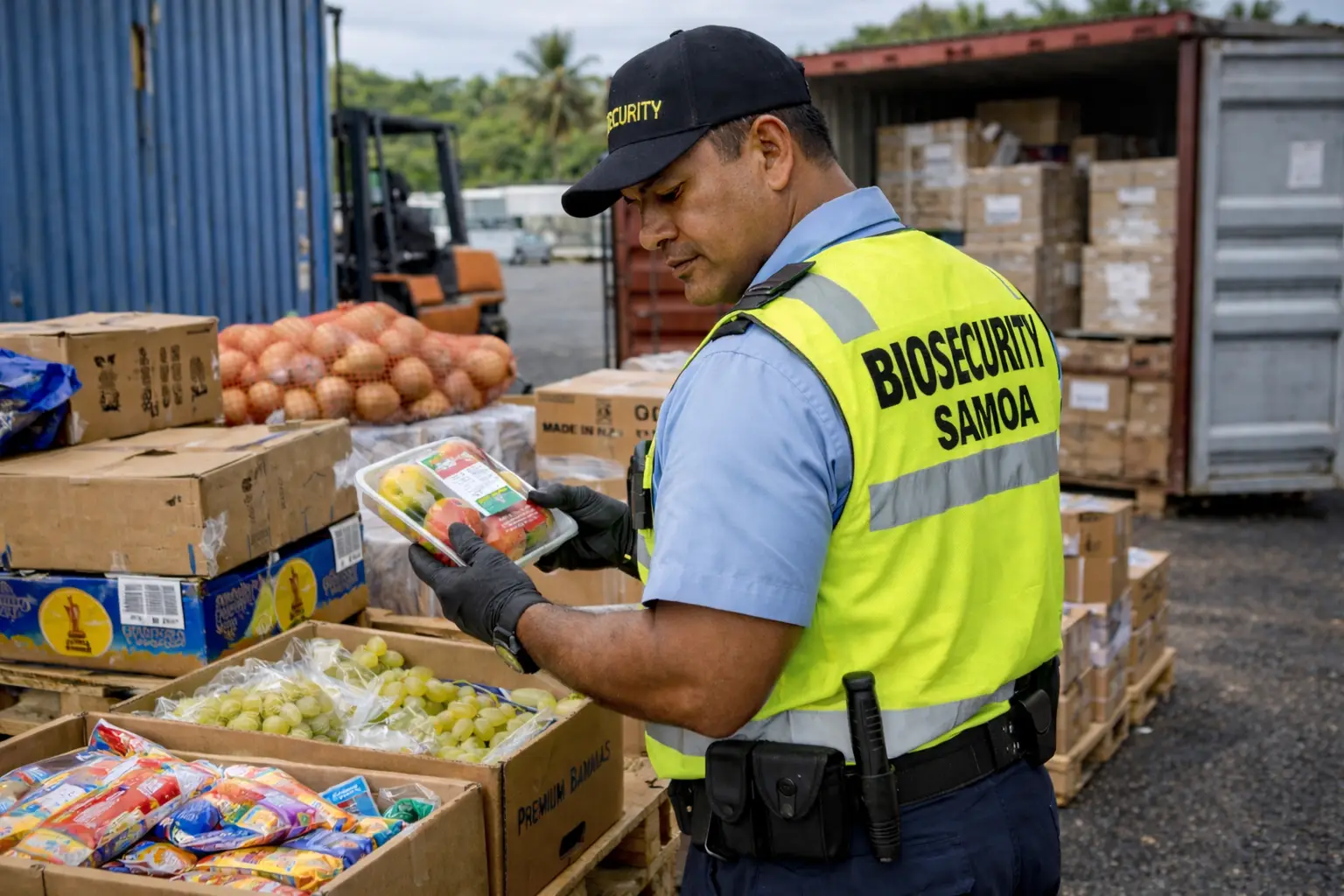
Inspections help prevent invasive pests and diseases from entering Samoa.
The SQUID system was introduced in 2006 to help biosecurity officers manage quarantine processes and maintain records for imports, inspections, and certification. The system plays a crucial role in Samoa’s border management and supports the country’s obligations under international trade standards, including the World Trade Organisation’s Sanitary and Phytosanitary (SPS) Agreement.
Through SQUID, officers record information about cargo arrivals, issue permits and certificates, and track inspections of goods entering Samoa. These processes help ensure that imported products comply with national regulations designed to prevent harmful pests and diseases from entering the country.
Over the years, the system has become the technological backbone of Samoa’s biosecurity operations. However, like many long-standing systems, it has begun to show its age.
Built using Microsoft Access 2007, the platform relies on software that is no longer supported by modern operating systems. This creates challenges for security, compatibility, and performance. The system also operates primarily from a single location, meaning biosecurity officers working at remote ports of entry often need to rely on manual processes before data can be entered into the central system.
"The SQUID platform is a critical part of Samoa's biosecurity system, helping ensure that goods entering the country meet quarantine standards and protect Samoa’s agriculture and environment."
These limitations not only slow down daily workflows but also highlight the need for a modern digital solution that can keep pace with Samoa’s evolving biosecurity requirements.
Recognising the importance of strong biosecurity systems for safe trade, the PACER Plus Implementation Unit supported a comprehensive review of the SQUID platform.
The review examined the system’s architecture, security, infrastructure, and operational workflows. It also assessed how the system could be modernised to better meet the needs of biosecurity officers and improve the efficiency of border processes.
The findings confirmed that while the existing system continues to function, it requires significant upgrades to address cybersecurity vulnerabilities, outdated technologies, and operational inefficiencies.
The review therefore recommended developing a modern web-based platform supported by secure cloud infrastructure. Such a system would allow biosecurity officers to access the platform from multiple devices and locations, while strengthening security and improving overall performance.
Importantly, the new system would connect key biosecurity locations across Samoa, including Matautu Wharf, Faleolo International Airport, and Fagalii Airport, allowing officers to enter and access data in real time.
Beyond improving system security, the new platform is expected to deliver tangible operational benefits.
Currently, processing an import permit takes an average of around eleven minutes, while issuing a certificate requires approximately seven minutes. With a modernised digital system, these processes are expected to become significantly faster, reducing permit processing times to around eight minutes and certificate processing times to approximately four minutes.
While these time savings may appear small on an individual transaction, they add up across hundreds of monthly processes. Overall, the improved system is projected to save more than 1,150 hours of staff time each year, allowing biosecurity officers to focus more on inspection and compliance activities that protect Samoa’s borders.
The upgraded platform will also strengthen cybersecurity protections, introduce modern password and data security policies, and enable more reliable backup and recovery systems.
Strong biosecurity systems play a vital role in protecting Samoa’s economy and environment.
Agriculture remains an important part of Samoa’s livelihood and food security. At the same time, the country’s pristine natural environment and marine ecosystems underpin its tourism industry. Preventing the introduction of invasive pests and diseases is therefore critical to safeguarding these national assets.
By improving the digital systems that support quarantine and inspection processes, PACER Plus is helping Samoa strengthen its capacity to manage these risks while ensuring trade continues to flow efficiently.
The modernisation of the SQUID system represents more than just a technology upgrade. It reflects a broader commitment to building stronger trade systems and modern regulatory infrastructure in the Pacific.
With a secure and connected digital platform, Samoa’s biosecurity officers will be better equipped to monitor goods entering the country, respond to emerging threats, and meet international trade obligations.
As trade continues to expand across the region, investments in systems like SQUID help ensure that Pacific economies can grow while protecting their unique environments and communities.
Through targeted technical support such as this system review, PACER Plus continues to support Pacific Island countries in strengthening the institutions and infrastructure that underpin safe and sustainable trade.
-ENDS-