
Pacific Labour Mobility Annual Meeting 2025 to Convene in Honiara

HONIARA, Solomon Islands – Labour mobility stakeholders from across the Pacific and beyond will gather in Honiara from 3-6 November 2025 for the Pacific Labour Mobility Annual Meeting (PLMAM) 2025, hosted under the theme “Sustainable Reintegration Begins with Fair and Effective Recruitment”. The meeting, organised by the PACER Plus Implementation Unit (PPIU), which also serves as the Labour Mobility Secretariat, brings together participants from PACER Plus Parties including Australia, Cook Islands, Kiribati, New Zealand, Niue, Samoa, Solomon Islands, Tonga, Tuvalu, and Vanuatu, as well as invited representatives from Fiji, Papua New Guinea, and Timor Leste as observers. Other labour mobility stakeholders will also be represented including workers, employers, trade unions, private sector, academia, international and regional organisations. The PLMAM 2025 theme is “Sustainable Reintegration Begins with Fair and Effective Recruitment”. The four-day meeting will provide a platform for open and practical discussions among labour mobility stakeholders including workers, employers, labour sending and labour receiving government officials, international organisations such as the International Labour Organisation, International Organisation for Migration, and the World Bank, and a guest speaker from the Philippines Department of Migrant Workers. The key topics discussed will focus on worker recruitment and sustainable reintegration. Solomon Islands Minister of Foreign Affairs and External Trade, Peter Shanel Agovaka said his government is honoured to host the regional meeting. The Pacific’s labour mobility schemes have brought life-changing opportunities to thousands of our people. But as the numbers grow, so does our shared responsibility to ensure recruitment is fair, ethical, and transparent. Hosting the PLMAM 2025 is a privilege for Solomon Islands and a chance for us all to ensure that the benefits of these programmes are felt not only by workers abroad but also by families, communities and countries. Hon. Peter Shanel Agovaka Head of the PACER Plus Implementation Unit and Labour Mobility Secretariat, Mr. Roy Lagolago, said this year’s theme reflects a growing regional focus on ensuring that the worker journey is fair from start to finish. “Sustainable reintegration starts long before workers board a plane. It begins with how they are recruited, trained, and supported,” Mr. Lagolago said. “The PLMAM provides an important space for sending and receiving countries to work together, share lessons, and make practical commitments to fair recruitment and better outcomes for our workers and their families.” Established under the PACER Plus Arrangement on Labour Mobility, the PLMAM is the region’s main platform for cooperation on labour mobility issues, strengthening dialogue and partnership between governments, private sector employers, and worker representatives across the Pacific. -ENDS- More articles like this one
PACER Plus partners with SPTO to promote sustainable tourism in the region

VAVA’U, Tonga – The PACER Plus Implementation Unit (PPIU) provided funding support and took part in the Pacific Tourism Organisation (SPTO) meetings held in Vava’u, Kingdom of Tonga, from 20 to 22 October 2025. The three-day gathering included the SPTO Board of Directors Meeting, the Council of Tourism Ministers Meeting, and the Pacific Sustainable Tourism Leadership Summit 2025. The Princess Royal, Her Royal Highness Princess Salote Mafile’o Pilolevu Tuita, Patron of Tourism Tonga, delivers her opening address. (Photo: SPTO) The meetings brought together Pacific tourism ministers, national tourism directors, private sector representatives, and youth delegates to discuss how the region can build a tourism industry that is sustainable, inclusive, and resilient. As the Pacific’s only trade agreement that covers trade in services, PACER Plus played a vital role in highlighting the importance of trade in services, investment, and labour mobility — all critical enablers of a thriving and sustainable tourism sector. “Trade in services is the backbone of the global economy, accounting for over 60 percent of global GDP, and it’s growing faster than trade in goods. In the Pacific, tourism has become an engine of growth. But to stay strong, it needs to be sustainable, inclusive, and resilient. Creating the right policy environment is key, and this is where PACER Plus can make a real difference.” Dr. Alisi Kautoke Holani, Labour Mobility Specialist and Trade in Services and Investment Lead at the PPIU Dr. Alisi Holani (far right) of the PPIU with Pacific tourism stakeholders at the SPTO meetings in Vava’u, Tonga. (Photo: SPTO) SPTO Chief Executive Officer Mr Christopher Cocker shared this view, thanking PACER Plus for their support and saying that tourism must continue to deliver more than economic benefits. “For tourism to fulfil its full potential across our Blue Pacific Continent, it must not only generate economic value but also reinforce our cultures, empower our youth, and protect our natural environment,” he said. “The policy landscape must support this — enabling connectivity, investment, community-led enterprises, and digital access. Together with partners like PACER Plus, we can ensure that tourism remains an engine of inclusive growth, resilience, and regional identity.” Through its participation, PACER Plus strengthened collaboration with SPTO, Pacific governments, and other development partners to enhance the enabling environment for trade in services and investment. The partnership also supports efforts to improve policy coherence and promote sustainable and digital transformation initiatives across the region. This engagement will contribute to the implementation of the Pacific 2030 Sustainable Tourism Policy Framework and advance shared regional goals under PACER Plus, helping to build stronger, more connected, and more resilient Pacific economies through sustainable tourism and inclusive trade. -ENDS- More articles like this one
Fair Beginnings, Strong Returns

Rethinking Reintegration in Pacific Labour Mobility The theme of this year’s Pacific Labour Mobility Annual Meeting (PLMAM), “Sustainable Reintegration Begins with Fair and Effective Recruitment”, raises an important question: what does reintegration really mean in the context of Pacific labour mobility? For seasonal workers in New Zealand’s Recognised Seasonal Employer (RSE) scheme, time away is usually six months, after which they must return home for at least five months before being eligible to recruit for the RSE again. Unlike the nine-month PALM visas in Australia, there is no pathway to a longer-term stay from the RSE visa. On the face of it, reintegration after six months is not likely to be a major issue for recruits who work for one or two seasons. Only 40 percent of the 56,500 recruits for the RSE since 2007 have returned for three or more seasons. The picture changes when absences accumulate year after year. For workers who leave, say, Samoa for six months annually, repeating this cycle for four or more years, the rhythm of absence and return inevitably creates family and community challenges. Adjusting to life at home after repeated long absences is not always seamless. Social stresses, family expectations, and even rumours about workers’ behaviour abroad can complicate the return. This is why the theme of this year’s meeting is so timely. Reintegration is not just about coming home once — it’s about managing the long-term impacts of seasonal as well as long-term cyclical migration. Fair and effective recruitment lies at the heart of sustainable reintegration, writes the author. Shifts in Labour Mobility The broader labour mobility landscape in the Pacific has been transformed dramatically over the past decade, particularly in Australia. Until the introduction of the Seasonal Worker Programme, the forerunner to today’s Pacific Australia Labour Mobility (PALM) scheme, Pacific people had no dedicated migration channel into Australia’s workforce. The PALM scheme, particularly its long-term stream, marks a significant policy shift. For the first time in over a century, Australia opened long-term, low-skilled and semi-skilled labour pathways for Pacific people. This is a profound change, one that mirrors New Zealand’s longer history of engagement. Australia has invested heavily in staffing, administration, and support to make the scheme work both onshore and in labour sending countries. Meanwhile, New Zealand’s RSE scheme continues to provide opportunities, though demand there has plateaued. In recent years, the cap on RSE numbers has not been reached. Rising costs for employers, from compliance and accommodation to pastoral care, have curbed demand. In Samoa, for example, New Zealand approved employers now pay a fee per Samoan worker, and Samoan workers themselves also face new costs. These financial pressures, on both sides, are shaping the trajectory of recruitment. Recruitment, Fairness, and Reintegration Fair and effective recruitment lies at the heart of sustainable reintegration. Labour sending countries often want to distribute opportunities equitably, ensuring that benefits are shared across communities. Yet recruitment often happens through established relationships between employers and experienced workers, who are then asked to recommend new candidates. While this system provides continuity, it risks limiting access for those outside the existing networks. Governments in countries such as Samoa, Tonga, and Vanuatu have sought to centralise recruitment through Labour Sending Units (LSUs). But balancing fairness with employers’ preferences remains a challenge. The critical question is how to ensure that workers participate with a clear plan for their earnings — whether that is education costs, housing, or small business ventures — rather than treating seasonal work as a lifestyle of permanent dependency on cash incomes earned through temporary labour migration overseas. In New Zealand, where workers must always return home, reintegration planning is essential to ensure maximum benefit from short-term circular migration. In Australia, where transitions from short-term to long-term PALM visas are possible, the pressures on families can be even greater, with absences stretching to years. The challenges of reintegration are different in this context. For some families, temporary work overseas has become a primary livelihood strategy, even passed down across generations. While remittances are vital, this kind of dependency risks undermining local livelihoods in the long term. Reintegration is not just about coming home once, writes the author. It’s about managing the long-term impacts of seasonal as well as long-term cyclical migration. The Changing Labour Market Looking ahead, sustainability will depend on recognising shifts in global and regional labour markets. Technological change, particularly automation, is already reshaping demand. In New Zealand, for instance, pack houses that once employed large numbers of women are becoming increasingly automated, reducing the need for seasonal labour. Technology will continue to disrupt traditional roles. Consumer expectations are also evolving. Major international buyers of agricultural products are scrutinising labour conditions more closely. Questions around ethical recruitment, modern slavery, and cost-sharing practices are now influencing whether large companies choose to buy Australian and New Zealand produce. For example, comparisons are being made between the costs borne by temporary migrant workers in New Zealand versus those recruited in the United States, where employers are often required to cover transport fully. These perceptions matter and will affect the long-term viability of Pacific labour mobility schemes. Priorities for Sustainability To keep Pacific labour mobility successful and sustainable, several priorities stand out. First, costs must remain manageable for both approved employers and workers. If participation becomes too expensive, demand will decline, and workers will struggle to send meaningful remittances home. Second, labour sending countries must play a proactive role in promoting fair recruitment and supporting reintegration. This means ensuring access is broad-based and encouraging workers to have long-term financial plans for their earnings. It also means discouraging the pattern where families become wholly reliant on seasonal migration, which may not be viable in the long run. Finally, stakeholders must keep pace with global shifts, from technology to consumer standards. Ethical recruitment, decent working conditions, and transparency will increasingly be non-negotiable in global supply chains. If PALM and RSE schemes can stay ahead of these expectations, they will remain attractive to both approved employers and consumers. Returning
Seventh Annual Vanuatu Made Week Wraps Up in Port Vila
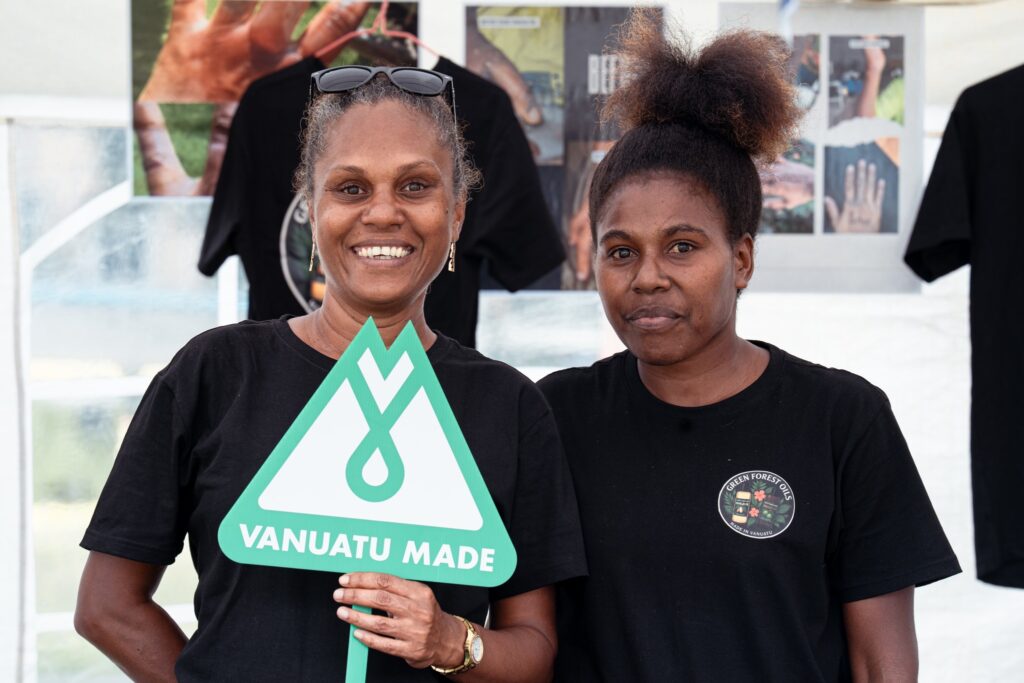
PORT VILA, Vanuatu – The Seventh Vanuatu Made Week concluded today after four days (23-26 September) of showcasing the very best of Vanuatu’s locally made products, crafts, and services. Bringing together micro, small and medium enterprises (MSMEs), producers, and stakeholders from all six provinces, the event has become a flagship platform for promoting the creativity, innovation, and resilience of Vanuatu’s people. The Pacific Agreement on Closer Economic Relations Plus or PACER Plus is a Gold Sponsor of the event. This year the event featured a trade fair, the Vanuatu Made Toktok B2B Forum, a garments and textiles fashion show, All-Vanuatu-Made products cooking demonstrations by the Vanuatu Chef Association, and an awards night. Together, these activities provided an important space for producers to connect directly with domestic consumers and international buyers. Mr. Noel Kalo, Director of the Department of Industry, says that the event is about creating sustainable livelihoods. “Vanuatu Made Week is not just an exhibition, it’s an economic driver. By supporting this event, PACER Plus is helping our MSMEs tap into new markets, strengthen business networks, and reinforce the Vanuatu Made brand at home and abroad. It’s about creating sustainable livelihoods while proudly promoting what is authentically ours.” Mr. Noel Kalo, Director of the Department of Industry For many vendors, the opportunity to showcase their products to a larger audience was invaluable. Ms. Esmie Jimmy, owner of Green Forest Oils, a natural oil producer from Nguna Island, said: “This week I sold what I would normally sell in a month. But more importantly, I’ve connected with new buyers as well.” The PACER Plus Vanuatu National Coordinator, Mr. Michael Ligo, noted that supporting events like Vanuatu Made Week directly aligns with PACER Plus’s mission to strengthen trade and economic opportunities in Vanuatu. By helping local producers gain visibility, build networks, and access information, PACER Plus contributes to sustainable private sector growth while encouraging value addition export readiness. Ms. Esmie Jimmy (left), owner of Green Forest Oils, a natural oil producer from Nguna Island at the event. “Supporting Vanuatu Made Week matters because it’s not only about showcasing products, but it’s also about building confidence, creating opportunities, and ensuring that Vanuatu-made goods find their rightful place in both regional and global markets,” said Mr. Ligo. -ENDS- More articles like this one
Regional Workshop Advances Implementation of Tariff Commitments under PACER Plus
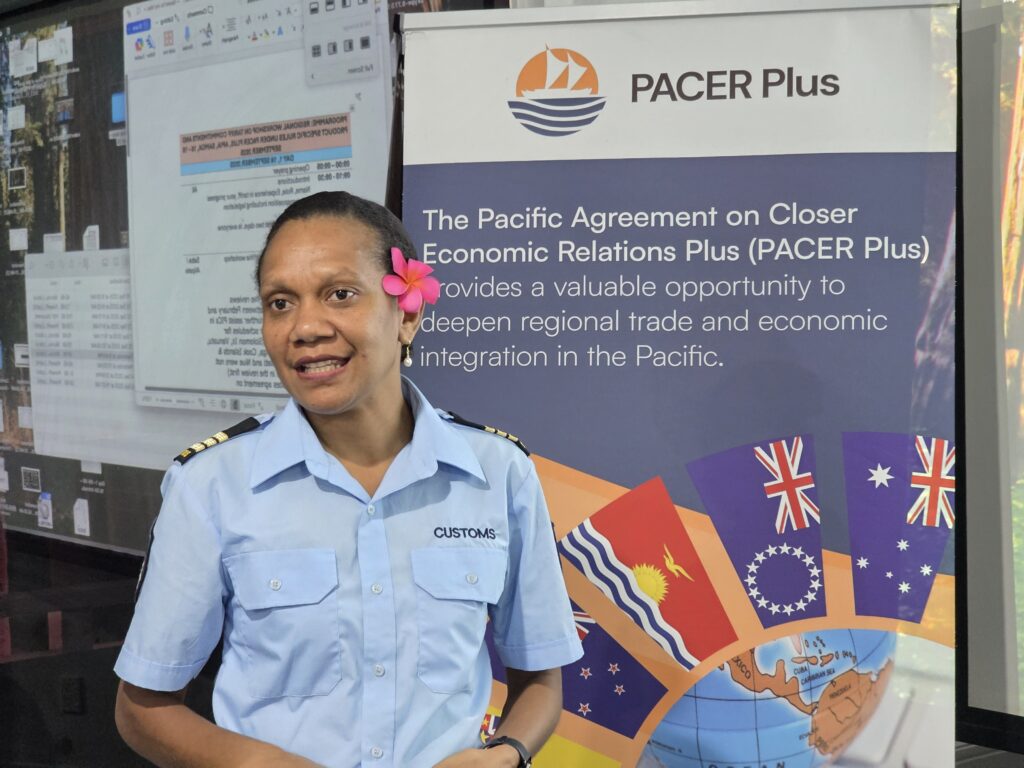
APIA, Samoa – Customs officials from eight Pacific Island countries have concluded a three-day Regional Workshop on Transposition of Tariff Commitments and Product-Specific Rules (PSRs) under the Pacific Agreement on Closer Economic Relations Plus (PACER Plus). The workshop, held in Apia, Samoa, from 16-18 September 2025, brought together officials from the Cook Islands, Kiribati, Niue, Samoa, Solomon Islands, Tonga, Tuvalu, and Vanuatu. The workshop was designed to help countries align their PACER Plus tariff schedules and product-specific rules with the latest version of the Harmonised System (HS), an internationally standardised system of names and numbers used to classify traded products. Periodic updates to the HS ensure that trade rules keep pace with new products and changing technologies. Ms. Sisilia Asel Lui from Vanuatu Customs and Inland Revenue makes a point at the workshop. For Pacific Island member countries of the PACER Plus, updating tariff commitments and PSRs is essential to ensure that goods can move freely and fairly across borders of the PACER Plus Parties. Without these updates, countries risk inconsistencies in how goods are treated, which could create unnecessary trade barriers, confusion for traders, and revenue collection implications. “HS 2022 introduced over 350 sets of amendments to product classifications, and Pacific Island countries need to update their commitments to reflect these changes. This workshop provided a valuable opportunity to work through technical issues together, harmonise approaches, and set realistic timelines for implementation.” Mr. Saba Vallipuram, Tariff and Rules of Origin Expert, who has been assisting PACER Plus countries with this process since early 2025 As of January 2025, countries were at different stages of updating their tariff commitments. Samoa, Tonga, and Vanuatu have made progress with draft HS2022 transposed schedules, while others such as Kiribati and Tuvalu were slightly behind. The Solomon Islands recently finalised its updated tariff schedule. This week’s workshop has helped remaining countries, particularly Kiribati and Tuvalu, to take concrete steps towards completing their schedules. It also equips countries with the knowledge and tools for the next transposition to HS2028. Mrs. Annette Kotela Ibe, Team Leader Technical at the Ministry of Finance’s Customs and Excise Division in Solomon Islands, noted the importance of the workshop for building regional consistency: “For Pacific Island countries like ours, aligning tariff commitments and product-specific rules is not just about compliance. It’s also about creating a level playing field for our businesses. This workshop gave us clarity and practical tools to move forward. It also reassures traders that PACER Plus countries are committed to facilitating trade in a fair and transparent way.” Customs officials from eight Pacific Island countries at the three-day Regional Workshop on Transposition of Tariff Commitments and Product-Specific Rules under PACER Plus in Apia, Samoa. At the close of the workshop, participants agreed on next steps to finalise their updated tariff commitment schedules, address pending comments from earlier technical reviews, and complete the necessary legislative processes to adopt the new transposed HS2022 schedules. For Pacific exporters and importers, this work means simpler, clearer, and more predictable trade rules. For governments, it strengthens the foundation for economic growth by ensuring that PACER Plus continues to deliver on its promise of expanding regional trade and investment. -ENDS- More articles like this one
Cultivating More Than Crops in Samoa

The first rays of sunlight hit the taro fields of Lefaga village in Samoa, and 33-year-old Kent Onesemo is already at work. The morning air is alive with low hum of a brush cutter, the chatter of farmhands, and the occasional call of cattle grazing nearby. It’s a familiar routine for Kent, a father of six who has learned that farming, like life, demands patience, grit and vision. “I have a full-time job,” Kent says, wiping sweat from his brow. “But it wasn’t enough to support my family. I knew I had to do something more.” Kent Onesemo at his farm in Lefaga, Samoa. Four years ago, he turned to farming, planting taro and raising cattle on six acres of land. What began as a side effort to ease financial strain soon grew into something bigger. After two years of supplying Samoa’s local markets, Kent ventured into exports. His very first month abroad brought in WST$12,000 (AU$6,700). “It was exciting but overwhelming,” he admits. “The demand was there, but I couldn’t keep up with it.” Rather than risk burning out, Kent made the bold choice to pause exports while he focused on expanding and strengthening his farm. That expansion was given a boost in July 2025 when the Pacific Agreement on Closer Economic Relations Plus (PACER Plus), through the Samoa Farmers Association, provided over WST$89,000 (AU$50,000) worth of farming and processing equipment to local farmers. Kent was among the 1,000 beneficiaries. The support included taro chippers, multi-use grinders, tillers, ground drillers, brush cutters, and chainsaws — all tools that turned Kent’s ambitions into achievable plans. “The equipment from PACER Plus came just when I needed it most,” Kent says. “It has lifted the pressure and helped me prepare for the next stage of exports.” But Kent’s story isn’t just about farming. It’s also about redefining what it means to be a farmer in the Pacific. Under the name Samoan Farmer, Kent has carved out a space online where he documents his journey. His YouTube channel has almost 17,000 subscribers, with thousands more following him on Facebook and Instagram. His videos blend farm tutorials with moments of candid honesty. They’ve struck a chord so much so that six Samoans have launched their own farms after watching Kent’s content. “That’s the best part. Knowing my story is inspiring others to start their own.” Kent Onesemo After a hard day’s work at the farm, Kent Onesemo is ready to transport some of his produce to the local market. What began as a way to share knowledge has also grown into a business. With his video production skills, Kent has created commercials for local companies, bringing in more than WST$50,000 in revenue. His website, www.samoanfarmer.com, now sells branded merchandise. Still, Kent’s focus remains on the bigger picture: using his journey to encourage young Samoan and Pacific people to embrace technology as a tool for growth. “We’re great at using social media for fun, but not enough for building skills or learning about financial literacy,” he says. “I want young Samoans to have a vision for themselves. To step out of their comfort zones and take chances.” Of course, farming isn’t without its challenges. There are days when the work feels too heavy, the market too demanding, or the weather too unforgiving. “But that’s when I push harder,” Kent explains. “It’s like driving up a steep hill — you’ve got to press the accelerator a little more to get over the top. Once you’re there, the view makes it worth it.” For Kent, the view is more than financial stability. It’s the pride of seeing his children run through the taro rows, the satisfaction of exporting Samoan produce to the world, and the knowledge that he is building something that others can follow. “You can never do this alone,” he says. “It takes family, community, and support like PACER Plus to make it possible.” -ENDS- More articles like this one
Cook Islands Sets Regional Benchmark with Uniquely Cook Islands Branding Program

PACER Plus-supported initiative safeguards cultural identity while driving inclusive economic growth RAROTONGA, Cook Islands — The Cook Islands has marked a historic milestone under the PACER Plus Agreement with the co-design of its ground-breaking Branding Program: Uniquely Cook Islands. The initiative — the first of its kind in the Pacific — was validated through a day-long workshop that brought together artisans, entrepreneurs, cultural leaders, and government representatives. Designed to safeguard cultural knowledge and creativity, protect against counterfeiting, and strengthen global recognition, the program ensures that Cook Islands products and services are respected and trusted worldwide. It also fosters investment opportunities, including through the diaspora, particularly in the cultural and creative industries. Repeta Puna, CEO of the Business Trade & Investment Board (BTIB) Through its Certification Mark and Tokens, Uniquely Cook Islands will make authenticity visible, give buyers confidence, and future-proof the culture, customs, and traditions of the islands. It also directly advances the Cook Islands Government’s National Sustainable Development Strategy (NSDS), linking cultural protection with inclusive and sustainable economic growth. “This is not just a certification mark; it is a national commitment to honouring who we are as a people. By designing this program together, with voices from Rarotonga, the Pa Enua, and our diaspora, we are setting a global standard for best practice in cultural integrity and sustainable trade.” Repeta Puna, CEO of the Business Trade & Investment Board (BTIB) The “Branding Program: Uniquely Cook Islands” initiative was validated through a day-long workshop that brought together artisans, entrepreneurs, cultural leaders, and government representatives. The Uniquely Cook Islands Certification Program is built on three pillars: Protect: Safeguard cultural intellectual property and prevent misuse of traditional designs, language, and stories. Participate: Enable small and micro-businesses, particularly artisans and those in the outer islands, to participate in trade on fair and transparent terms. Prosper: Unlock economic value at home and abroad, ensuring the Cook Islands’ reputation for authenticity strengthens in global markets. Highlighting the broader significance of the program, Dr Alisi Kautoke Holani, PACER Plus Trade in Services and Investment Lead, noted: “For artisans and cultural practitioners, the program provides recognition and pricing power that reflects their skill and heritage. For entrepreneurs and innovators, it offers a pathway to sustainable growth while proudly carrying the Cook Islands name. For the Cook Islands diaspora, it establishes a channel to contribute to the homeland’s cultural and economic advancement.” With strong interest already expressed by local businesses and cultural leaders, the program is now entering its final co-design stages before launch. The Cook Islands is poised to set an inspiring regional and global benchmark in protecting and promoting cultural identity through trade. -ENDS- More articles like this one
Final Evaluation Confirms Success of the Niue-Solomon Islands Labour Mobility Pilot
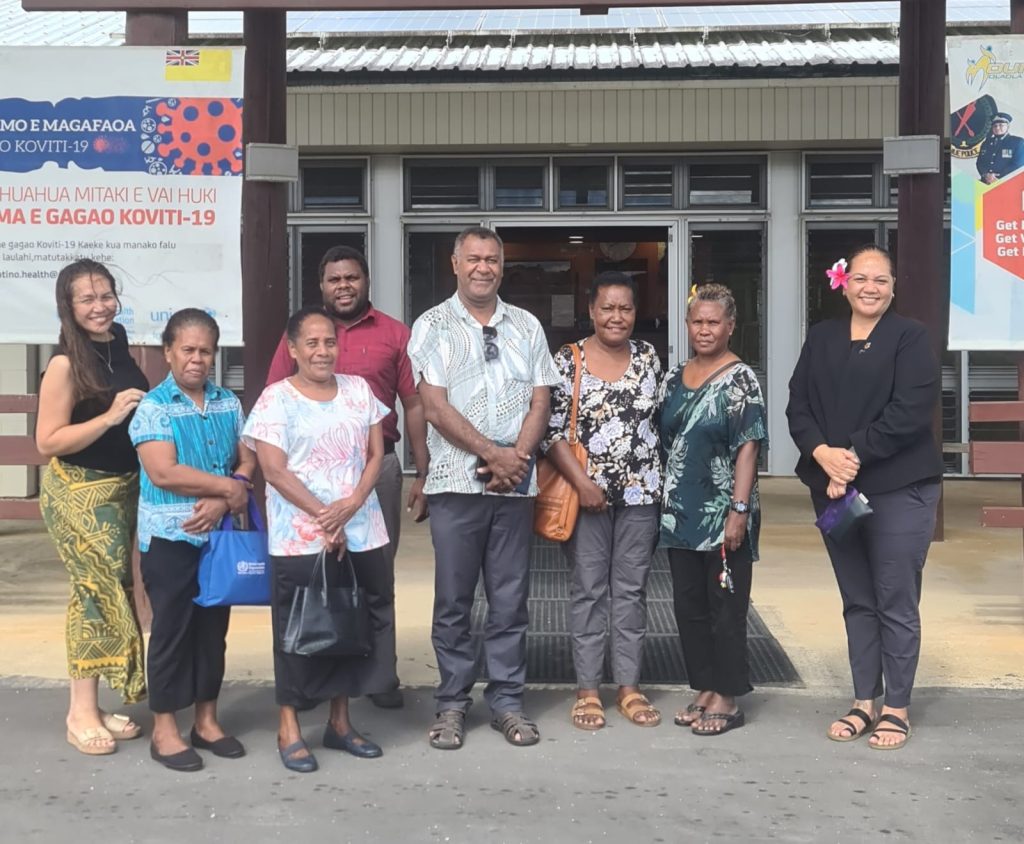
Alofi, NIUE – PACER Plus, in collaboration with the Government of Niue, hosted the final evaluation of the Niue-Solomon Islands Labour Mobility Pilot from 1-4 July 2025 in Niue. The ground-breaking labour mobility pilot between Niue and Solomon Islands has been deemed a success, following a comprehensive final evaluation that highlights the initiative’s strong outcomes for both countries. The Niue–Solomon Islands Intra-Pacific Labour Mobility Pilot, launched under the PACER Plus Arrangement on Labour Mobility (ALM) in July 2024, has provided a unique and valuable opportunity for four retired Solomon Islands nationals to address critical labour shortages in Niue’s aged care sector. The final evaluation confirmed that the pilot met its core objectives of facilitating the movement of Pacific labour within Pacific countries to deliver mutual benefits to both labour sending and labour receiving countries. The Niue-Solomon Islands Intra-Pacific Labour Mobility Pilot has provided a valuable opportunity for four retired Solomon Islands nationals to address critical labour shortages in Niue’s aged care sector. The evaluation found that Niue benefited from increased workforce capacity and improved aged care services while the retired nurses from Solomon Islands gained an income-generating opportunity they otherwise would not have had. Both governments demonstrated strong collaboration, which set a precedent for future intra-Pacific labour arrangements. The final evaluation also identified lessons for future intra-Pacific initiatives, including the need for streamlined recruitment processes, tailored pre-departure training, and continued worker welfare support. Niue’s Minister for Finance and Infrastructure, Hon. Crossley Tatui, welcomed the results. “This pilot has demonstrated that Pacific Island countries can work together to solve shared challenges. We are proud to have hosted workers from Solomon Islands and are already seeing the positive impacts in our aged care sector.” Hon. Crossley Tatui, Niue’s Minister for Finance and Infrastructure, Solomon Islands’ Deputy Secretary for Foreign Affairs and External Trade, Mr. Hickson George, echoed the sentiment: “This has been an important opportunity for our workers to gain employment in their retirement years and support their families at home. We look forward to expanding such partnerships under the PACER Plus framework.” The success of the pilot has generated interest in scaling up intra-Pacific labour mobility in critical sectors while ensuring that development benefits are shared across the region. PACER Plus will use the evaluation findings to inform the development of Niue’s Labour Mobility Strategy and provide broader regional policy and develop practical guidance for Parties seeking to initiate similar pilot schemes. -ENDS- More articles like this one
Cook Islands Completes Landmark Crop Pest Survey to Strengthen Trade and Plant Health

RAROTONGA, Cook Islands – The Cook Islands has successfully completed a national crop pest survey, its first in years, as part of a push to protect local agriculture and strengthen trade opportunities in the region and beyond. The survey, carried out from 14-25 July 2025 in Aitutaki and Rarotonga, was led by the Cook Islands’ Ministry of Agriculture in partnership with the PACER Plus Implementation Unit (PPIU), Australia’s Department of Agriculture, Forestry and Fisheries (DAFF), Northern Australia Quarantine Strategy (NAQS), New Zealand’s Ministry for Primary Industries (MPI) and Lincoln University. It forms a key part of the Cook Islands’ commitment under PACER Plus to improve its plant health systems and support safe, sustainable trade. Cook Islands’ crop pest survey, its first in years, was led by the by the Cook Islands’ Ministry of Agriculture in partnership with the PPIU, Australia’s DAFF, Northern Australia Quarantine Strategy, New Zealand’s MPI, and Lincoln University. “Keeping our agricultural borders strong for potential export opportunities requires good data. This survey provides exactly that, an up-to-date understanding of the pest and disease risks facing our crops, and a stronger foundation for trade.” Ms. Temarama Anguna-Kamana, Head of the Ministry of Agriculture The fieldwork involved targeted surveillance of key crops and entry pathways across Aitutaki and Rarotonga, followed by in-country diagnostic training for Ministry staff. Samples collected were analysed in-country and further tested in DAFF’s specialised laboratories in Australia. This dual-track approach not only ensured scientific rigour but also built long-term diagnostic capacity within the Ministry. The fieldwork involved surveillance of key crops and entry pathways across Aitutaki and Rarotonga, followed by in-country diagnostic training for Ministry staff. Mr. Alipate Tavo, Trade Adviser at the PACER Plus Implementation Unit, said the plant health surveillance demonstrates how to facilitate international trade while protecting plant life or health in the PACER Plus countries. “Cook Islands is showing leadership by investing in the systems that matter such as biosecurity, pest reporting, and diagnostics,” he said. “We’re pleased to support this work because plant health isn’t just a technical issue. It’s about growing exports, protecting livelihoods, and ensuring farmers can reach new markets with confidence.” The activity included the procurement of specialised traps, lures, and field kits from Australia, and hands-on training for Cook Islands agricultural officers in data collection and pest identification. Survey results will be used to update the Pacific Pest List Database and meet reporting obligations under the International Plant Protection Convention (IPPC). By providing an updated pest status, the survey sets the stage for more accurate pest risk assessments, improved biosecurity planning, and strengthened trade access for Cook Islands-grown produce, particularly in regional and international markets. A final report capturing the survey’s findings and recommendations will be submitted to the Ministry of Agriculture and the PACER Plus Implementation Unit in August 2025. -ENDS- More articles like this one
PACER Plus Delivers Over $89,000 in Farming Equipment to Boost Agriculture Sector

APIA, Samoa – Samoan farmers received a major boost today with the official handover of more than WST$89,000 (AU$50,000) worth of farming and processing equipment to the Samoa Farmers Association (SFA), thanks to support from the Pacific Agreement on Closer Economic Relations (PACER) Plus. The new equipment – ranging from coffee bean roasters and electric winnowers to taro chippers, multi-use grinders, tillers, ground drillers, brushcutters and chainsaws – is part of the broader project aimed at empowering Samoa’s farming community through increased productivity, improved livelihoods, and stronger market linkages. Minister for Agriculture and Fisheries, Hon. Niuava Eti Malolo. SFA, which represents more than 1,000 farmers across Samoa – including women’s groups, church-based farming collectives, and youth enterprises – will roll out this support through its Empowering Agriculture Project. The project focuses on equipping farmers with the tools they need to improve both the quantity and quality of their produce, enabling greater access to domestic, regional, and international markets. Speaking at the handover ceremony, the Minister for Agriculture and Fisheries, Hon. Niuava Eti Malolo, acknowledged the significance of the initiative, highlighting its alignment with Samoa’s broader trade and development aspirations. “For Samoa, the PACER Plus Agreement opens doors to new avenues in trade and investment. It aids in refining our systems and standards, enabling more of our local products to meet international market requirements. This is especially significant for agriculture – a sector that remains the backbone of our economy and a vital source of income for many Samoan families.” Hon. Niuava Eti Malolo, Minister for Agriculture and Fisheries. Mr. Roy Lagolago, Head of the PACER Plus Implementation Unit (PPIU), said the initiative aligns with PACER Plus’s development goals of enabling Pacific farmers and small businesses to participate more effectively in trade. “PACER Plus was designed with a vision of driving economic growth and improving the livelihoods of people in the Pacific Island nations,” said Mr. Lagolago. “Through fostering an environment conducive to trade and investment, it enhances regional cooperation and broadens our access to international markets. Today’s handover is a reflection of that mission in action.” PACER Plus supported the project through its Development and Economic Cooperation (DEC) Work Programme, funded by the Australian and New Zealand governments, which assists Pacific Island countries in implementing the PACER Plus Agreement and unlocking trade-related development benefits. Samoa Farmers Association president, Sala Sagato Tuiafiso. SFA President Mr. Sala Sagato Tuiafiso expressed his appreciation for the support and said it will have a lasting impact on the agricultural sector. “Our farmers are the backbone of Samoa’s economy, and this equipment is timely,” said Mr. Sagato. “It will improve how we process, preserve, and present our crops for market. We are especially proud that this support will reach those who need it most – women, youth, and rural farmers – ensuring no one is left behind.” The SFA will work closely with the PPIU to monitor the use and impact of the equipment, supported by a quarterly reporting process and follow-up surveys with farmers and stakeholders. This collaborative approach will help measure tangible outcomes such as increased productivity, improved quality, and access to new markets. The Empowering Agriculture Project also includes plans for future capacity building initiatives, strengthening farmers’ knowledge in sustainable farming practices, post-harvest handling, and business development. -ENDS- More articles like this one