
PACER Plus Talanoa Concludes with Commitments to Strengthen Pacific Economies

APIA, Samoa – The Pacific Agreement on Closer Economic Relations (PACER) Plus Implementation Unit (PPIU) hosted the second Revenue Mobilisation Talanoa for PACER Plus Signatories this week in Apia, Samoa. The Talanoa brought together senior officials from customs, tax administrations, and finance ministries across the Pacific to address the challenges and opportunities of revenue mobilisation in the context of trade liberalisation under PACER Plus. Representatives from the Cook Islands, Kiribati, Niue, Samoa, Solomon Islands, Tonga, Tuvalu, and Nauru attended the four-day event, which ran from 25-28 February 2025. Representatives from the Cook Islands, Kiribati, Niue, Samoa, Solomon Islands, Tonga, Tuvalu, and Nauru attended the four-day Talanoa, which ran from 25-28 February 2025. The Talanoa, which follows the inaugural Revenue Mobilisation Talanoa held in Nadi, Fiji, in February 2024, focused on improving indirect revenue mobilisation through efficient taxation, broadening the tax base, and closing the tax gap. Participants explored short-term actions and long-term structural reforms needed to enhance revenue administration and collection. Mr. Alipate Tavo, Trade Adviser at PPIU and moderator of the workshop, highlighted the importance of the Talanoa in addressing the region’s unique challenges. “The PACER Plus Agreement has brought economic opportunities to the Pacific, but it has also highlighted the need for robust revenue mobilisation strategies. This Talanoa has been a critical platform for sharing experiences, identifying best practices, and developing actionable plans to ensure that our countries can adapt to the changing economic landscape while maintaining fiscal stability.” Mr. Alipate Tavo For Samoa, where customs duties account for a significant portion of government revenue, the stakes are particularly high. Mr. Magotaamu Salanoa, the Principal Customs Officer-Trade with Samoa’s Ministry of Customs and Revenue, stressed the importance of collaboration and knowledge-sharing. “Samoa, like many Pacific countries, relies on customs duties for revenue. The discussions here have been invaluable in helping us identify practical solutions to mitigate revenue losses while exploring new opportunities to diversify our tax base. The insights gained from this Talanoa will guide our efforts to strengthen Samoa’s economic resilience.” Mr. Magotaamu Salanoa Ms. Pipiena Tanaki, the Deputy CEO of Tonga’s Ministry of Revenue and Customs. Ms. Pipiena Tanaki, the Deputy CEO of Tonga’s Ministry of Revenue and Customs, shared her perspective on the role of technology in improving revenue collection. “Modernising our customs systems and leveraging technology is important for improving efficiency and accuracy in revenue collection. This workshop has reinforced the importance of investment in capacity building and digital solutions to address the administrative gaps in our tax systems.” Ms. Pipiena Tanaki The workshop featured sessions on key topics such as the role of customs administrations in collecting Value Added Tax (VAT) and Goods and Services Tax (GST), the impact of trade liberalisation on revenue, and strategies for optimising revenue through tax policies. Understanding the impacts of tax expenditures on revenue collection and good tax administration practice to improve revenue collection were also covered. Additionally, participants discussed the challenges of cross-border e-commerce, valuation issues, and the need for regional cooperation to address complex revenue mobilisation challenges. The Revenue Mobilisation Talanoa has been organised in collaboration with the Pacific Financial Technical Assistance Center, the Pacific Islands Tax Administration Association, the Oceania Customs Organisation, and the International Monetary Fund. “As we implement PACER Plus, our customs administrations must evolve to meet new revenue collection challenges. This Talanoa provides a vital platform for Pacific customs agencies to share practical solutions and strengthen our regional approach to revenue mobilisation while facilitating trade modernisation.” Ms. Nancy Oraka, Head of the Oceania Customs Organisation (OCO). The Revenue Mobilisation Talanoa has been organised in collaboration with the Pacific Financial Technical Assistance Center, the Pacific Islands Tax Administration Association, the OCO, and the International Monetary Fund. The workshop’s outcomes will contribute to the development of a comprehensive roadmap for revenue mobilisation across the Pacific, ensuring that PACER Plus signatories can continue to fund essential services while promoting economic growth. The Talanoa, which concluded today (28 February), provided an opportunity to explore revenue mobilisation in the context of the impacts of PACER Plus but the need for revenue to fund the social and economic needs of countries is ever present. -END- More articles like this one
Solomon Islands Begins Preparations for PLMAM 2025

HONIARA, Solomon Islands – The preeminent regional forum for labour mobility, the Pacific Labour Mobility Annual Meeting (PLMAM) will be held in Honiara, Solomon Islands in November 2025. This week, the PACER Plus Implementation Unit (PPIU) is in Honiara to begin preparations for PLMAM 2025 in collaboration with the Government of the Solomon Islands. The Deputy Secretary for the Solomon Islands Ministry of Foreign Affairs and External Trade, Mr. Hickson George expressed his enthusiasm for the upcoming meeting. (L-R) Director Christina Marau, Dr Alisi Kautoke Holani, Deputy Secretary Hickson George, Mr. Alistair Molioo, and Mr. Patrick Kaka. “Labour mobility is a development priority for the government of the Solomon Islands and we are very excited to welcome labour mobility stakeholders from across the region to our shores this November,” said Mr. George. “Solomon Islands was one of the late comers to labour mobility, having only joined the Pacific labour mobility schemes to Australia in 2019. However, in a very short time it has grown tremendously as a labour sending country and we are excited to be sharing some of the best practices that we have adopted and also to learn from our other neighbouring Pacific islands and partners.” The discussions this week will consider the dates and key issues to be deliberated during PLMAM 2025 and how the forum can improve in fostering regional labour mobility cooperation. Dr. Alisi Kautoke Holani, PPIU’s Labour Mobility Specialist, emphasised the importance of collaborative efforts. “Labour mobility has proven to be a transformative driver of socio-economic development in the region, but it is not without its challenges. The PLMAM serves as the leading regional platform to address these challenges and promote mutual benefits by sharing best practices, exploring innovative solutions and strengthening effective partnerships across all Pacific labour mobility stakeholders,” said Dr. Holani. The PPIU, in its role as the Labour Mobility Secretariat, is also the Secretariat to the PLMAM and will be supporting the government of Solomon Islands as it prepares to host the annual meeting in November. Details on PLMAM 2025 will be later released through the PACER Plus website. -ENDS- More articles like this one
PPIU Contributes to CHOGM 2024 in Samoa

The PACER Plus Implementation Unit (PPIU) played a role in promoting trade and economic growth across the Pacific at the Commonwealth Heads of Government Meeting (CHOGM) 2024, held in Apia, Samoa from 21-26 October. Mr. Roy Lagolago, Head of the PPIU, spoke at the Commonwealth Business Forum, a CHOGM side event, delivering insights on the theme of “Reducing Barriers to Trade”. His address emphasised PACER Plus’s contributions to fostering sustainable economic growth, increasing trade opportunities, and empowering Pacific businesses to thrive in a competitive global market. Mr. Roy Lagolago, Head of the PPIU, meeting His Majesty King Charles III, the King of the United Kingdom and Head of the Commonwealth. This year’s Commonwealth Business Forum focused on the theme “One Resilient Common Future: Transforming Our Common Wealth,” exploring key pillars such as access to finance, technological innovation, sustainability, and workforce transformation. Mr. Lagolago highlighted how PACER Plus is helping Pacific Island nations navigate these critical areas by providing the tools needed to overcome trade barriers, enhance market access, and promote sustainable development. In addition to his speech at the forum, Mr. Lagolago participated in several high-profile events on the margins of CHOGM 2024. One of these was the unveiling of the Commonwealth Investment Action Plan–a major initiative aimed at increasing trade and investment among Commonwealth nations. The plan is particularly focused on helping small and vulnerable states attract investment and meeting the Sustainable Development Goals (SDGs) by 2030. It complements other Commonwealth initiatives, including the Commonwealth Blue Charter and the Climate Finance Access Hub, which are essential to addressing climate change and fostering resilience across member states. The PPIU was honoured to host bilateral discussions for Mr. Anthony Albanese (third from left), the Australian Prime Minister and other Commonwealth nations at our office in Apia, Samoa during the CHOGM 2024. Mr. Lagolago also attended the Commonwealth Enterprise and Investment Council and Sustainable Markets Initiatives CEO-Leaders Event, where he met His Majesty King Charles III. These discussions highlighted the importance of collaboration between the private sector and governments in addressing global challenges such as climate change, biodiversity, and inequality, while advancing the development aspirations of Commonwealth member states. More articles like this one
First in-person PACER Plus Ministerial Meeting Convened in Brisbane

BRISBANE, Australia – The Pacific Agreement on Closer Economic Relations (PACER) Plus Ministerial Meeting was held yesterday, Friday 15 November, in Brisbane, Australia, marking the first in-person gathering of Ministers since the PACER Plus Agreement entered into force in December 2020. The meeting was chaired by the Hon. Leota Laki Lamositele, Minister of Commerce, Industry and Labour of Samoa, and brought together Ministers and senior officials from Australia, Cook Islands, Kiribati, New Zealand, Niue, Samoa, Solomon Islands, Tonga, Tuvalu, and Vanuatu. The Ministers discussed the future of trade and investment under the Agreement, which came into effect during the height of the COVID-19 pandemic. Samoa’s Minister of Finance, Hon. Lautimuia Uelese Vaai (right), at the PACER Plus Ministerial Meeting in Brisbane, Australia. Reflecting on the journey since the Agreement’s first meeting in February 2020, Ministers reaffirmed the foundational importance of PACER Plus in strengthening economic partnerships, fostering sustainable development, and promoting regional economic integration. PACER Plus, which emerged during unprecedented global health and economic challenges, has proven instrumental in supporting Pacific nations’ resilience and recovery through trade liberalisation and capacity building. “The contributions of the PACER Plus Development and Economic Cooperation (DEC) Work Programme have been critical in advancing trade facilitation across our region. The capacity building initiatives aimed at equipping our officials and local enterprises with the tools to navigate the global trade environment have provided substantial benefits. Through PACER Plus, we have managed to alleviate some of the pandemic’s adverse impacts, particularly by providing support to sectors, such as hospitality, that were significantly affected during those challenging times.” Hon. Lautimuia Uelese Vaai, Samoa’s Minister of Finance Australia’s Assistant Minister for Trade and Manufacturing, Hon. Tim Ayres, highlighted the significance of the Agreement: “PACER Plus is not a traditional Free Trade Agreement. It is a facilitative Agreement that makes the region stronger together. Australia is ambitious for the region and rightly so – we recognise our role in supporting ambitions for regional economic prosperity. PACER Plus is an important framework for this, bringing our governments together to make good decisions collectively.” The Ministers acknowledged the work of the PACER Plus Implementation Unit (PPIU) in supporting the Parties to implement the Agreement. Australia’s Assistant Minister for Trade and Manufacturing, Hon. Tim Ayres (left), at the PACER Plus Ministerial Meeting 2024 in Brisbane, Australia. The Ministers also acknowledged the importance of the DEC Work Programme, which has provided vital support to Pacific countries, improving trade capacity and strengthening regional cooperation. They commended the strong engagement by PACER Plus Parties, who have leveraged the DEC Work Programme to boost their trade capabilities and build a more robust enabling environment for businesses. Recognising the role of the private sector as the key driver of trade, PACER Plus Ministers and their representatives called for intensified efforts to support private sector development. They tasked the PPIU with accelerating the implementation of the DEC Work Programme and refining its approach to private sector engagement. The PACER Plus Ministerial Meeting was held today in Brisbane, Australia, marking the first in-person gathering of Ministers since the PACER Plus Agreement entered into force in December 2020. Ministers expressed their in-principle support for renewing the Implementing Arrangement for Development and Economic Cooperation under PACER Plus for another five years beyond December 2025, calling for reforms to ensure its continued effectiveness in addressing the unique needs of Pacific Island economies. The meeting was also attended by Nauru, a PACER Plus signatory, and the Pacific Islands Forum Secretariat who participated as observers. To read the full 2024 PACER Plus Ministerial Meeting Communique, please click here. -ENDS- More articles like this one
Australia Hosts Pacific Labour Mobility Annual Meeting 2024: Focus on Resilience and Regional Cooperation
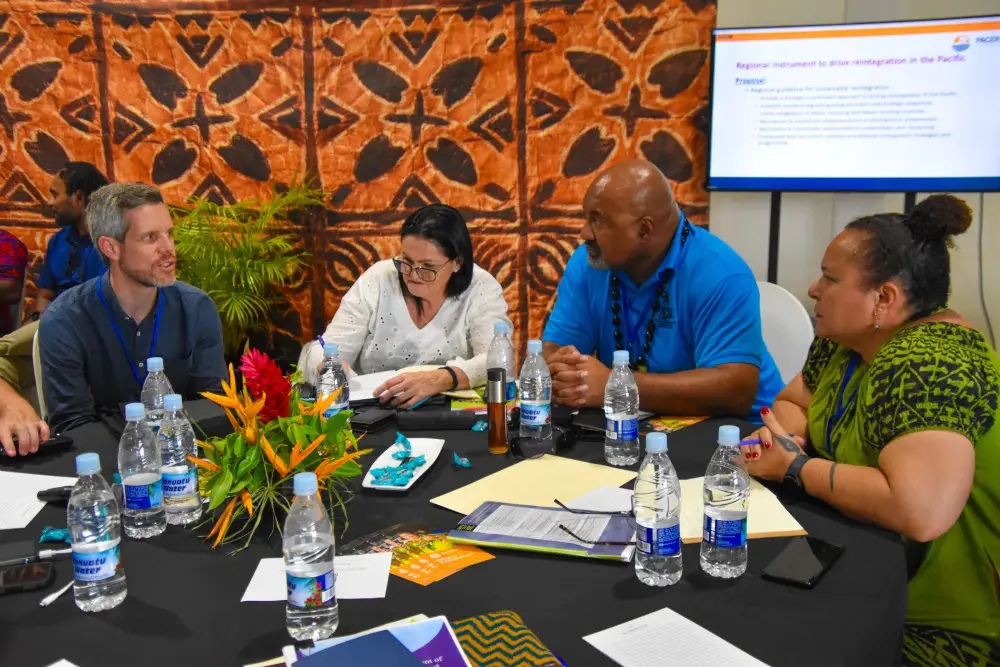
BRISBANE, Australia – The Government of Australia will host the 2024 Pacific Labour Mobility Annual Meeting (PLMAM) from 11-14 November in Brisbane, Australia. The event, held under the PACER Plus Arrangement on Labour Mobility, serves as the Pacific region’s premier platform for discussing labour mobility issues and fostering collaboration among key stakeholders. The annual meeting is expected to bring together almost 400 participants, including government officials, workers, employers, private sector representatives, unions, civil society organisations, academics, and regional institutions. The central theme for PLMAM 2024, “Collectively Building Resilience”, highlights the importance of regional cooperation to strengthen labour mobility frameworks in the face of evolving challenges. The annual meeting is expected to bring together almost 400 participants, including government officials, workers, employers, private sector representatives, unions, civil society organisations, academics, and regional institutions. Mr. Roy Lagolago, Head of the PACER Plus Implementation Unit and Labour Mobility Secretariat, spoke on the transformation of Pacific labour mobility over the years. “Pacific labour mobility has evolved significantly since the inception of the New Zealand Recognised Seasonal Employer (RSE) scheme in 2007 and the Pacific Australia Labour Mobility (PALM) scheme in 2012 under its predecessor, the Seasonal Worker Programme. This evolution has been prompted by a number of different factors, including the changing socio-economic structures of the region, the COVID pandemic, and climate change, to name a few. In this rapidly changing era, the challenge for the Pacific is to continuously build resilience, and we recognize that successfully building resilience requires a cooperative effort by all involved,” said Mr. Lagolago. Over four days, the PLMAM 2024 programme will feature discussions on how Pacific labour mobility stakeholders can work collaboratively to build the resilience of labour mobility, with a focus on ensuring mutual benefits for workers, employers, and economies across the region. This includes addressing key issues such as worker wellbeing, skills development, and social security. PLMAM 2024 will provide an opportunity for stakeholders to engage in policy discussions, share best practices, and develop tangible measures to ensure the resilience of labour mobility schemes amid shifting socio-economic and environmental landscapes. For more details on PLMAM 2024, please click HERE. ENDS More articles like this one
Harvesting Hope: Rose Sosoe’s Journey from Honiara to Marlborough

Rose Sosoe had a simple dream: to provide a better life for her family. As a young mother in Honiara, Solomon Islands, she worked part-time at a local bakery, making ends meet but always hoping for more. With a five-year-old child depending on her, Rose yearned for an opportunity that would allow her to uplift her family’s standard of living. That opportunity came when her sister-in-law introduced her to the Recognised Seasonal Employer (RSE) scheme in New Zealand. This program, established in 2007, connects workers from Asia-Pacific countries with New Zealand’s horticulture and viticulture sectors, addressing labour shortages while offering workers a chance to earn a sustainable income. For Rose, it was a lifeline. “My sister-in-law spoke to me about the RSE scheme, and that got my interest. I knew this was what I wanted to do, so I applied,” Rose recalls in Pijin. Rose Sosoe (pictured) says that the income she earns allows her to send remittances back home, supporting her family and providing a better future for her child. Rose’s determination paid off when she secured a job working on vineyards in New Zealand’s largest wine-growing region, Marlborough. Her employer, Hortus, is a leader in ethical workforce solutions across several regions of New Zealand, focused on support both people and land. Despite her nerves about leaving home – she had never been outside Solomon Islands before – Rose was eager to seize the opportunity. In July 2022, she boarded a plane to New Zealand, ready to work hard for a brighter future. Two years later, Rose reflects on her journey with pride. “I joined Hortus in July 2022, and two years later, I’m grateful to still be part of the team and contributing to Hortus’ success. It’s been a wonderful journey, one that has allowed me to gain meaningful employment and learn new skills. I have also been able to support my now seven-year-old back home in Honiara,” Rose shared. Her experience working in New Zealand has been life changing. The income she earns allows her to send remittances back home, supporting her family and providing a better future for her child. But beyond the financial benefits, Rose has also gained a sense of empowerment and accomplishment. At Hortus, Rose is part of a diverse team, many of whom are also from Pacific nations. Mike Jay, General Manager of Hortus, speaks highly of Rose’s contribution and the value Pacific workers bring to the company. Rose is part of a diverse team at Hortus, a leader in ethical workforce solutions across several regions in New Zealand. “Rose is a valued part of our team, and her hard work embodies the commitment and resilience that Hortus prides itself on. Through the RSE scheme, we’ve been able to build lasting partnerships with skilled workers from Pacific nations, who bring dedication and an incredible work ethic. These relationships are vital – not just for meeting labour needs, but for creating a positive impact on both our business and the lives of the people involved. It’s a partnership that supports growth for everyone,” Jay said. Hortus is one of many New Zealand businesses that have embraced the RSE scheme, not just for the labour it provides but for the meaningful relationships it fosters between the workers and the company. For Rose and her colleagues, it’s more than just a job – it’s a stepping stone toward a better life. “Every day I wake up thankful for this opportunity,” Rose says with a smile. “I’ve learned so much, and I’ve seen how my hard work can make a difference for my family.” -ENDS- More articles like this one
Collectively building the resilience of Pacific labour mobility

The Pacific labour mobility landscape has evolved considerably since the inception of the New Zealand Recognised Seasonal Employer (RSE) scheme and the Pacific Australia Labour Mobility Programme (originally the Seasonal Worker Programme and Pacific Labour Scheme). The onset of COVID-19, economic recessions, natural disasters and changing government policies have contributed to this evolution, warranting a relook at Pacific labour mobility settings to ensure resilience and sustainability. The 2024 Pacific Labour Mobility Annual Meeting (PLMAM) seeks to launch this discussion under the theme of “Collectively Building Resilience”. The PACER Plus Implementation Unit (PPIU) sat down with one of the leading experts on Pacific labour mobility, Emeritus Professor Richard Bedford, to get his insights on this theme and what we can envisage from the discussions at PLMAM. Emeritus Professor Richard Bedford. At the core of any considerations on the sustainability and resilience of Pacific labour mobility are the Pacific workers who supply labour and the New Zealand and Australian employers who demand their labour. Workers’ families and households should also not be discounted as they play a critical role in shaping the behavior and decision making of Pacific workers even when they are away from home. In this regard, the continued success of Pacific labour mobility really stems from ensuring that the costs to the workers and employers do not outweigh the benefits. Professor Bedford pointed out that the issue of costs versus benefits was the subject of a lot of discussion at the recent annual RSE Conference in New Zealand. “Several changes to a number of provisions relating to minimum payments to workers were announced at the Conference and while these have provided some welcome relief to employers they attracted sharp criticism from representatives of Pacific Governments who were in attendance,” noted Professor Bedford. The details of the changes can be found here and here, but one of the key concerns the Pacific representatives had was the absence of any consultation with them about the proposed changes in advance of their announcement and very rapid implementation, which was four days after the conference. Sudden changes in policy either in the labour sending or the labour receiving countries can create major challenges to key stakeholders in temporary migration schemes like the RSE and PALM. Consultation is clearly at the heart of PLMAM’s theme of “Collectively Building Resilience”. Sudden changes in policy either in the labour sending or the labour receiving countries can create major challenges to key stakeholders in temporary migration schemes like the RSE and PALM. As Vanuatu’s High Commissioner to New Zealand, His Excellency Mr. Jimmy Nipo, stressed in a thought-provoking keynote address entitled Sustainable bilateral relations: Vanuatu and the balancing act, “To ensure that our bilateral relations are sustained, the mutual benefits must be balanced out. The act of balance must be mutual. Open conversations must be done regularly.” PLMAM provides very valuable opportunities for “open conversations” about how we deal with ensuring balance in the distribution of costs and benefits from temporary labour migration policies. The impacts of climate change on economies and societies in the region must also be part of these conversations, not only because changing weather conditions are affecting workers’ hours of work and earnings, but also to determine how labour mobility can be used to build the resilience of their communities at home. Stakeholders at the PLMAM 2023 in Port Vila, Vanuatu. Professor Bedford emphasised that the importance of PLMAM lies in its ability to “provide a forum where a wide range of labour mobility stakeholders feel that they can share their views.” “There is real potential for a good relationship between countries in terms of temporary schemes that can enable people to earn money to help support their communities. The question is how do we maximise opportunities in these schemes to support that aspect of resilience in Pacific countries?” said Professor Bedford. Addressing these issues and building the resilience of Pacific labour mobility requires changes to policy settings in both labour receiving and labour sending countries. PLMAM provides a valuable platform for discussions to inform policy formulation in both labour sending and labour receiving countries particularly as it brings together workers, employers, governments of labour sending and labour receiving countries, unions, academics, private sector, civil society, and regional organisations. Professor Bedford emphasised that the importance of PLMAM lies in its ability to “provide a forum where a wide range of labour mobility stakeholders feel that they can share their views.” PLMAM also provides a platform for these views to be translated to action through an Outcomes Document which provides agreed actions to be implemented by various Pacific labour mobility stakeholders including the PACER Plus Implementation Unit. PLMAM provides very valuable opportunities for “open conversations” about how we deal with ensuring balance in the distribution of costs and benefits from temporary labour migration policies. The impacts of climate change on economies and societies in the region must also be part of these conversations, not only because changing weather conditions are affecting workers’ hours of work and earnings, but also to determine how labour mobility can be used to build the resilience of their communities at home. More articles like this one
Strengthening Digital Trade Capabilities at Regional Workshop
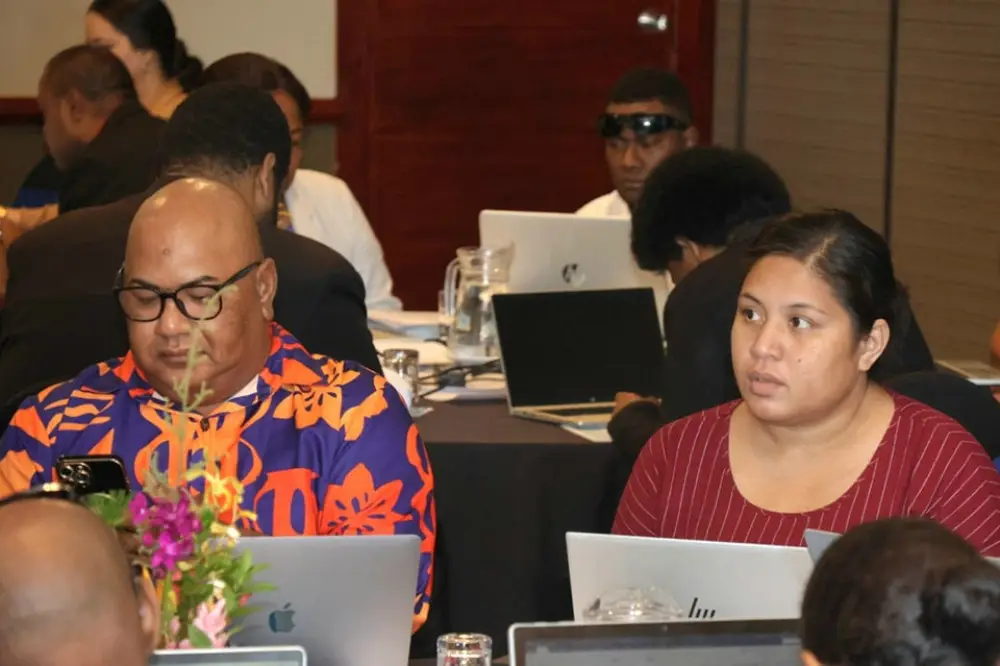
SUVA, Fiji – The inaugural Pacific Regional Digital Trade Workshop kicked off today in Suva, Fiji, bringing together public and private sector stakeholders from Fiji and Pacific PACER Plus countries. Workshops such as this demonstrates the continued commitment of the Australian Government and the Pacific Agreement on Closer Economic Relations Plus (PACER Plus) to support and strengthen the skills and capacity of Pacific Island Countries (PICs) on trade in services, digital trade and e-commerce. The two-day workshop brings together government officials from the eight Pacific PACER Plus countries such as Cook Islands, Kiribati, Niue, Samoa, Solomon Islands, Tonga, Tuvalu, and Vanuatu as well as Fiji. With 60 percent of all exports in the region linked to the services sector, services play a key role in the Pacific’s economic growth and development. The two-day workshop aims to support PICs to engage effectively in the fast-evolving digital trade space, understand digital trade and e-commerce provisions, and support countries’ capacity to negotiate and implement these provisions in trade agreements. In the margins of the workshop, a two-day proposal clinic will be delivered to help PACER Plus countries develop bankable project proposals that align with regional and international trade commitments and boost trade in services, e-commerce, and investment in the region. Mr. Shaheen Ali (left), Permanent Secretary to Fiji’s Ministry of Trade, Co-operatives, SMEs and Communications and Mr. Andrew Shepherd, Australian Deputy High Commissioner to Fiji at the .Pacific Regional Digital Trade Workshop. Mr. Shaheen Ali, Permanent Secretary to Fiji’s Ministry of Trade, Co-operatives, SMEs and Communications, opened the workshop, stating: “Workshops and training programmes like these are invaluable in building our capacities and equipping us with the tools needed to better understand the highly technical provisions related to digital trade. As we deepen our knowledge and expertise, we position ourselves to negotiate future agreements with provisions that not only support and facilitate digital trade but also align with our regional interests,” said Mr. Ali. Mr. Andrew Shepherd, Australian Deputy High Commissioner to Fiji, also spoke to the importance of the initiative, saying: “The workshop will continue our trajectory of building a community of practice and peer to peer learning in the Pacific. Also, with the relevant information and a community of practitioners at our fingertips, the world of e-commerce and digital trade is smaller than we think.” -ENDS- More articles like this one
Regional Workshop on Skills Development Underway in Samoa

APIA, Samoa – The Regional Workshop on Skills Development commenced yesterday (8 July) in Apia, Samoa. This workshop is part of an ongoing commitment to ensure that the PACER Plus Agreement and Arrangement on Labour Mobility are responsive to the development needs of Parties, specifically in the area of skills development. The PACER Plus Arrangement on Labour Mobility (ALM), a regional framework signed in 2017 by Australia, Cook Islands, Kiribati, Nauru, New Zealand, Niue, Samoa, Solomon Islands, Tonga, Tuvalu, and Vanuatu, aims to strengthen labour mobility cooperation. The framework operates alongside the Pacific Agreement on Closer Economic Relations (PACER) Plus agreement. The 2022 Pacific Labour Mobility Annual Meeting (PLMAM) directed an independent evaluation of the ALM, which was then completed in December 2023. The Review highlighted the critical importance of skills development for sustainable economic development in the region and the need to strengthen the ALM to support skills development and the generation of net skills gains for Pacific labour sending countries. The Regional Workshop on Skills Development had over 40 participants including qualifications officials, trade and labour mobility officials as well as private sector representatives from the 10 PACER Plus countries. The Regional Workshop on Skills Development, taking place from 8-12 July 2024, is an initial forum that aims to inform the design of the new ALM and the broader PACER Plus work programme. It brings together over 40 participants including qualifications officials, trade and labour mobility officials as well as private sector representatives from the 10 PACER Plus countries, including Australia, Cook Islands, Kiribati, New Zealand, Niue, Samoa, Solomon Islands, Tonga, Tuvalu, and Vanuatu. Representatives from the Pacific Community’s Educational Quality and Assessment Programme (SPC-EQAP), International Labour Organisation (ILO), and the International Organisation for Migration (IOM). Dr. Opeti Pulotu, CEO of Tonga National Qualifications Authority Board speaks at the Regional Workshop on Skills Development. Dr. Opeti Pulotu, CEO of Tonga National Qualifications Authority Board, emphasised the importance of aligning qualifications frameworks to meet both domestic and international skill needs: “By harmonising our qualifications frameworks with both national and international skill demands, we can ensure that our workforce is exceptionally equipped for local opportunities while remaining highly competitive on the global stage.” Ms. Lita Lui, CEO of the Samoa Chamber of Commerce and Industry, highlighted the importance of private sector engagement in the design and implementation of skills training: “Engaging the private sector in the design and implementation of the National Workforce Plan is vital to ensure that industry demand is met. When businesses are involved in shaping this Plan and its training programs, we can create a workforce that is ready to meet the current and future needs of the market.” Ms. Lita Lui, CEO of the Samoa Chamber of Commerce and Industry, highlighted the importance of private sector engagement in the design and implementation of skills training at the Regional Workshop of Skills Development. Over the course of the five-day workshop, participants will engage in interactive sessions, group work, and discussions. Key topics that will be covered include the alignment of skills training systems to skills needs, both domestic and labour mobility demands, qualifications recognition, the role of labour mobility in skills development, and finding solutions for issues such as brain drain. This workshop is a step towards ensuring that the PACER Plus ALM not only enhances labour mobility but also supports sustainable livelihoods and economic development across the Pacific region. -ENDS- More articles like this one
Trade Information Portal Streamlines Pacific Trade Processes

APIA, Samoa – The PACER Plus Regional Workshop on Trade Information Portals (TIPs) commenced on Tuesday 4 June in Apia, Samoa. This workshop aims to enhance the accessibility of trade-related information for PACER Plus countries to increase their regulatory transparency in trade and investment-related capacity to reach the standards set out in PACER Plus. A TIP is a one-stop website where countries can access information on trade import and export procedures, laws, and regulations, for engaging in international trade. This platform makes complex trade procedures understandable by displaying them step-by-step from start to finish, from a trader’s point of view. Government officials from PACER Plus parties – Cook Islands, Kiribati, Niue, Samoa, Solomon Islands, Tonga, Tuvalu, Vanuatu, and UNCTAD – were present at the Regional Workshop on Trade Information Portals in Apia, Samoa. The Pacific Agreement on Closer Economic Relations (PACER) Plus is a unique trade agreement designed to raise living standards, create jobs, and boost exports from Pacific Island countries. By lowering trade barriers, PACER Plus provides greater certainty for businesses operating in the Pacific region. Julian Fraga-Campos, Economic Affairs Officer at the UN Trade and Development (UNCTAD), is leading the training sessions. “The establishment of Trade Information Portals is crucial for increasing transparency, enhancing predictability and facilitating smoother trade processes within the PACER Plus framework,” said Mr. Fraga-Campos. Alipate Tavo (left), PACER Plus Implementation Unit’s Trade and Investment Adviser, speaks at the closing of the Regional Workshop on Trade Information Portals with Julian Fraga-Campos, Economic Affairs Officer at the UN Trade and Development (UNCTAD). Government officials from PACER Plus parties – Cook Islands, Kiribati, Niue, Samoa, Solomon Islands, Tonga, Tuvalu, and Vanuatu – were present at the workshop. The workshop focuses on the creation of capacity among government officials for the implementation, management and sustainability of TIPs, as well as in providing training on notifications send through Contact Points and awareness of its obligations to ensure that all PACER Plus countries are informed and able to comply with the agreement’s standards. Alipate Tavo, PACER Plus Implementation Unit’s (PPIU) Trade and Investment Adviser, emphasised the importance of cooperation among PACER Plus countries. “As part of the PACER Plus agreement, countries have an obligation to share trade information and policy amendments with other PACER Plus parties. This ensures a cohesive and transparent trading environment that benefits everyone involved.” Keity Tuiloma from Samoa’s Ministry of Commerce, Industry, and Labour (left) with Verleena Nooapii from the Cook Islands at the Regional Workshop on Trade Information Portals in Apia, Samoa. Mrs. Angoango Fakaua from Kiribati’s Ministry of Tourism, Commerce, Industry and Cooperatives highlighted the impact of the workshop on her country’s trade practices. “This training is important for Kiribati as it equips us with the tools needed to streamline our trade processes and align with regional standards. It is an important step towards improving our trade infrastructure.” Ms. Ann Warsal from Vanuatu’s Department of Customs and Inland Revenue shared similar sentiments. “The Trade Information Portal has simplified the complexities of international trade regulations for Vanuatu, making it easier for our businesses to navigate and comply with trade requirements.” Ms. Keity Tuiloma from Samoa’s Ministry of Commerce, Industry, and Labour added, “Having a centralised source of trade information not only promotes efficiency but also enhances our ability to engage in international trade more effectively. This workshop is an important opportunity for us to learn and implement best practices.” The four-day training concludes on Friday 7 June. -END- More articles like this one