
Economic and social impact of labour mobility in Vanuatu
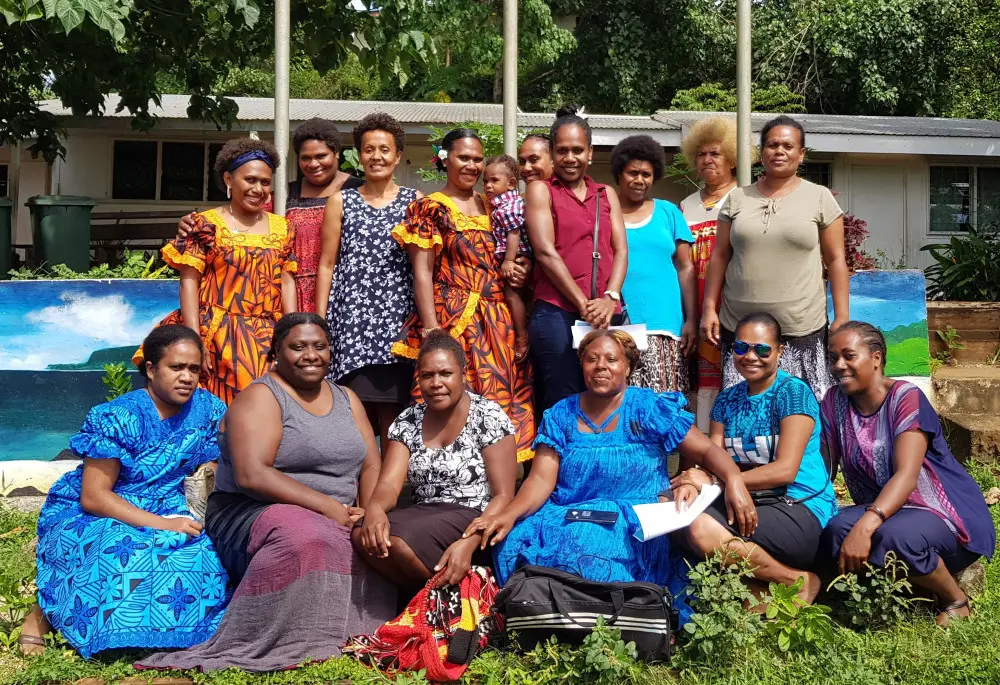
Converting the negatives to positives: Vanuatu Strengthening Seasonal Workers Family Programme (SSFWP) One of the downsides to labour mobility is the negative social impacts on families of workers left behind in their home countries. As Pacific labour mobility programmes are largely dominated by men, the wives are often required to manage the households and take on the roles of both mother and father while their husbands are abroad. Peter Bumseng was one of the first 45 Vanuatu workers to participate in the New Zealand Recognised Seasonal Employer (RSE) scheme. He has participated in the program every year since, and in 2011 he and his wife Regina, established the Strengthening Seasonal Worker Family Program in Vanuatu. In an interview with the Australian National University Development Policy Centre, Mr. Bumseng stated: “It started with my wife who took the families once a month, just on social occasions, like taking a picnic. I found this was helpful in New Zealand, as when the men know their families are happy and being looked after, they perform to the best of their ability in a good working environment. This is how we started and came up with some ideas and programs to look after the families. We know we can only move ahead if the process is right, if the families and communities are right.” The SSFWP is essentially a localised support group for the spouses of the workers. It started with five women engaging in monthly meetings at Peter and Regina’s home, with Regina regularly checking on workers’ spouses to ensure they had support. Peter and Regina would monitor the wellbeing of the workers and their spouses, and when issues arose, they would each provide targeted support to the workers and families involved including through house visits. Since 2011, the SSWPF has significantly grown in membership. Monthly activities continue to bring together families to support each other and share their experiences. The program now also provides new programmes focusing on social, educational, and spiritual support which are fundamental to helping workers and their families cope with the separation and the potential problems associated. The SSWFP also provides counselling programmes for workers and their spouses and have internally developed solutions to address social problems amongst the members. The activities of the SSWFP are self-funded through fundraising activities by the workers and their spouses in Vanuatu. The workers in New Zealand set up a Christian reggae band to raise funds through concerts. The spouses also work together to raise funds through selling food, producing local arts and crafts, and sewing items for tourist and local markets. The proceeds have helped the set-up of a rotation of money scheme where each household is given VT15,000 (AUD189) in their fortnightly meetings. They have also initiated a loan scheme for workers and their families who have set up new businesses. The SSFWP highlights the importance of localised support groups to addressing the negative social impacts of labour mobility. Peter believes that the programme can be replicated in other countries as the challenges are similar. It only takes the commitment of champions such as Peter and his wife to convert the negatives to positive outcomes for the workers and their families. More articles like this one
PACER Plus an opportunity for regenerative development, trade, and investment in Vanuatu
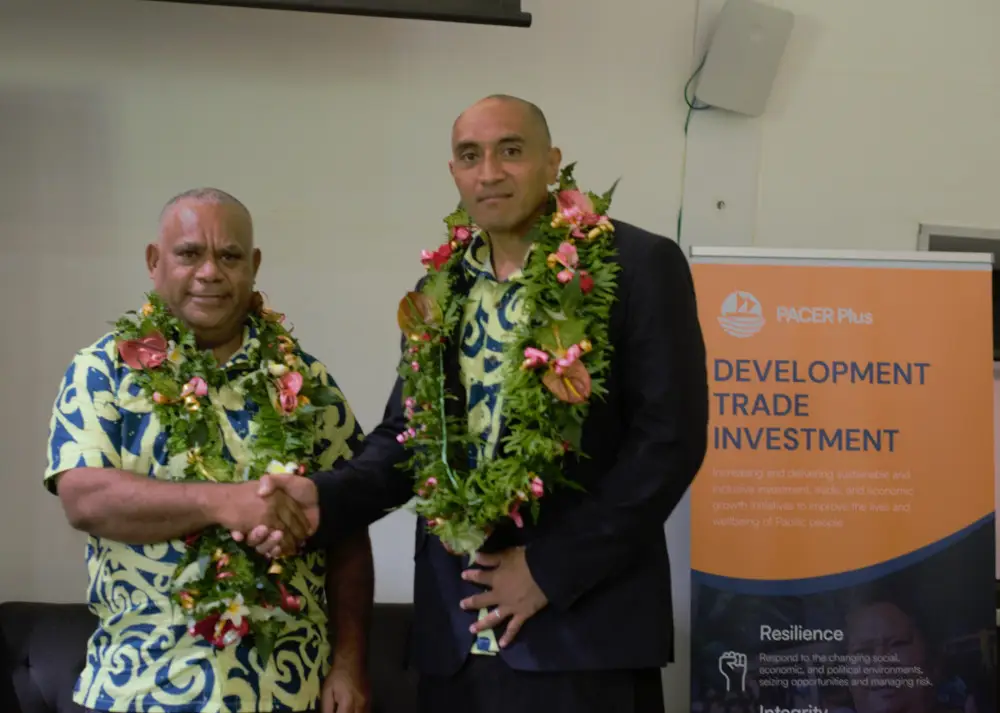
PORT VILA, Vanuatu – Vanuatu has taken a major step to boost its economy and improve the livelihood of its people by ratifying the Pacific Agreement on Closer Economic Relations (PACER) Plus. PACER Plus, a unique development-centered trade and investment agreement between eight Pacific Island Countries and Australia and New Zealand, aims to reduce barriers to trade and investment, and promote economic development and prosperity in the region. Vanuatu’s ratification of PACER Plus marks a major milestone in the country’s commitment to trade and economic development. The agreement is expected to bring significant economic benefits to Vanuatu’s people and businesses but will require a change of mindset and a desire to change the way trade is implemented. It will reduce tariffs on goods traded with Australia and New Zealand, allowing for improved access to these markets. It will also provide the opportunity for Vanuatu to benefit from the services and investment markets of Australia and New Zealand, allowing for increased trade and foreign direct investment. In addition, the agreement will help Vanuatu to diversify its economy, providing a boost to its tourism and agricultural sectors. It will also provide improved access to technology and knowledge, allowing for more efficient and productive businesses. During the official launch of PACER Plus awareness workshop today, the Minister for Foreign Affairs, International Cooperation and External Trade, Hon. Jotham Napat said the benefits of ratifying PACER Plus are numerous. “It will provide better job opportunities for the people of Vanuatu. It will open new avenues of employment for our people, helping to reduce poverty and improve the overall wellbeing of our community,” said Mr. Napat. Head of PACER Plus Implementation Unit and Labour Mobility Secretariat, Roy Lagolago, welcomed Vanuatu to the PACER Plus family, the tenth country to ratify the agreement. “PACER Plus is unique compared to other trade agreements. Unique in that a dedicated secretariat – the PACER Plus Implementation Unit – has been set up to assist and support member parties to ensure the opportunities and benefits offered by PACER Plus are shared equally between all people by targeting and supporting more women, youth, and persons with disabilities to engage in trade. Ratifying PACER Plus is the easy part; the challenge for Vanuatu now is to unite and be clear on what they want to achieve to make the most of the opportunities that this agreement has to offer. We cannot continue to implement trade agreements in the same way and expect different results. That is why under PACER Plus, a different approach is required and we at the PACER Plus Implementation Unit stand ready to support Vanuatu towards that goal,” said Mr. Lagolago. Mr. Lagolago also announced that Vanuatu will be hosting the Pacific Labour Mobility Annual Meeting (PLMAM) this year, the first time for Vanuatu to do so. The event will bring together policymakers, researchers, and industry leaders from across the Pacific to discuss the ongoing challenges and opportunities in labour mobility. “The PLMAM is a vital platform for regional dialogue and cooperation on labour mobility, and we are delighted that Vanuatu will be hosting the event this year,” he said. The annual meeting aims to promote dialogue, collaboration, and innovation to improve the management of labour migration in the Pacific. More articles like this one
Tongan farmers receive support from PACER Plus
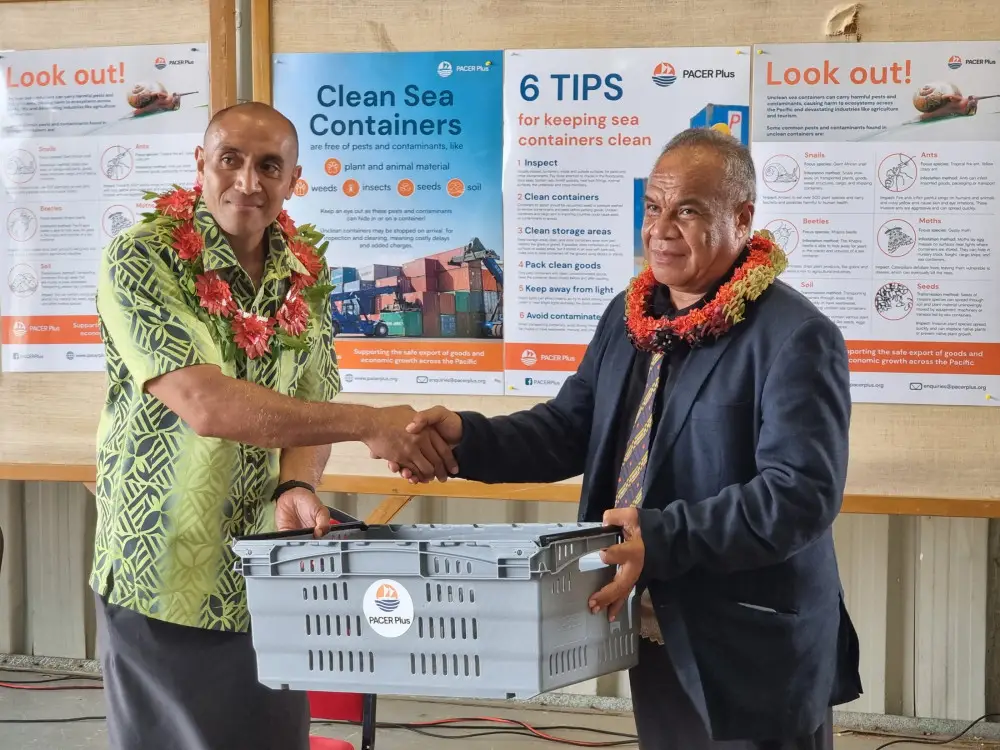
The PACER Plus Implementation Unit (PPIU) handed over 1,000 harvesting crates to Tonga’s Ministry of Agriculture, Food and Forests (MAFF) on Wednesday, 8 February. These harvesting crates will assist Tongan farmers by minimizing post-harvest damage and loss of produce harvested for export. “I’m happy to see the PACER Plus Implementation Unit team meeting the farmers and supporting the Tongan agricultural sector. I want to continue to grow the volume of my produce and this support will assist me and other farmers in doing that. I look forward to continued talanoa with the Implementation Unit on how to help me grow my business,” said Tevita Tapaivalu, one of many Tongan farmers present at the handover. MAFF CEO, Dr Viliami Manu, raised the importance of supporting farmers as the agricultural industry in the island kingdom has been severely impacted by COVID-19 as well as the volcanic eruption and tsunami in 2022. “This support comes at a critical time for our farmers. As a party to the PACER Plus agreement, Tonga is pleased to receive these benefits that will support our agricultural sector,” said Dr Manu. PACER Plus is a regional development-centered trade and investment agreement aligned with the Sustainable Development Goals. The Agreement is designed to support Pacific Island countries to stimulate economic growth by becoming more active partners in, and benefit from, regional and global trade. Ten countries are currently parties to the Agreement: Australia, Cook Islands, Kiribati, New Zealand, Niue, Samoa, Solomon Islands, Tonga, Tuvalu, and Vanuatu. -ENDS- Image Caption: Hon. Lord Fohe (right), Minister of Agriculture, Food, and Forests in Tonga receives 1,000 harvest bins from Roy Lagolago, Head of the PACER Plus Implementation Unit. More articles like this one
PACER Plus two years on
This month marks the second anniversary of when the Pacific Agreement on Closer Economic Relations Plus (PACER Plus) entered into force. PACER Plus is a regional development-centered trade agreement designed to support Pacific Island countries to become more active partners in, and benefit from, regional and global trade. Ten Pacific Island Forum countries ratified and have been party to the agreement since its entry into force on 13 December 2020: Australia, Cook Islands, Kiribati, New Zealand, Niue, Samoa, Solomon Islands, Tonga, Tuvalu, and Vanuatu. The PACER Plus Implementation Unit (PPIU), which manages and delivers the work programme, was established in Apia, Samoa last year. PPIU works with Pacific parties to implement activities under PACER Plus. The agreement provides members with a framework to sustainably grow their trade in services and expand participation in key service sectors such as tourism. Sustainable tourism development is a key driver of economic recovery in the Pacific with PACER Plus enabling more transparent and predictable operation conditions for domestic and foreign service providers. With the reopening of Tonga’s international borders, PPIU supported the Tongan tourism industry with training programs on customer service, communications, COVID-19 protocols, and other priority themes identified through a training needs analysis. “The impact of the pandemic on the Tongan tourism industry has been severe but we were pleased that PACER Plus provided the much-needed training to prepare our tourism industry as we welcome the world back to Tonga,” said Ms Lorraine Kauhenga, Deputy CEO at Tonga Ministry of Trade and Economic Development. PPIU was also pleased to support Solomon Islands and Samoa with the ePhyto Capacity Building Workshop attended by exporters and industry stakeholders. The electronic phytosanitary certificate, otherwise known as ePhyto, is a tool that transitions paper phytosanitary certificate information into a digital phytosanitary certificate. This electronic exchange between countries makes trade safer, faster, and cheaper. “ePhyto promotes opportunities to improve bilateral trade in the region and other parts of the world. It will advance trade efficiency by reducing costs associated with bilateral negotiations and reduce fraudulent certificates. The ePhyto system will improve trade thereby improving incomes, creating more employment opportunities, and thereby enhancing economic development,” said Hon. La’aulialemalietoa Leuatea Polataivao Fosi Schmidt, Samoa’s Minister of Agriculture and Fisheries. This year, Samoa hosted the sixth Pacific Labour Mobility Annual Meeting (PLMAM) where more than 150 delegates from government, private sector, international agencies, and stakeholders in the Pacific, Australia, New Zealand, and Timor Leste to discuss labour mobility priorities in the region. “The PLMAM is a significant medium by which we are advancing inclusive regional labour mobility cooperation in the Pacific. This meeting’s theme of ‘Reinvigorating labour mobility cooperation for development’ reiterates the opportunity for all labour mobility stakeholders to re-engage, reset and re-commit to advancing an effective level of cooperation that can enhance mutually beneficial development gains,” said Hon. Leatinu’u Wayne So’oialo, Samoa’s Minister of Commerce, Industry, and Labour. Moving forward, PPIU will focus on exports and broader trade facilitation in the agricultural sector, recovery of the tourism industry, improving cooperation under labour mobility, and implementing activities that focus on enabling PACER Plus parties to meet requirements of importing countries, implementing systems that make trade easier, and promoting export products while establishing business connections across the PACER Plus network. More articles like this one
2022 Pacific Labour Mobility Annual Meeting Outcomes

The 2022 Pacific Labour Mobility Annual Meeting (PLMAM), held on 7 – 10 November 2022 in Apia, Samoa, reached consensus among 14 countries on agreed regional labour mobility priorities for FY2023/24. A range of initiatives were collectively identified, aimed at increasing development benefits for participating countries while addressing identified risks. The 2022 PLMAM Outcomes Document summarises the agreed decisions derived from dialogue during the four-day meeting. The PACER Plus Arrangement on Labour Mobility (ALM), which provides for the PLMAM, is a regional framework for labour mobility cooperation. The agreed outcomes from the PLMAM are regional activities that address common issues raised by participating countries and stakeholders. These agreed activities include the development of processes for worker welfare and well-being to address welfare risks in sending and receiving countries; development of a cultural framework to assist employers increase their understanding of cultural differences; development of a worker education framework to foster the systematic development of worker skills; development of a reintegration strategy to guide the integration of returning workers into local labour markets; and inclusive consultations between labour sending and receiving countries to align labour mobility opportunities with supply priorities and capacities in sending countries so as to address skills drain risks. The regional priorities inform the labour mobility annual plan of the PACER Plus Implementation Unit (PPIU) for 2023/24, where they will be implemented in collaboration with relevant regional and international organisations. The PPIU’s role in Pacific labour mobility is to facilitate the implementation of the ALM by contributing to the creation of an enabling labour mobility environment in the Pacific through effective regional cooperation. Along with the regional activities generated from the PLMAM, the PPIU also provides support at the national level to participating countries in the areas of: advancing knowledge sharing and cooperation; improving policy and institutional frameworks; identifying and promoting new opportunities including for semi-skilled and skilled labour mobility; and increasing the development benefits of labour mobility while mitigating risks such as negative social impacts and brain drain. Held on an annual basis, the PPIU, as Labour Mobility Secretariat, will continue to work with participating countries to increase the effectiveness of the PLMAM in advancing regional labour mobility cooperation through inclusive dialogues amongst all stakeholders. The 2023 PLMAM will be held in Port Vila, Vanuatu where progress against the 2022 Outcome Statement will be discussed, and new priorities and activities identified. To view the full 2022 PLMAM Outcomes Document, please click on 2022-PLMAM-Outcomes-Document. -ENDS- More articles like this one
Rebuilding Tonga tourism after the pandemic
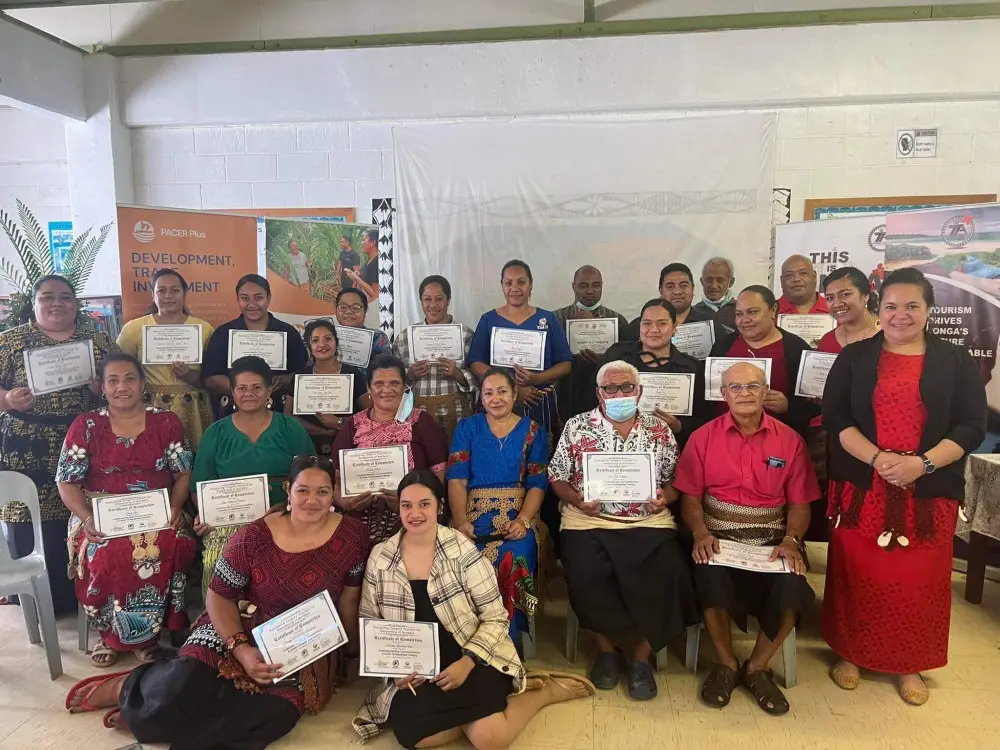
PACER Plus countries look to reinvigorate key industries to support their economic recovery with international borders reopening worldwide. The impact of the pandemic on tourism industry has been severe, where it is estimated some 80 per cent of tourism-sector jobs have been lost across the region. The tourism sector remains a key pillar of many Pacific economies and presents an important opportunity to stabilise service sectors and kick-start their diverse value chains again. For Tonga, pre-pandemic tourism contributed to over 11 per cent of GDP, a critical factor recognised by Lorraine Kauhenga, Deputy CEO at Tonga Ministry of Trade and Economic Development (MTED) when developing the program of support for international trade under the PACER Plus Agreement. Key tourism markets for Tonga are Australia and New Zealand, where over 70 per cent of tourist arrivals originate from, and thus MTED prioritised support to the Tonga Tourism Authority (TTA) as measure. With the support of PACER Plus Implementation Unit, the TTA commenced a fast-tracked program of training and re-training tourism staff. Priority themes identified through a training needs analysis in late 2021 included customer service, communications, and COVID-19 protocols as key areas for development. On 29 June 2022, the first of a series of the customer service and communications training took place at Tungi Colonade in Nuku’alofa. Some 24 participants developed skills in greeting customers, responding to complaints, and range of other activities over the two-day training. “The Ministry would like to thank the TTA for leading this much needed training in preparing our tourism industry for the reopening of the borders, learning new things as we adapt to the new norm of living with COVID-19 and its uncertainty, but also to serve as a refresher to gain new energy as we once again greet the world,” said Ms Kauhenga. Training on health and hygiene standards and COVID-19 soon followed on 11 July 2022 in Nuku’alofa, with more trainings to be rolled out across the countries in priority locations including Vava’u, Ha’apai and ‘Eua. “Whilst the pandemic has had many devastating impacts, a positive development has been the increased use of technology in the way we work. This was seen as a key opportunity for expanding the reach of training activities,” said Ms Simata Palu, Planning and Development Manager at TTA. With support from the PACER Plus Implementation Unit, TTA was able to live stream their event. “This is an important step in making our training more inclusive and accessible, as well as sustainable. Whilst we still need to develop our systems and processes to best capture this new way of delivering training, we are learning new skills and will strive to make this better as we progress,” said Ms Palu. Supporting economic recovery and promoting trade in the region is key objective of the PACER Plus Agreement. As we look to the future, many countries will consider prioritising opportunities that tourism presents in creating jobs, expanding the services sector, and international investment – all key elements of PACER Plus, and the role of the Implementation Unit in supporting. “We also appreciate the financial assistance provided through the PACER Plus Implementation Unit in making this training possible. We look forward to more successful trainings such as these and regaining the world’s confidence in our tourism industry,” said Ms Kauhenga. More articles like this one
Leveraging labour mobility for local business development

Give a man a fish and you feed him for a day. Teach him how to fish and you feed him for a lifetime. For many, labour mobility provides short-term but necessary support for families and communities back home. For a few, it means a step up to entrepreneurship and a way to support families long term when they return home. In 2008, Tumanuvao Pualele Fiu travelled from his Samoan village, Poutasi to Hastings, New Zealand as one of the first participants of the Recognised Seasonal Employer (RSE) scheme. He held a managerial position at Johnny Appleseed Holdings Limited for several months where he was responsible for overseeing a team of fellow RSE workers from the same village. Like other RSE workers, Fiu left Samoa with an aim to attain tangible outcomes for his family. During this time, he managed to save for, purchase and ship over a vehicle to Samoa. This humble sedan was to be the first step toward Fiu’s entrepreneurship endeavours. Upon his return to Samoa, Fiu started his own taxi service using the vehicle he had shipped from New Zealand. The business began well. Fiu was able to support his family through an arrangement with a well-known resort to ferry clients to nearby attractions. Tragedy stuck however on 29 September 2009 when the tsunami caused major damage to villages and businesses, including resorts, along the south coast of Samoa. Fiu’s taxi was also badly damaged. Despite losing his working vehicle, Fiu was able to use his savings from the RSE to start a brick-making business. The start-up was timely as affected areas of the Samoa south coast were rebuilding homes, churches, and hotels after the disaster. The products manufactured by Fiu’s brick business helped with the rebuild. After establishing the brick-making business, Fiu expanded into commercial fishing. He purchased two vessels and began supplying fish to the local market. Although the venture was successful, the inherent risks associated with fishing such as cyclone threats and basic sea safety caused Fiu to consider returning to port for good to pursue land-based business opportunities instead. He decided to sell the fishing vessels and use the funds to develop land for farming. Fiu now oversees a plantation where he primarily grows taro. His eldest son works on the family farm and assists in transporting the taro to market. Besides the taro plantation and the brick-making business, which is managed by his second eldest son, Fiu has diversified into lawn mowing and hiring out public address system. He employs up to 20 workers from the village through his various businesses. Tuatagaloa Joe Annandale, Founder of Poutasi Development Trust and Falealili Seasonal Workers Scheme, praised Fiu’s RSE journey at the Pacific Labour Mobility Annual Meeting 2022 held in Apia from 7-10 November. “The RSE journey for Tumanuvao Pualele Fiu and his family has gone full circle. Along with his many businesses, Fiu also mentors youths who wish to participate in the RSE scheme. He offers guidance and reinforces the need for participants to be disciplined in their work and life overseas as they are representing their families, village, and Samoa,” said Mr Annadale. Roy Lagolago, Head of PACER Plus Implementation Unit, agrees. “Fiu’s story is one of many encouraging examples of how labour mobility has been transformational for many Samoans and their families. PACER Plus recognizes that labour mobility as a vital trade initiative between Australia, New Zealand, and Pacific Island Countries delivering shared economic benefits across the region,” said Mr Lagolago. More articles like this one
PLMAM 2022 concludes in Apia, Samoa
The sixth Pacific Annual Labour Mobility Meeting (PLMAM) 2022 was held in Apia, Samoa from 7-10 November 2022. Hosted by the Government of Samoa, this year’s PLMAM is the first in-person meeting following the hybrid-mode PLMAM in 2021. The 2022 PLMAM was attended by over 150 delegates from government, private sector, non-government actors, international agencies, and stakeholders in the Pacific, Australia, New Zealand, and Timor Leste to discuss labour mobility priorities in the region. PLMAM is provided under the Pacific Agreement on Closer Economic Relations (PACER) Plus Arrangement on Labour Mobility as a mechanism to advance regional labour mobility cooperation. “The significance of the PLMAM lies in the opportunity to bring the region together to discuss issues and come up with solutions to address these issues as a collective. As we heard this week, labour mobility is not just a development initiative but also an economic initiative for both labour sending and receiving countries,” said Mr Roy Lagolago, Head of PACER Plus Implementation Unit. “The PLMAM effectively provides the preeminent opportunity for open and inclusive dialogues that can advance the level of cooperation needed to enhance the benefits of labour mobility in the Pacific,” said Mr Lagolago. The theme of the 2022 PLMAM is “Reinvigorating Labour Mobility Cooperation for Development” and is an opportunity for Pacific labour mobility stakeholders to re-engage, reset, and re-commit to advancing effective regional cooperation. The 2022 PLMAM generated stimulating inclusive dialogues on current labour mobility opportunities and challenges and identified regional solutions and concrete actions for 2023/24. The alternate Chair of the final PLMAM Dialogue, Pulotu Lyndon Chu Ling, CEO of the Ministry of Commerce, Industry, and Labour concluded by saying that “whilst the recently discussed recommendations in today’s session for more workshops, technical talanoas and additional staff of the PPIU are a step in the right direction, however what we need as a collective are practical solutions to our longstanding problems, which includes appropriate and affordable accommodation, improved pay rates, more efficient visa processes, to name a few.” Vanuatu made an offer to host the 2023 PLMAM. The PLMAM is funded by the Governments of Australia and New Zealand and is facilitated by the PACER Plus Implementation Unit which exists as the Labour Mobility Secretariat that supports the implementation of the Arrangement on Labour Mobility. More articles like this one
Samoa ready to host labour mobility annual meeting
The sixth Pacific Annual Labour Mobility Meeting (PLMAM) will be hosted by the Government of the Independent State of Samoa and will be held at the Taumeasina Island Resort in Apia on 7-10 November 2022. The PLMAM is provided under the PACER Plus Arrangement on Labour Mobility (ALM) as a mechanism to advance regional labour mobility cooperation. It has been an annual event since 2017, upon the signing of the PACER Plus Agreement and the Arrangement. However, the outbreak of the COVID-19 pandemic cancelled the PLMAM in 2020 and resolved to a virtual PLMAM in 2021. The 2022 PLMAM will be the first in-person meeting since 2019 and will attract more than 100 participants from around the region to discuss regional labour mobility priorities. The theme of the 2022 PLMAM is “Reinvigorating Labour Mobility Cooperation for Development” and is an opportunity for Pacific labour mobility stakeholders to re-engage, reset and re-commit to advancing effective regional cooperation. This level of cooperation is particularly important as the development impact of labour mobility are mostly contingent on the policies and conditions in both labour receiving and sending countries. Improved cooperation is therefore crucial to ensuring that an enabling labour mobility environment is created to support sustainable and inclusive socio-economic development for the Pacific. The 2022 PLMAM is anticipated to generate stimulating inclusive dialogues on current labour mobility issues and priorities. More importantly, it is anticipated to identify regional solutions and concrete actions for 2023/24. The PLMAM is funded by the Governments of Australia and New Zealand and is facilitated by the PACER Plus Implementation Unit which exists as the Labour Mobility Secretariat that supports the implementation of the PACER Plus Arrangement on Labour Mobility. More articles like this one
PACER Plus Ministerial Meeting discuss COVID-19 economic recovery
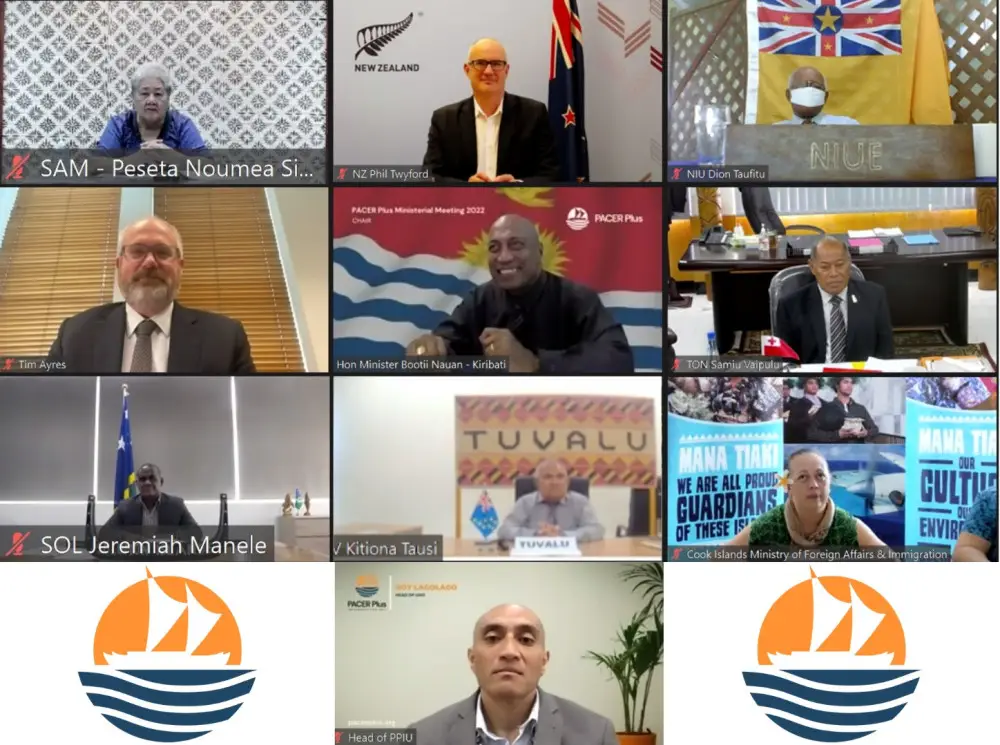
Ministerial representatives of the Parties to the PACER Plus Agreement and high-level government officials met virtually on Wednesday 27 July 2022. Nauru and Vanuatu were also present at the Ministerial Meeting as signatories to PACER Plus and the Pacific Islands Forum Secretariat attended as Observer. The PACER Plus Ministerial Meeting 2022 came at a critical time for the region as Pacific Island economies, many of whom are dependent on tourism, were severely impacted by COVID-19 border closures. The Ministerial Meeting discussed how PACER Plus can provide support to the economic recovery of PACER Plus Pacific Island Parties, pursuance of strategic partners to support the work programme and economic integration efforts, and enhancement of mutual gains from the labour mobility work programme. Kiribati hosted the PACER Plus Ministerial Meeting and the Minister for Tourism, Commerce, Industry and Cooperatives, Honourable Bootii Nauan chaired the meeting. He paid tribute to the late Deputy Prime Minister and Minister of Fisheries and Trade for Tuvalu, Honourable Minute Taupo, who passed away in May this year. “The late Honourable Taupo’s contributions to Tuvalu and her people were immense. He was also a champion of PACER Plus and was quite instrumental in Tuvalu ratifying the Agreement this year. Through his incredible leadership, he has set an example for us all as Pacific leaders of PACER Plus countries to perform our roles well in service to our people and our community,” said Mr. Nauan. Pacific Agreement on Closer Economic Relations Plus or PACER Plus is a regional development-centered trade and investment agreement aligned with the Sustainable Development Goals. The Agreement is designed to support Pacific Island countries to stimulate economic growth by becoming more active partners in, and benefit from, regional and global trade. Nine countries are currently parties to the Agreement: Australia, Cook Islands, Kiribati, New Zealand, Niue, Samoa, Solomon Islands, Tonga, and Tuvalu. -ENDS- Caption: Government leaders from nine PACER Plus countries virtually met for the second PACER Plus Ministerial Meeting held on Wednesday 27, July 2022. More articles like this one