
PACER Plus Joint Committee Meeting Concludes in Niue

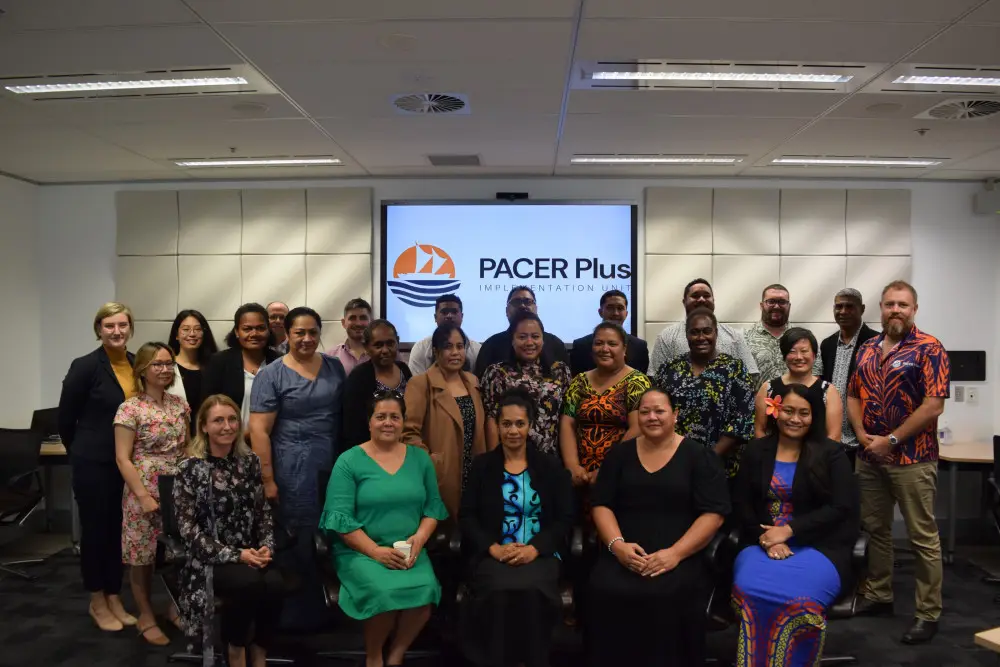
ALOFI, Niue – The PACER Plus Joint Committee Meeting concluded today, marking a significant milestone for regional cooperation in the Pacific. The three-day meeting brought together officials from the ten countries participating in the PACER Plus, enabling them to meet face-to-face for the first time since entry into force of the Agreement due to the COVID-19 border closures. Government representatives from the 10 PACER Plus parties met in Niue for the 6th PACER Plus Joint Committee Meeting. The Pacific Agreement on Closer Economic Relations Plus or PACER Plus is a regional trade and development agreement between 10 countries: Australia, Cook Islands, Kiribati, New Zealand, Niue, Samoa, Solomon Islands, Tonga, Tuvalu, and Vanuatu. The agreement aims to enhance economic cooperation, expand regional trade, and promote sustainable development across the Pacific. The three-day PACER Plus Joint Committee Meeting provided an opportunity for delegates to engage in fruitful talanoa and address issues impacting the implementation of the PACER Plus. The officials deliberated on various topics, including trade in goods, trade in services, investment, labour mobility, and measures to increase the value and long-term impact of the PACER Plus Agreement and Arrangement on Labour Mobility. Some of the key outcomes from the PACER Plus Joint Committee Meeting included adoption of the Annual Plan for the Financial Year 2023-2024, endorsement of the General Review process for the Agreement and endorsement of the PACER Plus Monitoring and Evaluation, Learning and Adaptation (MELA) Framework and Gender Equality and Disability and Social Inclusion (GEDSI) Strategy. Delegate at the PACER Plus Joint Committee Meeting in Niue. Ms. Doreen Siataga, the Niue Secretary for Finance and Chair of the 6th PACER Plus Joint Committee meeting, highlighted the significance of the event. She stated, “Niue is pleased to have hosted the PACER Plus Joint Committee Meeting, a gathering that signifies the unwavering commitment of the region towards economic growth and sustainable development for our communities.” -END- More articles like this one
PACER Plus and PTI New Zealand partnership to boost investment and economic growth in the Pacific

Pacific Trade Invest New Zealand (PTI NZ) in collaboration with the PACER Plus Implementation Unit (PPIU) is delighted to announce the launch of the Investment Readiness Programme aimed at stimulating economic growth and creating investment opportunities in the Pacific. The programme will develop a robust pipeline of up to 15 investable projects within the eight Pacific parties of PACER Plus, including Cook Islands, Niue, Kiribati, Samoa, Solomon Islands, Tonga, Tuvalu, and Vanuatu. The primary objective of the Investment Readiness Programme is to support selected small and medium-sized enterprises (SMEs) in the Pacific by assisting them in developing investment proposals. These proposals will be utilised by PTI NZ to facilitate connections between foreign investors and developers, fostering mutually beneficial partnerships and driving sustainable economic development. The Investment Readiness Programme will adopt a sector-agnostic approach, focusing on key industries such as agriculture, renewable energy, manufacturing, fisheries, and tech/innovation. By taking this approach, the programme aims to leverage the diverse strengths and capabilities of Pacific SMEs, highlighting the region’s potential to global investors. Ms Glynis Miller (left), PTI NZ Trade Commissioner with Mr Alipate Tavo, PPIU Trade and Investment Adviser. A core principle of the Investment Readiness Programme is its commitment to promoting and supporting women-owned or led businesses. Through active engagement and dedicated resources, the programme will empower women entrepreneurs, providing them with the necessary tools and opportunities to thrive in their respective industries. Furthermore, the programme will actively promote these women-owned businesses to the impact investment community in New Zealand and abroad, recognising the significant contributions they make to the Pacific economy. Ms Glynis Miller, PTI NZ Trade Commissioner, says: “Pacific Trade Invest New Zealand is committed to assisting Pacific parties of PACER Plus expand their investment opportunities and bring global attention to the many high-value projects in the Blue Pacific. The programme offers a vital practical step for SMEs seeking equity and growth, and wanting to assess their potential firstly for investment, then for business and export development.” Mr Roy Lagolago, Head of PPIU, expressed his enthusiasm for the programme, emphasizing its value in driving economic transformation and attracting foreign investments in the Pacific. “The Investment Readiness Programme represents a tremendous opportunity for the Pacific. By nurturing and showcasing the potential of our SMEs, we are not only fostering economic growth but also promoting the values of inclusivity and diversity. Investing in businesses with a higher representation of women in leadership positions has proven to be a predictor of long-term value creation and improved financial performance. We are confident that the programme will serve as a catalyst for positive change, unlocking new avenues of development and prosperity for the Pacific,” said Mr Lagolago. So far, 12 projects have been undertaken across the Pacific. These businesses operate across a breadth of industries and have been chosen both due to the exciting scope of their work and potential for growth. While the participation in the programme cannot provide an assurance for future investment, it will provide a solid foundation to understand where businesses can focus attention to attract committed financial partners. The PACER Plus Implementation Unit and Pacific Trade Invest New Zealand are excited to embark on this collaborative journey to boost investment readiness and propel Pacific businesses onto the global stage. By capitalising on the region’s strengths, the Investment Readiness Programme aims to create a thriving investment environment that fosters sustainable development, economic empowerment, and inclusive growth. -END- More articles like this one
PACER Plus to support sustainable economic development for Niue

ALOFI, Niue – The regional governance meeting for the Pacific Agreement on Closer Economic Relations Plus (PACER Plus) will be held in Alofi, Niue on 30 May – 1 June 2023. The PACER Plus Agreement is a comprehensive free trade agreement (FTA) between the Pacific Island Countries and Australia and New Zealand, covering trade in goods, trade in services, investment, and a side-arrangement on labour mobility. The Agreement was signed in 2017 and entered into force in December 2020. Niue is one of eight Pacific countries that have ratified the Agreement. Other Pacific Parties are the Cook Islands, Kiribati, Samoa, Solomon Islands, Tonga, Tuvalu, and Vanuatu. PACER Plus is a unique FTA in the sense that its central focus is to support regional development and assist Pacific Parties to participate more actively in, and benefit from, international trade. The Agreement is in fact one of few FTAs to have a Development and Economic Cooperation Work Programme which provides development assistance to Pacific Parties to strengthen their capacity to benefit from regional and international trade. Premier of Niue, Hon Dalton Tagelagi (second from left), with the PACER Plus Implementation Unit team. Niue will host the first in-person PACER Plus Joint Committee Meeting from 30 May to 1 June. Mr. Frank Sioneholo, the Economics and Planning Director and the PACER Plus national focal point for Niue, said: “For Niue, international trade and economic integration is fundamental to overcoming the challenges inherent to our smallness and remoteness from key markets. PACER Plus provides a framework for increased regional economic integration and at the same time provides assistance needed to enable us to benefit from trade.” In an interview with one of the advisers from the PACER Plus Implementation Unit, Dr. Alisi Kautoke Holani, she stated: “Increasing the benefits of PACER Plus for Niue requires targeted support for areas where Niue has comparative advantage.” She added: “From Niue’s GDP data over the past years, the services sector is clearly the major contributor to economic growth and tourism is shown to have the greatest economic potential. The PACER Plus Agreement can play a critical role in the development of your services sector as it is the only Pacific FTA in force with details commitments on trade in services and can therefore support the creation of an enabling environment that can increase foreign direct investment, economy-wide productivity, connectivity, and competitiveness of other exports including agricultural products such as your vanilla and honey.” She also highlighted that the transition and rapid advancement in the digital economy and digital trade provides many opportunities for small and remote island countries such as Niue. “Services are central to digital trade, and we are now seeing that a broad range of services can now be supplied online, which presents significant opportunities for our small and remote island countries. This was particularly evident during COVID-19. The PACER Plus Agreement can facilitate the provision of enabling policies and strategies for digital supply and e-commerce,” said Dr Holani. The PACER Plus Agreement also covers trade in goods and seeks to increase merchandise trade between Parties. This is achieved through improved customs procedures, improved rules of origin, use of Sanitary and Phyto-Sanitary (SPS) measures to protect plant, animal and human life and health. This allows for the increase trade, address barriers to trade that may arise from technical regulations, standards, and conformity assessment procedures (TBT). These provisions provide opportunities to increase Niue’s agricultural and fisheries exports and support Niuean businesses to take advantage of duty-free access to not only Australia and New Zealand but also the other eight Pacific Parties. Labour shortages are also a recognised development constraint that cuts across all sectors in Niue. Dr. Holani further stated that this is another area where the PACER Plus can provide benefits to Niue. “The PACER Plus Arrangement on Labour Mobility provides a framework to facilitate labour mobility from other Pacific PACER Plus Parties to address labour shortages in Participant labour receiving countries such as Niue,” she said. Over the past week, the PACER Plus Implementation Unit, together with the Australian National University, were in Niue upon the request of the Niuean government, to conduct stakeholder consultations to later inform the development of a strategy to facilitate the movement of workers from other Pacific PACER Plus Parties to meet labour shortages in key sectors. “The scoping visit was a success, and we are looking at ways where we can address immediate labour shortages in critical service sectors such as health, while at the same time consider a strategy that can sustainably address labour shortages in Niue in a manner that meets required labour standards and ensures the protection of workers coming in,” said Dr. Holani. The PACER Plus Implementation Unit, based in Samoa, is a regional organisation established to administer the Agreement’s Development and Economic Cooperation Work Programme and support Parties in the implementation of the Agreement. -END- More articles like this one
PACER Plus SPS and TBT Workshop Empowers Solomon Islands to Foster Trade Excellence
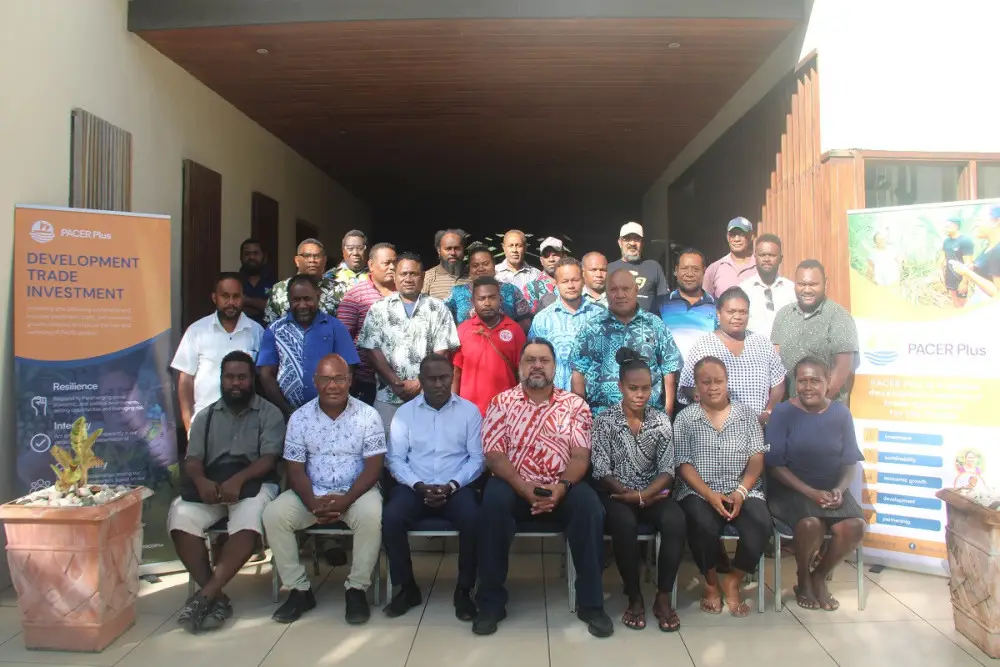
HONIARA, Solomon Islands – The Pacific Agreement on Closer Economic Relations Plus (PACER Plus) successfully concluded its SPS and TBT Workshop in Honiara, Solomon Islands, held from 23-24 May. The workshop was specifically designed to create awareness and promote understanding of the Sanitary and Phytosanitary (SPS) and Technical Barriers to Trade (TBT) obligations and requirements outlined in the PACER Plus Agreement. The two-day workshop brought together key stakeholders from the government, private sector, and non-governmental organisations in Solomon Islands. The event ensured that relevant government officials, importers, exporters, farmers, women groups, youth, community groups, and all those involved in trade are well-informed and updated on SPS and TBT measures, as well as their implementation when engaging in trade activities with other parties of PACER Plus. “The workshop has been an eye-opener for many of us,” said Ms Claudine Watoto (left), owner of Island Agro Fresh, shaking hands with Mr Alipate Tavo, PPIU Trade and Investment Adviser at the PACER Plus SPS and TBT Awareness Workshop in Honiara, Solomon Islands. “This workshop and the topics covered are very important, especially for us who want to export our local products. It’s been an eye-opener for many of us. Thank you to the PACER Plus Implementation Unit for facilitating this. It has allowed us to think on what needs to be improved, and identify where the gaps are,” said Ms Claudine Watoto, owner of Island Agro Fresh, a Solomon Island producer of flour from crops such as potato, banana, and cassava. The Government of Solomon Islands expressed its gratitude to all the participants and to the PACER Plus Implementation Unit for their dedication and contribution to the success of the workshop. “Historically, we have been facing a great deal of challenges in getting our local unique products into the bigger markets, such as Australia and New Zealand. Under PACER Plus, there is a Development Economic Cooperation Work Programme that also provides support to responsible agencies to assist them in creating an enabling environment for private sectors,” said Mrs Jenny Barile, Deputy Director of External Trade. “Thank you to PPIU for conducting this awareness workshop, and for the continuous support towards the implementation of PACER Plus in Solomon Islands. PACER Plus will help our country to become more active partners in, and benefit from, regional and global trade and, in turn, create new opportunities for economic growth, jobs, and raising living standards.” -END- More articles like this one
PACER Plus Workshop Empowers Pacific Trade Officials with Insights
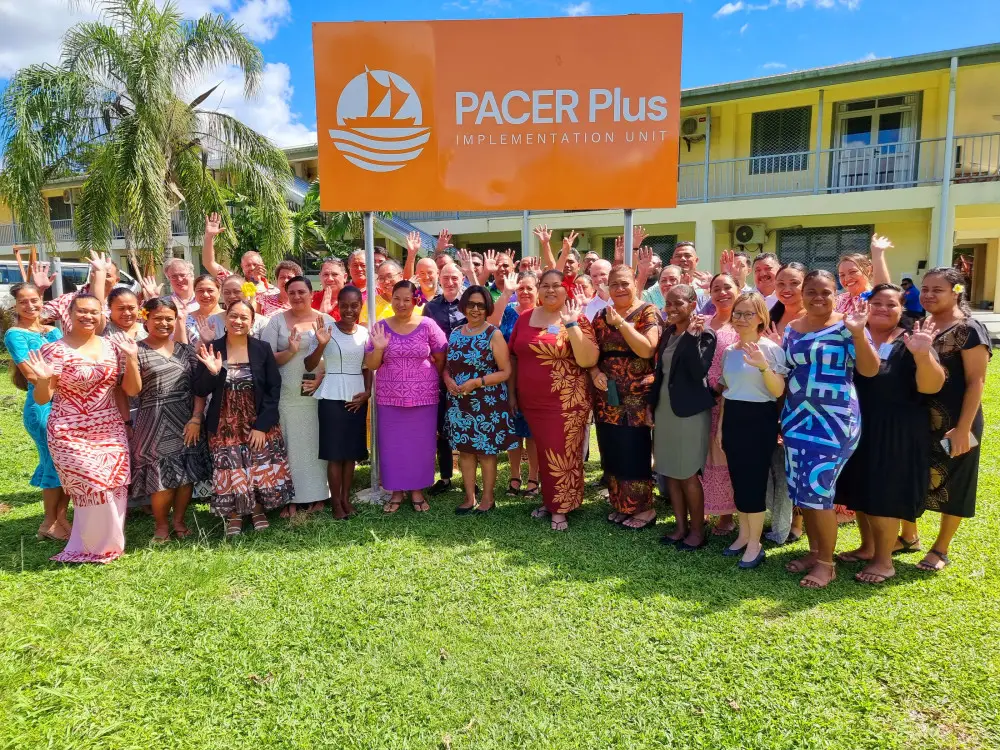
APIA, Samoa – The four-day PACER Plus Regional Trade in Services Workshop, aimed at enhancing the capacity of government officials from PACER Plus Parties, concluded successfully yesterday. The workshop, held from 8-11 May in Samoa’s capital Apia, provided a platform for participants to delve into the significance of services trade, explore the PACER Plus services chapter and schedules of specific commitments, analyse trade in services statistics, and identity opportunities for Pacific Parties to bolster their service sectors and maximise gains from services trade. The workshop featured world class experts who shared their expertise and knowledge on various aspects of services trade. These included trade experts from organisations such as the World Trade Organisation, Lexbridge Lawyers, World Bank, United Nations Conference on Trade and Development, TradeWorthy, Pacific Islands Forum, and the Pacific Community. Presentations from the ASEAN region and the Regional Cooperation Economic Partnership also highlighted lessons from other regions and Free Trade Agreements (FTAs) that could assist the development of trade in services in the Pacific. Through comprehensive sessions and engaging exchanges with experts, the participants deepened their understanding of the vital role services play in the region’s economic growth. The workshop fostered a collaborative environment that empowered the participants to explore the opportunities available to them and envision strategies to strengthen their service sectors. “I wish to acknowledge the PACER Plus Implementation Unit (PPIU) for organising this workshop. The first day of the workshop, I remember saying to myself that I didn’t fully understand trade in services. At the end of it, I can now say that I’ve gained invaluable insights into services trade. My understanding of the vital role services play in Solomon Islands and indeed regionally has deepened,” said Janice Ashwin, Senior Trade Officer with the Ministry of Foreign Affairs and External Trade in Solomon Islands. Reflecting on the workshop’s success, Laisiana Tugaga, Operations and Secretariat Manager of the PACER Plus Implementation Unit, remarked: “We’ve learnt this week that the services sector is the backbone of economic development, creating more jobs and economic activity than any other sector. We are seeing this even in the Pacific with services value added accounting for more than half of some countries’ GDP – 70 per cent for Samoa. PACER Plus offers a unique opportunity to address barriers to trade in services in the Pacific. Not only is it the only FTA in the Pacific with a trade in services agreement that is in force, but it also has a development cooperation programme that can provide targeted support to our countries. We are confident that the knowledge gained during this workshop will pave the way of enhanced participation and gains from services trade in the Pacific.” From this workshop, the Parties have agreed to continue targeted capacity building initiatives to broaden Pacific stakeholders’ understanding of Parties’ services obligations and commitments under the PACER Plus Agreement. The Parties also agreed to look at renewed processes and tools to improve the development of project proposals under the PACER Plus Development and Economic Cooperation (DEC) work programme. The PACER Plus Implementation Unit administers the DEC and provides support to Parties for the implementation of activities including Trade in Services. -END- About PACER Plus: The Pacific Agreement on Closer Economic Relations Plus (PACER Plus) is a unique regional trade and investment agreement among eight Pacific countries and Australia and New Zealand. The agreement aims to promote economic cooperation and enhance trade between Pacific countries and their larger neighbours, Australia and New Zealand. More articles like this one
Regional Workshop to Boost Services Trade under PACER Plus
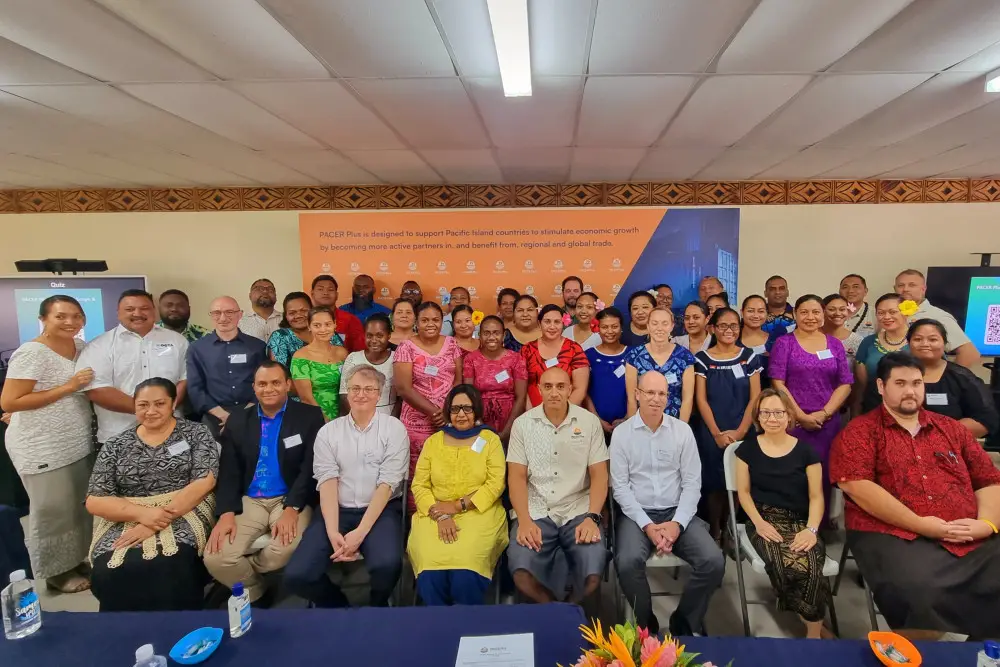
APIA, Samoa – The Pacific Agreement on Closer Economic Relations Plus (PACER Plus) is the only Free Trade Agreement in the Pacific which has entered into force, that has a Trade in Services component. It offers better access and greater certainty for service suppliers in Parties and has the potential to deliver significant gains given the increasing importance of services trade in Pacific economies. For these small and remote economies, services trade can directly contribute to sustainable economic development in the region through generating jobs, facilitating global and regional value chains, and enhancing participation of Pacific micro, small and medium-sized enterprises in those chains. The PACER Plus Implementation Unit (PPIU) recognises the need for further capacity development support to help Pacific countries understand their obligations and optimise the opportunities provided in the PACER Plus Agreement to increase their participation and benefits from services trade. The PPIU is therefore hosting a four-day Regional Trade in Services workshop which starts today in Apia, Samoa. Experts in Trade in Services from around the world have been engaged to conduct the training, including from the World Trade Organisation, International Telecommunications Union, United Nations Conference on Trade & Development, World Bank, Asian Development Bank, Pacific Community, and the Pacific Islands Forum Secretariat. Experts from the Association of Southeast Asian Nations (ASEAN) are also engaged to share lessons learnt from services trade in their region and how it can apply to the Pacific. The workshop is attended by key trade in services officials from Pacific Parties, namely Cook Islands, Kiribati, Niue, Samoa, Solomon Islands, Tonga, Tuvalu, and Vanuatu. “The regional workshop will help Pacific countries enhance their participation and benefits from services trade under PACER Plus. It is a significant step towards effective capacity building and implementing Trade in Services under the PACER Plus agreement,” said Mr Roy Lagolago, Head of PPIU. -END- Photo Caption: Pacific trade officials from PACER Plus parties met at the PPIU office in Apia, Samoa today for the 4-day PACER Plus Trade in Services Workshop. More articles like this one
PACER Plus-funded food safety training concludes in Solomon Islands
A food safety training program for food processors and exporters on food safety requirements and the importance of compliance and implementation of food safety plans (HACCP) was successfully concluded this week in Honiara, Solomon Islands. The training, which was held from 24-25 April, was conducted by the Food Safety Unit within the Environmental Health Division of the Ministry of Health and Medical Services. The two-day training was funded by the Pacific Agreement for Closer Economic Relations Plus (PACER Plus). PACER Plus is a unique trade and investment agreement aligned with the Sustainable Development Goals. The agreement is designed to support participating countries to stimulate economic growth by becoming more active partners in, and benefit from, regional and global trade. Ten countries are currently parties to the agreement: Australia, Cook Islands, Kiribati, New Zealand, Niue, Samoa, Solomon Islands, Tonga, Tuvalu, and Vanuatu. The training program aimed to provide awareness to food processors and exporters on the food safety requirements of the Pure Food Act 1996 and subsequent legislation, and most critically, for facilitation of food export. Compliance with HACCP is a critical requirement mandated by law for accessing food export markets. The program also aimed to train food processors, exporters, and handlers on the important issues of food safety and increase their understanding and desire for improvement and compliance. More than 20 participants participated in the workshop. The Ministry of Health and Medical Services expressed its gratitude for receiving the necessary support to conduct the training, and acknowledged the Department of External Trade under the Ministry of Foreign Affairs and External Trade as the national focal point for PACER Plus. Deputy Secretary to MFAET, Mr Cornelius Walegerea, said: This training will contribute to making a difference in our food processing and export industries by improving businesses in Solomon Islands to produce better quality and safe products, and allowing our exporters to be more effective players in the regional and international markets. PACER Plus Implementation Unit (PPIU) is committed to supporting PACER Plus parties to improve food safety and increase their competitiveness in the global marketplace. PPIU will continue to support capacity building efforts on food safety in Solomon Islands and other PACER Plus parties. More articles like this one
Tonga Launches Labour Mobility Supply Management Strategy
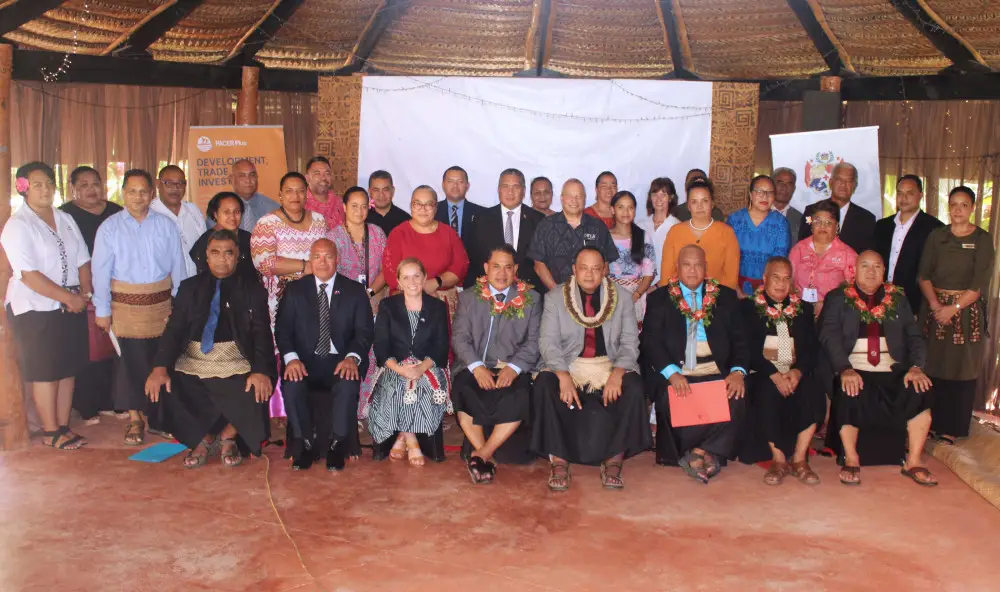
NUKU’ALOFA, Tonga – The Tongan Prime Minister Hon. Hu’akavameiliku has launched the Tonga Labour Mobility Supply Management Strategy (TLMSMS) today, funded by the Pacific Agreement on Closer Economic Relations Plus (PACER Plus). The strategy aims to develop a well-managed, coordinated labour mobility supply management programme that is equitable, inclusive, can broaden the range of appropriate and aligned skills for both domestic and international supply. The Prime Minister emphasised the importance of labour mobility as a key component of Tonga’s long-term development strategy, saying: “Labour mobility provides an important, viable development opportunity for Tonga to generate positive impacts for our socio-economic development. It is therefore essential to embed labour mobility as a key component of Tonga’s long-term development strategy.” Tonga has been participating in the Australian and New Zealand labour mobility schemes since their inception in 2007 for New Zealand’s Recognised Seasonal Employer (RSE) scheme, 2012 for Australia’s Seasonal Worker Programme (SWP), and 2018 for the Pacific Labour Scheme (PLS). Tonga has consistently been one of the three main Pacific labour supply countries. Tongan men have predominantly been recruited for seasonal work in Australia and New Zealand, with Tongan women accounting for around 13 per cent of SWP and RSE visa grants in recent years. The TLMSMS aims to address the labour mobility supply challenges faced by Tonga as demand for Pacific labour is expected to increase significantly over the next five years. The Pacific Australia Labour Mobility (PALM) scheme is expected to increase from its present 35,000 workers to almost 50,000 by 2025-26, while New Zealand’s labour mobility programmes are expanding to new sectors including construction and infrastructure, meat and seafood processing, the care workforce, and tourism and hospitality. Head of PACER Plus Implementation Unit, Mr. Roy Lagolago, said: “Labour mobility is a potential development vehicle for Pacific labour sending countries such as Tonga but optimising these benefits requires conducive policies and strategies to balance the costs and benefits for the country. The Tonga Labour Mobility Supply Management Strategy has been developed through evidence-based approaches to help increase Tonga’s development gains from labour mobility and contribute to the country’s sustainable economic development.” The TLMSMS was jointly conducted by labour mobility experts and officials from Tonga, New Zealand, and Australia working collectively to ensure an evidence-based approach to the findings. The TLMSMS has identified a range of skill shortages and labour shortages across the domestic market, particularly for medium to high-skilled professionals, trades, construction areas, and specific semi-skilled occupations. The Tonga 2021 Census of Population and Housing identified over 25 per cent of Tongan households have remittances from labour mobility workers as their main source of income. Temporary labour mobility remittances from Tongans working on SWP and RSE programmes were much higher than for any other labour-supplying country, with an estimated average of US$4,108 (TOP$9,545) sent per working season per person. The TLMSMS identified that the development challenge for Tonga is not a labour shortage but a skills shortage. This is largely due to the impact of permanent migration, a serious under-skilling of the work force, with lack of sufficient educational and vocational options, and labour mobility selection processes which allow over-skilled Tongans to take low-skilled jobs. Informed by evidence from the labour market data analysis, the TLMSMS provides an action plan for the next three years which will essentially provide a roadmap for Tonga’s management of its labour mobility supply. The key focus areas in the roadmap are improved labour mobility governance, improved labour mobility worker selection, targeted reintegration programmes, skills development to increase domestic skills supply and generate net-skills gains for Tonga, private sector engagement and labour market data management and intelligence programme. Tonga’s Ministry of Trade and Economic Development in collaboration with the Ministry of Internal Affairs, Ministry of Education and Statistics Department will lead the implementation of the Strategy and are required to submit an annual progress update to cabinet. The Governments of Australia and New Zealand both expressed their support of the Strategy and their commitment to the implementation of the action plan. -END- More articles like this one
PACER Plus supports Investment Agencies to better implement their obligations
SYDNEY, Australia – Investment officials from the Pacific Agreement on Closer Economic Relations Plus (PACER Plus) countries gathered in Sydney, Australia from 27-29 March to learn from investment experts and from each other on the investment component of PACER Plus. This workshop is the first opportunity for officials to meet and discuss the commitments and obligations all parties have made and share progress on implementation and ideas on how they can use PACER Plus as mechanism to improve the investment environment in their home countries. “By implementing the provisions in the Investment Chapter of PACER Plus, countries are demonstrating their commitment to increasing inclusive investment, creating jobs, and delivering better outcomes for their people across the country,” says Alipate Tavo, Trade & Investment Adviser at the PACER Plus Implementation Unit (PPIU). “Each country will have a different approach, but the principles remain the same.” PACER Plus is a regional development-centered trade and investment agreement aligned with the Sustainable Development Goals. The Agreement is designed to support participating countries to stimulate economic growth by becoming more active partners in, and benefit from, regional and global trade. Ten countries are currently parties to the Agreement: Australia, Cook Islands, Kiribati, New Zealand, Niue, Samoa, Solomon Islands, Tonga, Tuvalu, and Vanuatu. With the exception of Tonga which has a bilateral agreement with the United Kingdom, PACER Plus is the first International Investment Agreement (IIA) that many Pacific countries have entered into, a key milestone in improving access to international investment. PACER Plus is also one of the world’s most innovative IIAs in that it was developed and designed specifically for the economic and cultural contexts of the Pacific and it’s regional partners. The Introductory Investment Workshop will familiarise Investment Contact Points with the rationale behind inclusion of investment provisions in PACER Plus and the role of IIAs in partnership with national investment and broader economic development strategy. All Parties have identified the attraction of foreign investment as a key growth strategy; however, this must be done in manner that respects each Parties’ priorities, the sectors they want to focus on, and the types of investors and investments they would like to encourage, based on their community needs. Co-organised with the Asian Development Bank (ADB) in Sydney, the three-day workshop will be funded by the PPIU. In the following days, the ADB will convene a Business Registry Workshop for Forum Island Countries from 29-31 March to discuss improving the investment admission processes and procedures across the region. -END- More articles like this one
Bridging the Gender Gap in Agriculture

How Electronic Phytosanitary is Empowering Women in the Pacific The electronic phytosanitary certification system, also known as ePhyto, is a technological innovation that is making a significant contribution to gender equality in trade. This digital platform facilitates the certification of plant and food products by eliminating physical paperwork, reducing processing time, and enabling real-time tracking of certification status. One of the critical ways in which ePhyto supports gender equality is by enabling women to participate more fully in international trade. In many countries, women are traditionally excluded from trade-related activities due to cultural and social barriers. However, ePhyto has made it easier for Pacific women to access and participate in the export market by simplifying the certification process and making it more accessible. ePhyto removes the need for Pacific women to travel to and attend to government offices to complete phytosanitary paperwork each time they export/import. This system reduces time burdens, eliminates need to travel, and allows for online activities to be done at a time convenient to women. This system substantially supports Pacific women in engaging fully in trade. The Pacific Agreement on Closer Economic Relations Plus (PACER Plus) has been a crucial driver of ePhyto’s implementation in the Pacific region. PACER Plus is a unique trade agreement that aims to promote sustainable economic development in the Pacific by improving access to international markets. By supporting the adoption of ePhyto, PACER Plus is assisting member parties to increase their competitiveness in international trade while also promoting gender equality. Since September 2022, PACER Plus Implementation Unit provided training to a total of 123 biosecurity officials and exporters from seven member parties: Cook Islands, Kiribati, Niue, Samoa, Solomon Islands, Tonga, and Tuvalu. However, plans to involve stakeholders in Vanuatu, the latest Pacific country to ratify the agreement, have been delayed due to Cyclone Judy and Cyclone Kevin that hit the country this month. Out of all the participants who received training, 42 per cent are women. May Schaaf Vi, Manager Operations for Hihifo Foods, attended the PACER Plus ePhyto Training in Nuku’alofa, Tonga. “In my past experiences, the manual phyto certification generally takes a day or two to process. With ePhyto, processing the certificates will almost be instant which would assist us greatly in exporting and importing goods,” said Ms. Vi. ePhyto is a technological innovation that is having a significant impact on promoting gender equality in the Pacific. By simplifying the certification process and eliminating gender-based barriers to trade, ePhyto is enabling more Pacific women to participate in international trade and access new economic opportunities. More articles like this one