
Rethinking the Development “Wins” from Labour Mobility

The development benefits of labour mobility are not as straight forward as we would like. Emeritus Professor Richard Bedford dwelled on the complexities of the labour mobility-development nexus saying “we’re just assuming that labour mobility is always good, or labour mobility is always bad. Labour mobility is a process and an option that individuals can exercise at different times in their lives, depending on the access they’ve got to other places to live in, and it’s not just a simple linear direct relationship”. Labour mobility generally refers to the movement of labour to deliver a service in an overseas labour market. It can cover movement for very short periods or a much longer or even permanent term. Similarly, development is defined by scale, and it is crucial to recognise the factors which enhance or mitigate development at every level. Labour migration can generate “triple wins” for migrants, their countries of origin and the countries that receive them. Photo: PALM Scheme Professor Bedford elaborated that “if you’re looking at mobility generally, you’re looking at decisions that people make about moving in order to achieve some particular goals or improvements perhaps in their lives or to escape something which they don’t like in the context they’re currently living in. So, development in that context is very much development of the individual and the social unit that they’re involved in and just by simply saying that what’s good for the individual is necessarily good for the community or good for the nation is a little bit simplistic”. The labour mobility-development nexus has also been captured in the proposal that temporary labour migration can generate ‘triple wins’ for migrants, their countries of origin and the countries that receive them. While there is consensus amongst labour mobility researchers on labour mobility generating multiple wins, there is not much convergence on who wins. Professor Bedford indicated that the “challenge with the triple win is that there are two parties that are definite — the employer who wants labour, and the workers who provide that labour. They are the people who are engaged in the process of seasonal movement, and they have to feel that they are benefiting from the interaction.” The third win, however, is unclear. Some scholars are questioning whether the “win” for individual workers effectively translates to sustainable socio-economic development in their countries of origin. Professor Bedford elaborated on the issue saying “people who come back year after year, their family becomes completely dependent on money earned offshore, and that’s not to contribute to development back home, that’s just simply to cover consumption. It (increased consumption) increases imports into the country because all they’re really doing is adding to consumer demand for, well, a mix of local produce and often more and more imported produce, which doesn’t do great things for the balance of trade necessarily for the country”. At the same time, the win for the labour receiving countries should not be discounted. Professor Bedford said that “the receiving country is getting an enormous amount of revenue from this as well, and we don’t really quantify that. We don’t ever address that, and so I actually think the triple win concept needs some quite careful rethinking”. The development benefits of labour mobility are also contingent on the type of labour mobility. Professor Bedford highlighted the critical importance of stakeholders understanding the contrasting impacts of short-term and long-term labour mobility programmes. “The biggest negative is taking away the skilled labour that the public and private sectors in the island countries need and have spent a lot of money training,” Professor Bedford stated. He further clarified that in the case of short-term labour mobility “you should be selecting people in villages who have few opportunities to earn a lot of money at home because their skills are very much the skills of agriculture and that’s where they will make their money, their skills. They’re people that work the land, and you’re going to bring them in to continue to work the land”. Long-term labour mobility can have a different type of impact and these contrasts should be considered in the design of labour mobility and development policies and strategies. The Pacific Labour Mobility Annual Meeting (PLMAM) provides a unique forum for rethinking of the different “wins” from labour mobility to inform policy formulation in the Pacific. Professor Bedford recognised the significance of PLMAM stating that it provides the “opportunity to share information, to acknowledge that we (countries) are in competition, but…we’re going to have to cooperate andcollaborate and work out standards and work out bottom lines, what we’re prepared to accept and what we’re not prepared to accept and not to undercut each other and not to have a race to the bottom”. With the theme of “harnessing the development benefits of labour mobility”, PLMAM 2023 seeks to bring together all relevant stakeholders to determine regional solutions that can enhance the wins for all those involved. More articles like this one
Regional Refresher Training on PACER Plus Rules of Origin Empowers Trainers
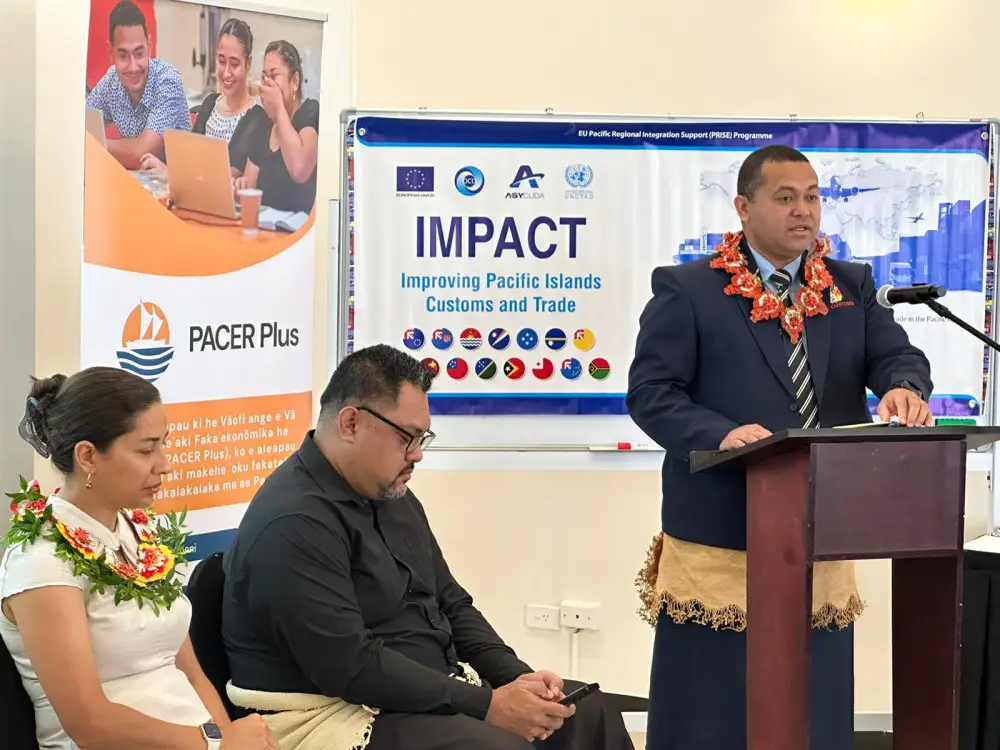
NUKU’ALOFA, Tonga – The Pacific Agreement on Closer Economic Relations Plus (PACER Plus) Implementation Unit (PPIU) successfully organised the Rules of Origin Train the Trainers Workshop in collaboration with key regional and international partners. The event took place in Nuku’alofa, Tonga, from 16-20 October 2023. The regional workshop’s goal was to equip trainers with the knowledge and skills necessary to bridge the existing gaps in training and ensure effective implementation of PACER Plus Rules of Origin. This initiative, co-funded by the PPIU and the Oceania Customs Organisation (OCO), aimed to enhance the capacity of trainers in the Pacific region to deliver national and regional capacity building on Rules of Origin (RoO). Partners involved in this initiative included the United Nations Conference on Trade and Development (UNCTAD), Charles Sturt University’s Center for Customs and Excise Studies (CCES), New Zealand Customs Service, United Kingdom’s Foreign, Commonwealth and Development Office (FCDO), Australian Government Department of Foreign Affairs and Trade, and the Tonga Ministry of Revenue and Customs and Ministry of Trade and Economic Development. Mr. Alipate Tavo, PPIU Trade in Goods Adviser, emphasised the significance of collaboration, saying, “This cooperation is imperative to ensure synergies in capacitating trainers in the Pacific to deliver national and regional capacity building on Rules of Origin under various trade agreements such as PACER Plus, Pacific Islands Countries Trade Agreement, Melanesian Spearhead Group Trade Agreement, Interim Economic Partnership Agreement, and the UK Developing Countries Trading Scheme.” PACER Plus holds enormous potential for the Pacific. However, realising these gains hinges on simplifying RoO for businesses and private sector stakeholders. Properly classifying products under the Harmonised System (HS) is a complex task, and the workshop focused on addressing these challenges. “Stakeholders can better utilise and benefit from duty free and quota free preferences when they understand the RoO, including how to access and undertake the necessary procedure,” said Mr. Tavo. The workshop’s goal was to equip trainers with the knowledge and skills necessary to bridge the existing gaps in training and ensure effective implementation of PACER Plus RoO, contributing to increased utilisation rates and benefits for the region. -END- More articles like this one
PACER Plus Implementation Unit Advocates for International Standards at the ISO Annual Meeting

BRISBANE, Australia – Mr. Roy Lagolago, Head of the PACER Plus Implementation Unit (PPIU), was among the participants at the International Organisation for Standardisation (ISO) Annual Meeting, held from 18-22 September 2023 in Brisbane, Australia. The event, hosted by Standards Australia, brought together global experts and leaders to discuss collaboration, innovation, and sustainable solutions for addressing pressing global challenges. It also explored the role of International Standards in achieving the 2030 Global Agenda’s Sustainable Development Goals. Mr. Roy Lagolago makes a presentation at the ISO Annual Meeting in Brisbane, Australia. Mr. Lagolago’s presence at the ISO Annual Meeting was marked by a talanoa focused on how the Pacific Agreement on Closer Economic Relations Plus (PACER Plus) could support Pacific parties in becoming more actively engaged with ISO standards and understanding their significance. PACER Plus, a unique development-based trade agreement between Australia, New Zealand and eight Pacific countries, aims to foster economic growth, trade liberalisation, and sustainable development among its parties. Mr. Lagolago’s discussion with interested delegates from the Pacific explored how PACER Plus could contribute to their ambitions to play a more significant role in ISO’s standardisation efforts. “We believe that embracing international standards is key to achieving economic growth, sustainability, and prosperity in the Pacific,” said Mr. Lagolago. “PACER Plus is committed to helping our member nations better understand and engage with ISO standards to enhance the quality of products and services they offer while facilitating trade with the broader international community.” The Pacific delegation’s attendance at the ISO Annual Meeting was made possible through the support of Standards Australia and the United Kingdom’s Foreign, Commonwealth and Development Office. Their contributions enabled officials from the Pacific to participate actively in discussions and share their perspectives on standards development. The United Kingdom is also committing AU$5.8 million to bolster the adoption of standards within Commonwealth countries. This investment aims to dismantle trade barriers, foster economic resilience, diminish reliance on aid, and pave the way for Pacific countries and other Commonwealth members to seize new opportunities for international businesses. Regional officials discuss how PACER Plus can support Pacific countries in becoming more actively engaged with ISO standards and understanding their significance. Hon. Crossley Tatui, Niue’s Minister for Finance and Infrastructure and the current chair of the PACER Plus Ministers Meeting, emphasized the significance of PACER Plus at both national and regional levels, highlighting its potential to deliver tangible benefits to Pacific countries. Ms. Leata Alaimoana, Queensland Trade Commissioner for the Pacific, discussed the close ties between the Australian state of Queensland and the Pacific, underscoring the opportunities for greater engagement with PACER Plus. Dr. Ulrich Diekmann, Regional Quality Infrastructure Coordination with the Pacific Islands Forum Secretariat, provided valuable insights into the Pacific’s ongoing efforts to strengthen its quality infrastructure, aligning with international standards to improve competitiveness and trade capabilities. The ISO Annual Meeting provided a vital platform for fostering global partnerships and advancing the adoption of international standards. The participation of Mr. Lagolago in facilitating discussions on PACER Plus and its connection to ISO standards underscored the Agreement’s commitment to quality, sustainability, and international collaboration. -END- More articles like this one
PACER Plus Regional Workshop on harnessing Pacific labour for sustainable economic development in the Pacific
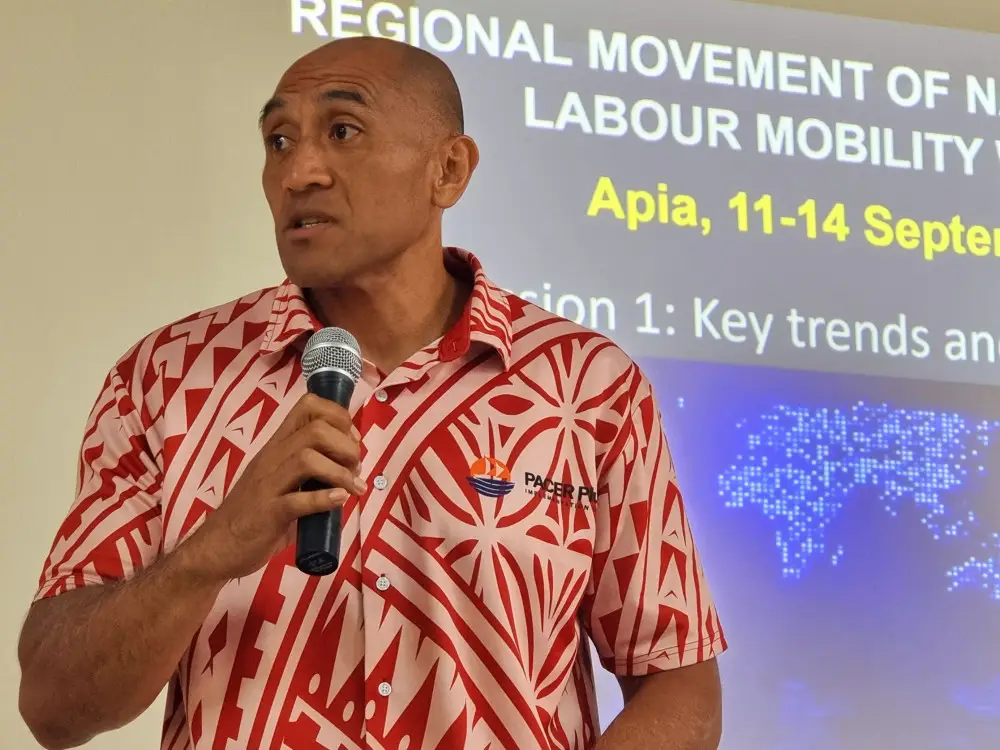
APIA, Samoa – The Pacific Agreement on Closer Economic Relations Plus (PACER Plus) Implementation Unit is set to host a regional workshop on Movement of Natural Persons and Labour Mobility in Apia, Samoa, from 11-14 September 2023. The “PACER Plus Regional Workshop on Movement of Natural Persons and Labour Mobility” aims to enhance understanding and explore the interconnections between Trade in Services and the Arrangement on Labour Mobility to maximise development benefits for PACER Plus parties. Experts, policymakers, and stakeholders from Australia, Cook Islands, Kiribati, Nauru, New Zealand, Niue, Samoa, Solomon Islands, Tonga, Tuvalu and Vanuatu met at the PACER Plus Implementation Unit in Apia, Samoa today for the four-day regional workshop. PACER Plus, a unique development-centered trade agreement, acknowledges the significance of human capital movement in fostering economic integration and sustainable development. The Movement of Natural Persons (MNP) Chapter of the agreement specifically focuses on facilitating the movement of service providers to promote services trade while excluding measures related to citizenship, residence, permanent employment, or access to foreign employment markets. The Arrangement on Labour Mobility (ALM) is a non-legally binding annex to the Agreement, which provides a framework for regional labour mobility cooperation to foster increased development benefits for participating countries. “PACER Plus recognises the potential of human capital mobility to drive regional development,” states Roy Lagolago, Head of the PACER Plus Implementation Unit. “This workshop provides a unique platform to address knowledge gaps and foster cooperation among PACER Plus parties in the realms of MNP and labour mobility, setting the stage for a more robust and interconnected regional trade ecosystem.” The objectives of the PACER Plus Regional Workshop on Movement of Natural Persons and Labour Mobility are as follows: Capacity building for government officials: Offer a focused capacity building programme for Pacific trade and labour mobility officials on the PACER Plus Movement of Natural Persons Chapter and Arrangement on Labour Mobility to understand how these components can be better utilised to support sustainable economic development in their countries. National Consultations for the Review of the Arrangement on Labour Mobility: Facilitate national consultations to gather valuable input for the ALM Review. The workshop promises to be a pivotal event in the ongoing efforts to maximise the benefits of PACER Plus for the Pacific. It will bring together experts, policymakers, and stakeholders from Australia, Cook Islands, Kiribati, Nauru, New Zealand, Niue, Samoa, Solomon Islands, Tonga, Tuvalu and Vanuatu, to foster a deeper understanding of the movement of natural persons and labour mobility, ultimately contributing to the region’s economic growth and sustainable development. For more information on the four-day workshop, please click here. -END- More articles like this one
Workshop Strengthens Regional Customs Administrations

APIA, Samoa – Today marks the commencement of the Regional Workshop on Harmonised System (HS) in Apia, Samoa. The workshop, jointly organised by the PACER Plus Implementation Unit (PPIU) and the Oceania Customs Organisation (OCO) under the European Union funded Improving Pacific Islands Customs and Trade project implemented in partnership with United Nations Conference on Trade and Development, will run from 21-25 August 2023. The five-day event aims to support Pacific countries in successfully implementing the Harmonised System Nomenclature 2022, the world’s global standard for classifying goods in international trade. Customs administrators and stakeholders from the Pacific met at the PACER Plus Implementation Unit in Apia, Samoa, for the five-day Regional Workshop on Harmonised System. The HS Nomenclature 2022 brought about 351 sets of amendments, posing significant challenges to customs administrations in the Pacific. Only a limited number of Pacific countries, including Fiji, French Polynesia, Nauru, New Caledonia, Niue, the Northern Mariana Islands, Palau, Papua New Guinea, Solomon Islands, Vanuatu, and Wallis and Futuna, have successfully implemented HS 2022 to date. This highlights the need for further assistance in the transposition of HS 2022 to retain historical concessions and ensure market access conditions remain unaffected by technical revisions to scheduled tariff commitments. Mr. Roy Lagolago, Head of the PPIU, stated, “The complexity and scale of the HS amendments have presented technical and time-consuming challenges for our members. This workshop is a crucial step in assisting Pacific countries to complete the HS 2022 transposition work by December 2023. It will enable us to enhance the uniformity in the interpretation and application of the HS Nomenclature 2022, fostering greater regional trade facilitation.” The workshop’s main objectives include providing an overview of the Harmonised System, HS 2022 Amendments, and the Pacific Harmonized Commodity Description and Coding System (PACHS 22) work. It will also facilitate discussions among members to share progress and experiences in implementing HS 2022 amendments and resolving outstanding issues that may hinder the process. Additionally, technical discussions and reviews will focus on the transposition of PACER Plus Tariff Schedules from HS 2012 to HS 2017. Moreover, the workshop will also raise awareness on the interim Economic Partnership Agreement and its requirements. Mr. John Sam (right), OCO’s Trade and Revenue Management Advisor, greets Mrs. Gianina Harris, Nauru Customs Officer, at the Regional Harmonised System Workshop in Apia, Samoa. Ms. Nancy Oraka, Head of OCO, emphasized, “Collaboration and capacity-building are essential in navigating the complexities of the HS amendments. By working together, we can enhance the efficiency and transparency of customs administrations in the region, ultimately benefiting businesses and consumers alike.” Attending the five-day workshop are customs administrators and stakeholders from the Cook Islands, Fiji, Guam, Kiribati, Nauru, Niue, the Northern Mariana Islands, Palau, Samoa, Solomon Islands, Timor-Leste, Tonga, Tuvalu, and Vanuatu. The Regional Workshop on Harmonised System marks a significant step forward in promoting regional economic cooperation and fostering sustainable development in the Pacific. By overcoming challenges and enhancing customs practices, the workshop seeks to create a conducive environment for trade in the region. -END- More articles like this one
Pacific Trade Officials Convene for Trade in Goods Course

Regional trade officials at the Pacific Regional Introductory Trade in Goods Course in Suva, Fiji. Photo: Fiji Government Regional trade officials at the Pacific Regional Introductory Trade in Goods Course in Suva, Fiji. Photo: Fiji Government The five-day capacity-building event, funded by the Australian Government and organised by the University of Adelaide’s Institute for International Trade in collaboration with Fiji’s Ministry for Trade, Cooperatives, Small and Medium Enterprises, and Communication, aims to empower Pacific trade officials with the necessary skills and knowledge to enhance trade relations within the region and beyond. The Course was opened by Hon. Mr. Manoa Kamikamica, Fiji’s Minister for Trade, Cooperatives, Small and Medium Enterprises, and Communications, highlighting the importance of such capacity-building efforts. “Together, we have the opportunity to leverage this training to bolster our collective efforts in regional and multilateral forums, shaping discussions, and advocating for the interests of our region on the international stage. I am confident that the knowledge and skills gained here will empower you all to navigate the complexities of global trade and create lasting positive impacts for our respective economies,” said Hon. Kamikamica. The Pacific Regional Introductory Trade in Goods Course’s primary objective is to provide a refresher on the current state of play in regional and international trade relations. This includes updating technical knowledge of Pacific regional trade agreements and international rules-based trading systems such as the World Trade Organisation. Participation in the course is part of the PPIU’s overall aim to develop Parties to build their trade capacities and allow them to effectively implement their obligations under the multilateral arrangements and regional trade agreements including PACER Plus. -END- More articles like this one
PACER Plus Ministers Meeting: Advancing Regional Economic Integration and Membership Expansion

APIA, Samoa – The Ministerial representatives of the Parties to the Pacific Agreement on Closer Economic Relations Plus (PACER Plus) convened virtually on 26 July 2023 under the chairmanship of Hon. Crossley Tatui, Minister for Infrastructure and Finance for Niue. The meeting saw government ministers and representatives from the 10 PACER Plus Parties – Australia, Cook Islands, Kiribati, New Zealand, Niue, Samoa, Solomon Islands, Tonga, and Vanuatu – along with representatives from the Pacific Islands Forum Secretariat. Regrettably, Tuvalu conveyed their apologies as they were unable to attend. Ministers and officials from PACER Plus parties at the PACER Plus Ministers Meeting. Ministers took note of the significant achievements and progress made by the PACER Plus Implementation Unit and Labour Mobility Secretariat in delivering the annual work programme for FY2022-2023. Recognising the importance of supporting Pacific private sector businesses and enhancing their participation in regional and international trade, Ministers reaffirmed their commitment to realising the benefits of PACER Plus. The principles of inclusion, mutually agreed priorities, complementarity with existing regional activities, value for money, and timely support for economic recovery remained central to their approach. Expanding the members of PACER Plus was acknowledged as a valuable step towards enhancing regional economic integration. The Ministers emphasized that this expansion would foster more efficient and cost-effective supply chains, open up access to intra-regional and international markets, and attract foreign investment while boosting the positive impact of labour mobility. With keen interest from Nauru and other Forum Island Countries in ratifying the PACER Plus, the Ministers tasked the PACER Plus Implementation Unit and Labour Mobility Secretariat to actively engage these countries and facilitate their accession. The Ministers also highlighted the importance of addressing trade, investment, and labour mobility issues through streamlined regional activities that benefit all parties involved. Recognising the limitations in human resources and technical capacity within both public and private sectors, as well as the constraints in economic infrastructure and supply chain robustness, they underscored the need for coordinated efforts to implement reforms and capitalise on opportunities. Regarding labour mobility, the Ministers lauded the progress in the delivery of the labour mobility work program for Financial Year 2022-2023 and endorsed the activity plan for Financial Year 2023-2024. They acknowledged that these initiatives contributed directly to the development of a regional and holistic labour mobility policy and explored new opportunities for Pacific labour receiving countries. Emphasizing the value of the Pacific Labour Mobility Annual Meeting (PLMAM) in facilitating effective regional cooperation, the Ministers committed to supporting the implementation of agreed regional initiatives. Additionally, the Government of the United Kingdom’s offer to provide technical expertise to support the implementation of the Development and Economic Work Programme was acknowledged with appreciation. The Chair of the PACER Plus Ministers Meeting, Hon. Crossley Tatui, stated: “The PACER Plus agreement remains crucial for our region’s economic growth and prosperity. By working together and coordinating our efforts, we can harness the full potential of PACER Plus to enhance trade, investment, and labour mobility, ultimately improving the lives of our people across the Pacific.” The Ministers’ commitment to realising the benefits of PACER Plus and advancing regional economic integration promises a brighter future for the Pacific, fostering sustainable socio-economic development and resilience against global challenges. -END- More articles like this one
Enhancing Pacific Labour Mobility: Pacific-Australia-New Zealand Visa Pathways Study

APIA, Samoa –The PACER Plus Implementation Unit (PPIU) has recently concluded a comprehensive study to identify alternative visa pathways that can facilitate the movement of semi-skilled and skilled Pacific workers to Australia and New Zealand. The PACER Plus Agreement recognises the importance of the movement of people to regional economic integration and sustainable development in the Pacific. The Movement of Natural Persons (MNP) Chapter covers the movement of semi-skilled and skilled service providers to facilitate services trade, and the Arrangement on Labour Mobility (ALM), a non-legally binding annex to the PACER Plus Agreement. The ALM provides a framework for regional cooperation to facilitate the movement of Pacific workers to the territories of other participating countries for temporary employment. Currently, the predominant modality for Pacific labour mobility to Australia and New Zealand is the New Zealand Recognised Employer (RSE) and the Australian Pacific Australia Labour Mobility (PALM) schemes. These schemes are largely focused on low-skilled employment in the Australian and New Zealand horticulture and meat works industries. Pacific countries are also interested in understanding alternative business and temporary employment pathways that can increase development outcomes for their countries. For this reason, the PPIU commissioned the study to capture information on eligibility conditions, verify potential opportunities, understand access constraints, and propose solutions to increase utilisation of these visa pathways by Pacific workers and businesses. For Australia, the Temporary Skill Shortage (TSS) (subclass 482) visa is the leading temporary work visa. From 2011-12 to 2021-22, only 1,848 TSS workers came from the Pacific, which is exceptionally low in comparison with the top countries for the TSS. The vast majority of the Pacific workers entering Australia on the TSS visa have been from Fiji and Papua New Guinea (PNG), with over 800 visas granted to workers from each country. The top sponsoring industries for Pacific workers on the TSS were ‘Mining’, ‘Other Services’, ‘Professional, Scientific and Technical’, ‘Health Care and Social Assistance’, ‘Manufacturing’, and ‘Retail Trade’. There has been a reduction in the overall use of this visa by Pacific workers over time. Australia Business Visitor visas granted to people from Pacific countries from 2012-13 to 2022-23 (to 31 March). Similarly, the primary temporary worker visa for New Zealand is the Accredited Employer Worker Visa (AEWV) and its predecessor visas that the AEWV subsumed in 2022. From 2013 to 2022, 22,803 workers from Pacific countries were granted an AEWV or one of its predecessor visas. This usage is exceptionally higher than the usage of the Australian TSS visa by Pacific workers and has increased over time, but this difference is driven by the use of AEWV by Fijian citizens, who make up 83.9 per cent of visa holders. The most common occupations taken up by Pacific AEWV visa holders were ‘Road and Rail Drivers’, ‘Automotive and Engineering Trades Workers’, ‘Farm, Forestry and Garden Workers’, ‘Construction Trades Workers’, and ‘Carers and Aides’. In addition to temporary work visas, Pacific businesspeople can temporarily travel to Australia and New Zealand for limited business purposes on business visas. Between 2012-13 and 2022-23 (until 31 March), Australia granted 72,404 business visitor visas to people from the Pacific. Businesspeople from PNG and Fiji have made the most use of this visa, with 28,474 and 18,352 visits respectively. For New Zealand, 18,378 business visas were issued to Pacific businesspeople between 2013 and 2022. While Pacific business visitors to NZ are significantly lower than Australia, business visitors to New Zealand have been relatively consistent up until 2020. Similar to Australia, most of these visitors came from Fiji (9,684 visits) and PNG (3,033 visits). The study identified that the constraints currently limiting Pacific access to the temporary employment and business visitor visas cover both systemic constraints and visa-specific constraints. A number of recommendations were provided to address these constraints. To read the full report titled “Mapping of Visa Pathways for Mode 4 and Semi-Skilled/Skilled Labour Mobility to Australia and New Zealand”, please refer to www.pacerplus.org or click here. -END- More articles like this one
PACER Plus Regional ePhyto Project Empowers Agricultural Trade in the Pacific

APIA, Samoa – The Pacific Agreement on Closer Economic Relations Plus (PACER Plus) hosted a Regional ePhyto Webinar on Thursday, 15 June 2023, bringing together key stakeholders from across the Pacific to explore the potential of electronic phytosanitary certification in improving facilitation of agricultural trade. The virtual event marked a significant milestone in advancing digital solutions for trade facilitation and bolstering economic growth in the region – at the completion of the first year of the ePhyto Capability Project. The PACER Plus Regional ePhyto Webinar was attended by Pacific government officials, regional partners, and industry stakeholders. The PACER Plus Regional ePhyto Webinar was attended by government officials, industry representatives, and experts in phytosanitary systems. Mr Peter Neimanis, the PACER Plus ePhyto Consultant, provided a presentation on the benefits and challenges of adopting electronic phytosanitary certification, sharing best practices, and exploring strategies for effective implementation. Mr Neimanis highlighted the transformative potential of ePhyto in streamlining trade processes and ensuring the safety and quality of agricultural products. “The PACER Plus ePhyto Webinar represents a significant step forward in enhancing trade efficiency and sustainability in the Pacific. By digitizing phytosanitary certification, we can reduce paperwork, improve accuracy, and expedite the flow of goods, ultimately benefiting both exporters, importers, and government agencies,” he said. The webinar also showcased successful ePhyto implementation updates from Cook Islands, Kiribati, Solomon Islands, and Tonga, underscoring the positive impact of electronic certification on trade facilitation. ePhyto will enhance trade efficiency and sustainability in the Pacific, said Mr Peter Neimanis (left). PACER Plus is a regional development-centered trade and investment agreement aligned with the Sustainable Development Goals. The agreement is designed to support Pacific countries to stimulate economic growth by becoming more active partners in, and benefit from, regional and global trade. Ten countries are currently parties to the agreement: Australia, Cook Islands, Kiribati, New Zealand, Niue, Samoa, Solomon Islands, Tonga, Tuvalu, and Vanuatu. -END- More articles like this one
PACER Plus Joint Committee Meeting Concludes in Niue

ALOFI, Niue – The PACER Plus Joint Committee Meeting concluded today, marking a significant milestone for regional cooperation in the Pacific. The three-day meeting brought together officials from the ten countries participating in the PACER Plus, enabling them to meet face-to-face for the first time since entry into force of the Agreement due to the COVID-19 border closures. Government representatives from the 10 PACER Plus parties met in Niue for the 6th PACER Plus Joint Committee Meeting. The Pacific Agreement on Closer Economic Relations Plus or PACER Plus is a regional trade and development agreement between 10 countries: Australia, Cook Islands, Kiribati, New Zealand, Niue, Samoa, Solomon Islands, Tonga, Tuvalu, and Vanuatu. The agreement aims to enhance economic cooperation, expand regional trade, and promote sustainable development across the Pacific. The three-day PACER Plus Joint Committee Meeting provided an opportunity for delegates to engage in fruitful talanoa and address issues impacting the implementation of the PACER Plus. The officials deliberated on various topics, including trade in goods, trade in services, investment, labour mobility, and measures to increase the value and long-term impact of the PACER Plus Agreement and Arrangement on Labour Mobility. Some of the key outcomes from the PACER Plus Joint Committee Meeting included adoption of the Annual Plan for the Financial Year 2023-2024, endorsement of the General Review process for the Agreement and endorsement of the PACER Plus Monitoring and Evaluation, Learning and Adaptation (MELA) Framework and Gender Equality and Disability and Social Inclusion (GEDSI) Strategy. Delegate at the PACER Plus Joint Committee Meeting in Niue. Ms. Doreen Siataga, the Niue Secretary for Finance and Chair of the 6th PACER Plus Joint Committee meeting, highlighted the significance of the event. She stated, “Niue is pleased to have hosted the PACER Plus Joint Committee Meeting, a gathering that signifies the unwavering commitment of the region towards economic growth and sustainable development for our communities.” -END- More articles like this one