
From Ocean Depths to International Tables

SolTuna’s Journey of Triumph with PACER Plus HONIARA, Solomon Islands – For years, the Solomon Islands’ pristine waters have cradled SolTuna, a leading tuna company, in their cerulean embrace. Amidst the ebb and flow of the tides, SolTuna battled daunting challenges, determined to deliver their prized tuna to the plates of Australians and New Zealanders. Their odyssey took a historic turn in 2020, when the Solomon Islands ratified the Pacific Agreement on Closer Economic Relations Plus or PACER Plus, a unique development-centered trade agreement that transformed SolTuna’s struggles into triumphs. Fish unloading at the wharf in Noro, Solomon Islands. (Photo: SIBC) “Before PACER Plus, SolTuna faced significant hurdles in exporting our tuna to Australia and New Zealand. Burdened by import duties, we found it hard to compete in these markets,” recalled Mr. Mark Gibble, SolTuna’s Business Development Manager. Despite these barriers, SolTuna’s spirit remained unyielding. Their commitment to quality and sustainability buoyed them through turbulent waters. With the ratification of PACER Plus, their efforts were not in vain. The agreement ushered in a new era, one where import duties were but a memory, paving the way for tariff-free exports. “PACER Plus has been a game-changer. It ensures we no longer pay import duties, revitalising our exports to Australia and New Zealand,” beamed Mr. Gribble. In the wake of tariff liberation, SolTuna’s exports soared. The aroma of freshly caught Solomon Islands tuna began gracing kitchens across Australia and New Zealand. But the impact transcended the realms of the market; it seeped into the heart of the Solomon Islands. With increased demand, SolTuna blossomed, sowing seeds of economic prosperity and job creation for the Pacific Island country. SolTuna’s surge in exports to Australia and New Zealand did more than boost the company’s bottom line. It became a beacon of hope for the people of the Solomon Islands, heralding a wave of employment opportunities. As SolTuna expanded its operations to meet the rising demand, a ripple effect of prosperity washed over the local communities. The increased production at SolTuna meant more hands were needed to harvest, process, and package the prized tuna, creating a surge in employment opportunities for the people. “Our success is not just measured in tons of tuna exported; it’s measured in the lives we touch and the communities we uplift in Solomon Islands. The positive impact of SolTuna’s growth goes beyond economic numbers. It’s about people, their dreams, and the collective progress of the Solomon Islands,” shared Mr. Gribble. “The effects of PACER Plus are profound. It ensures sustainable growth for our industry. With rising demands, we’re adopting eco-friendly practices, safeguarding our marine resources for generations to come,” added Mr. Gribble. “The future is promising. PACER Plus has granted us a competitive edge. We envision expanding our operations, generating employment, and continuing to offer sustainable, high-quality tuna worldwide.” Through tariff-free exports, SolTuna not only propels the economy forward but also safeguards the rich marine ecosystem that sustains countless livelihoods in the Solomon Islands. In every can of tuna exported, there is a story of resilience, collaboration, and a brighter future for a nation and its people. -END- More articles like this one
Solomon Islands Successful Transition to HS 2022

PACER Plus Supports Solomon Islands Boosts Trade Confidence In June 2020, Solomon Islands took a significant step toward economic integration by ratifying the Pacific Agreement on Closer Economic Relations (PACER) Plus trade agreement. This decision would play a pivotal role in navigating a crucial challenge – the transition to the Harmonised System (HS) 2022. The Harmonised System, a standardised numerical method of classifying traded products, serves as a global economic language, facilitating customs procedures, and ensuring consistency in the assessment of duties and taxes. With the latest update effective from 1 January 2022, more than 200 countries and economies, including Solomon Islands, were faced with the task of aligning their systems with HS 2022 standards. Mr. Michael Ligo (left), PPIU Consultant, with Ms. Alice Saefo’oa, from the Solomon Islands Ministry of Finance and Treasury. Recognising the importance of compliance with the PACER Plus Trade in Goods component, Solomon Islands sought assistance from the PACER Plus Implementation Unit (PPIU). Mr. Michael Ligo, the PPIU consultant who was responsible for supporting Solomon Islands in their transition to the Harmonised System 2022, shared, “The transition to HS 2022 is not merely an administrative task; it’s a testament to the commitment of Pacific countries to adhere to international standards. PACER Plus has been instrumental in providing the necessary technical assistance to ensure a seamless integration for the Solomon Islands.” Commencing in September 2022, the collaborative effort between PPIU and Solomon Islands aimed to peer-review existing practices, ensuring they adhered to the rigorous international standards set by HS 2022. This process took shape over three months, concluding in December 2022, paving the way for a seamless integration of HS 2022 into Solomon Islands’ customs procedures. Ms. Alice Saefo’oa, from the Solomon Islands Ministry of Finance and Treasury, described the significance of this collaboration, “The compliance with HS 2022 international standards is not only a regulatory milestone but a critical assurance for investors and the private sector. It signifies to the world that Solomon Islands is dedicated to maintaining international trade standards, fostering confidence among stakeholders involved in importing and exporting goods.” On 1 July 2023, Solomon Islands officially went live with HS 2022. Marking a historic moment in their commitment to international trade standards. The compliance not only benefits the government in streamlining customs operations but also provides a crucial signal to the global community, indicating that Solomon Islands is open for business and committed to facilitating international trade. PACER Plus emphasises the use of HS 2022 for tracking goods data entering and leaving the Pacific, creating a unified approach that fosters transparency and efficiency in regional trade. The successful collaboration between PPIU and Solomon Islands showcases the power of partnerships in addressing challenges and unlocking new opportunities for economic growth. Pacific PACER Plus countries, including Cook Islands, Kiribati, Samoa, Tonga, and Tuvalu, are currently undergoing their national approval processes, with plans to implement HS 2022 starting January 2024, thanks to the support of PPIU partners such as the Oceania Customs Organisation, United Nations Conference on Trade and Development, the Australian Government Department of Foreign Affairs and Trade, and New Zealand Customs Service. As Solomon Islands looks forward, the successful transition to HS 2022 positions the nation as a reliable and compliant partner on the global stage, reinforcing investor confidence and contributing to the overall economic prosperity of the Pacific region. -END- More articles like this one
PACER Plus-funded Training to Boost Solomon Islands Tourism Sector

HONIARA, Solomon Islands – The Ministry of Culture and Tourism in the Solomon Islands, in partnership with the Pacific Agreement on Closer Economic Relations Plus (PACER Plus), is pleased to announce the successful completion of the first phase of the Finance Literacy Training for Beach Operators. This initiative, aimed at micro, small, and medium enterprises (MSMEs) in the tourism industry in Solomon Islands, marks a significant step towards enhancing financial literacy and business management skills among local tourism operators. Sol Grassroots’ Financial Literacy Trainer Mr. Calvin Charles (standing) with students. The training, held on 1-2 August, 15-16 August, and 22-23 August 2023, witnessed enthusiastic participation from beach operators near Honiara. This endeavour is part of a broader effort to foster sustainable growth in the Solomon Islands’ tourism industry, where micro and small locally owned businesses constitute about 70 percent of the sector. Mr. Philip Sukibuka, Deputy Secretary for the Ministry of Culture and Tourism, expressed his optimism about the project’s outcomes: “Many small business operators were not able to access loans or relief grants due to poor financial reporting. This workshop is a possible solution on how we can assist to address this challenge.” The Solomon Islands tourism industry, although vibrant, faces challenges due to the predominance of informal small-scale businesses. Many operators struggle with inadequate financial reporting and management practices, hindering their ability to access loans and grants. The survey conducted by the Department of Tourism in 2022 highlighted these hurdles and the need for targeted interventions. Phase 1 of the training focused on enhancing business practices and encouraging investment in preparation for the 2023 Pacific Games scheduled to be hosted in Honiara. This initiative is designed to enable local operators to capitalise on the tourist influx during the games while also promoting sustainable practices. Mr. Augusto Taraha, owner and manager of Eden Bay, Block 1 Beach. Mr. Augusto Taraha, owner and manager of Eden Bay and Block 1 Beach, who attended the training, shared: “The training is simple and easy for me to understand. I never thought of adding extra income streams to grow my business. I will start to think about how I can incorporate this.” The second phase of the training, scheduled from January – March 2024, will expand its reach to other key provinces, including Western, Central Island, Malaita, and Isabel Provinces. The comprehensive curriculum covers critical topics such as beach tourism, bookkeeping in tourism, cash management in tourism, and savings and budgeting in tourism. The training session are designed to be context-specific, practical and interactive, empowering participants to develop effective cash book records. As the Financial Literacy Training for Beach Operators continues its journey, it holds the promise of not only transforming individual businesses but also uplifting the tourism landscape in the Solomon Islands. -END- More articles like this one
PACER Plus Empowers Farmers in Solomon Islands’ Malaita Province
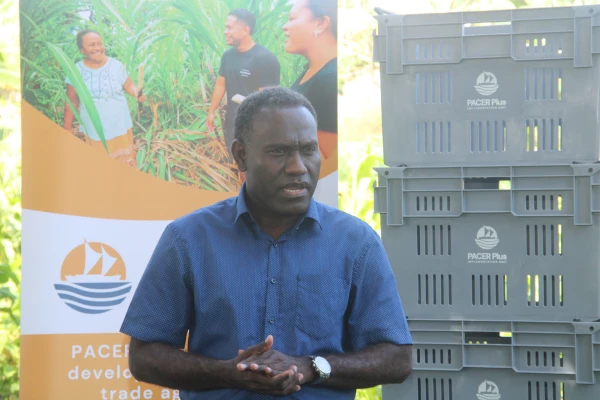
PACER Plus has assisted Goshen Enterprise Ltd with the provision of 500 harvest bins to assist the company in its efforts to support farmers on Malaita Province, Solomon Islands. The harvest bins were handed over by the Trade Commissioner in the Ministry of Foreign Affairs and External Trade (MFAET) Solomon Islands, Mr. Barrett Salato to Goshen Enterprise representative at the Ministry of Agriculture and Livestock Biosecurity area at Henderson, Solomon Islands yesterday (17 August 2023). MFAET Trade Commissioner Mr. Barrett Salato (left) handing over the harvest bins to Goshen’s Mr. Levite Maesimae (right) and witnessed by Ministry of Agriculture and Livestock Deputy Director of Biosecurity Solomon Islands, Mr. Crispus Fanai (center). The bins will be used to assist farmers in the post-harvest process where products will be harvested and transported to Goshen’s newly operated pack-house on Malaita for storage and eventual distribution to the domestic and international markets. Mr. Salato acknowledged the support from PACER Plus Implementation Unit (PPIU) in providing the bins that would go a long way in assisting Goshen and farmers on Malaita. He said Goshen has been working together with farmers on Malaita to encourage them to go into taro farming and increase productivity. He stressed that the bins are useful for harvest and transport to the processing facility. “I trust that Goshen will distribute the bins to their farmers and will be made useful for its intended purpose,” he added. Goshen Enterprises Limited was the beneficiary of a Taro Pack House on Malaita with funding support from the World Trade Organisation’s Enhanced Integrated Framework (EIF) Programme. Under EIF-Enhanced Capabilities of Agriculture Trade (ECAT) project in the Solomon Islands, emphasis was made on the development of taro products with focus on two provinces, Temotu and Malaita. Trade Commissioner Salato said that the Solomon Islands Government is keen to export taro to the international market soon. Trade Commissioner Salato said the Ministry of Foreign Affairs and External Trade would like to see that at some stage, Solomon Islands will be able to export taro to the international market, especially Australia and New Zealand with the Pacific diaspora. “I understand that the supply of taro is high at both markets and therefore this is where our target should be. With the close of the EIF-ECAT Project in June 2023, PACER Plus is coming on board to assist the Country with some of its programs. The delivery of these harvesting bins is a testimony of the support by PACER Plus,” he added. In receiving the harvesting bins, Goshen’s Levite Maesimae said farmers on Malaita have expressed concerns about the quality of their products when reaching the processing facility, hence the bins would greatly assist in the storage and handling of the products. He thanked PACER Plus for providing the bins to Goshen Enterprise. “It’s a delight to witness the tangible impact of PACER Plus in action, as it contributes to the growth and development of enterprises like Goshen on Malaita. These harvest bins serve as a testament to the collaborative efforts between PACER Plus and the Solomon Islands’ government as well as local businesses, uplifting farmers and enhancing the post-harvest processes. This initiative showcases the commitment to fostering agricultural prosperity and trade within Solomon Islands and the Pacific,” said Mr. Alipate Tavo, the PPIU Trade and Investment Adviser. -END- More articles like this one
Report on Constraints and Opportunities in Remittance Data Collection in the Pacific
APIA, Samoa – The PACER Plus Implementation Unit (PPIU), in collaboration with the Asian Development Bank (ADB), is pleased to release the report titled “Constraints and Opportunities in Pacific Remittance Data Collection: Study on Remittances Data and Measurement Constraints in Pacific Labour Sending Countries”. This comprehensive research report sheds light on the remittance landscape in three case study countries, namely Kiribati, Solomon Islands, and Tonga. It provides valuable recommendations for enhancing remittance data collection and analysis in the Pacific, aiming to inform policy decisions and support sustainable development in the region. The report underscores the importance of remittances for Pacific labour sending countries. For many of these countries, the level of remittances received exceeds the amount of foreign direct investment (FDI), export receipts, portfolio flows from financial markets, and even foreign aid. In Tonga for example, remittances in 2020 accounted for 39% of its Gross Domestic Product, while export receipts accounted for only 19%, FDI only 9%, and official overseas aid was less than half the value of remittances. Remittance flows have also been found to be more resilient during times of economic downturn including during the onset of the COVID-19 pandemic and have provided an important ‘safety valve’ to cushion the impact on household incomes and therefore having a direct impact on poverty alleviation. Measuring the volume of remittance flows from labour mobility workers to their Pacific countries of origin is not without its challenges. Pacific labour sending countries have raised concerns on the quality and accuracy of remittances data. To address these concerns, the PPIU commissioned the study to identify the key constraints to remittances data collection and analysis and to determine measures for addressing these constraints. According to the report, the key constraints to remittances data collection and analysis in the region include: Lack of reliable and comprehensive data on remittances in some countries, with insufficient disaggregation of data regarding the sender of remittances. Limited capacity of central banks to collect, analyse, and report on remittance data effectively. Dependence on money transfer operators (MTOs) for data collection resulting in inconsistent data reporting practices. Lack of coordination and collaboration among stakeholders involved in remittance data collection and analysis hampers efforts to obtain accurate and timely data. Despite these challenges, the report identifies several opportunities to improve remittance data collection and analysis in Pacific countries. These opportunities include: Support from international agencies: International agencies offer technical assistance, funding for surveys, collaboration meetings, and research reports and recommendations. Technological advancements: Innovations such as mobile wallets present new avenues for data disaggregation in remittance analysis. Policy interest: Policymakers in Pacific countries exhibit a strong interest in utilising remittances as a tool for economic development and poverty reduction. To address the constraints and capitalise on the opportunities, the report puts forth a number of recommendations which will frame the work that the PPIU will deliver on remittances in the region. To read the full report, please refer to www.pacerplus.org or click here. -END- More articles like this one
PACER Plus SPS and TBT Workshop Empowers Solomon Islands to Foster Trade Excellence
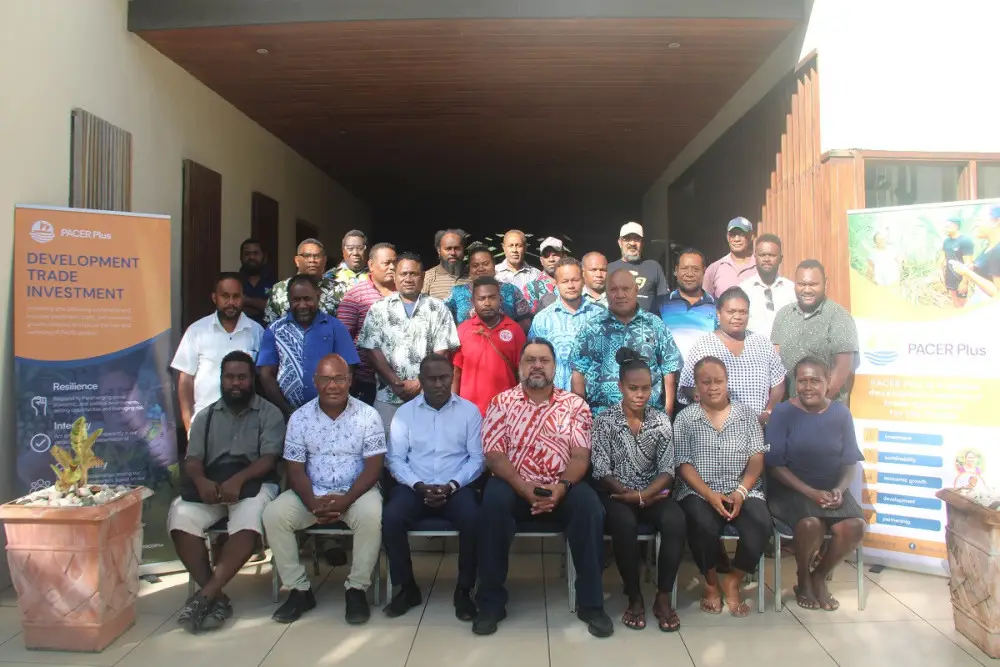
HONIARA, Solomon Islands – The Pacific Agreement on Closer Economic Relations Plus (PACER Plus) successfully concluded its SPS and TBT Workshop in Honiara, Solomon Islands, held from 23-24 May. The workshop was specifically designed to create awareness and promote understanding of the Sanitary and Phytosanitary (SPS) and Technical Barriers to Trade (TBT) obligations and requirements outlined in the PACER Plus Agreement. The two-day workshop brought together key stakeholders from the government, private sector, and non-governmental organisations in Solomon Islands. The event ensured that relevant government officials, importers, exporters, farmers, women groups, youth, community groups, and all those involved in trade are well-informed and updated on SPS and TBT measures, as well as their implementation when engaging in trade activities with other parties of PACER Plus. “The workshop has been an eye-opener for many of us,” said Ms Claudine Watoto (left), owner of Island Agro Fresh, shaking hands with Mr Alipate Tavo, PPIU Trade and Investment Adviser at the PACER Plus SPS and TBT Awareness Workshop in Honiara, Solomon Islands. “This workshop and the topics covered are very important, especially for us who want to export our local products. It’s been an eye-opener for many of us. Thank you to the PACER Plus Implementation Unit for facilitating this. It has allowed us to think on what needs to be improved, and identify where the gaps are,” said Ms Claudine Watoto, owner of Island Agro Fresh, a Solomon Island producer of flour from crops such as potato, banana, and cassava. The Government of Solomon Islands expressed its gratitude to all the participants and to the PACER Plus Implementation Unit for their dedication and contribution to the success of the workshop. “Historically, we have been facing a great deal of challenges in getting our local unique products into the bigger markets, such as Australia and New Zealand. Under PACER Plus, there is a Development Economic Cooperation Work Programme that also provides support to responsible agencies to assist them in creating an enabling environment for private sectors,” said Mrs Jenny Barile, Deputy Director of External Trade. “Thank you to PPIU for conducting this awareness workshop, and for the continuous support towards the implementation of PACER Plus in Solomon Islands. PACER Plus will help our country to become more active partners in, and benefit from, regional and global trade and, in turn, create new opportunities for economic growth, jobs, and raising living standards.” -END- More articles like this one
PACER Plus-funded food safety training concludes in Solomon Islands
A food safety training program for food processors and exporters on food safety requirements and the importance of compliance and implementation of food safety plans (HACCP) was successfully concluded this week in Honiara, Solomon Islands. The training, which was held from 24-25 April, was conducted by the Food Safety Unit within the Environmental Health Division of the Ministry of Health and Medical Services. The two-day training was funded by the Pacific Agreement for Closer Economic Relations Plus (PACER Plus). PACER Plus is a unique trade and investment agreement aligned with the Sustainable Development Goals. The agreement is designed to support participating countries to stimulate economic growth by becoming more active partners in, and benefit from, regional and global trade. Ten countries are currently parties to the agreement: Australia, Cook Islands, Kiribati, New Zealand, Niue, Samoa, Solomon Islands, Tonga, Tuvalu, and Vanuatu. The training program aimed to provide awareness to food processors and exporters on the food safety requirements of the Pure Food Act 1996 and subsequent legislation, and most critically, for facilitation of food export. Compliance with HACCP is a critical requirement mandated by law for accessing food export markets. The program also aimed to train food processors, exporters, and handlers on the important issues of food safety and increase their understanding and desire for improvement and compliance. More than 20 participants participated in the workshop. The Ministry of Health and Medical Services expressed its gratitude for receiving the necessary support to conduct the training, and acknowledged the Department of External Trade under the Ministry of Foreign Affairs and External Trade as the national focal point for PACER Plus. Deputy Secretary to MFAET, Mr Cornelius Walegerea, said: This training will contribute to making a difference in our food processing and export industries by improving businesses in Solomon Islands to produce better quality and safe products, and allowing our exporters to be more effective players in the regional and international markets. PACER Plus Implementation Unit (PPIU) is committed to supporting PACER Plus parties to improve food safety and increase their competitiveness in the global marketplace. PPIU will continue to support capacity building efforts on food safety in Solomon Islands and other PACER Plus parties. More articles like this one
Bridging the Gender Gap in Agriculture

How Electronic Phytosanitary is Empowering Women in the Pacific The electronic phytosanitary certification system, also known as ePhyto, is a technological innovation that is making a significant contribution to gender equality in trade. This digital platform facilitates the certification of plant and food products by eliminating physical paperwork, reducing processing time, and enabling real-time tracking of certification status. One of the critical ways in which ePhyto supports gender equality is by enabling women to participate more fully in international trade. In many countries, women are traditionally excluded from trade-related activities due to cultural and social barriers. However, ePhyto has made it easier for Pacific women to access and participate in the export market by simplifying the certification process and making it more accessible. ePhyto removes the need for Pacific women to travel to and attend to government offices to complete phytosanitary paperwork each time they export/import. This system reduces time burdens, eliminates need to travel, and allows for online activities to be done at a time convenient to women. This system substantially supports Pacific women in engaging fully in trade. The Pacific Agreement on Closer Economic Relations Plus (PACER Plus) has been a crucial driver of ePhyto’s implementation in the Pacific region. PACER Plus is a unique trade agreement that aims to promote sustainable economic development in the Pacific by improving access to international markets. By supporting the adoption of ePhyto, PACER Plus is assisting member parties to increase their competitiveness in international trade while also promoting gender equality. Since September 2022, PACER Plus Implementation Unit provided training to a total of 123 biosecurity officials and exporters from seven member parties: Cook Islands, Kiribati, Niue, Samoa, Solomon Islands, Tonga, and Tuvalu. However, plans to involve stakeholders in Vanuatu, the latest Pacific country to ratify the agreement, have been delayed due to Cyclone Judy and Cyclone Kevin that hit the country this month. Out of all the participants who received training, 42 per cent are women. May Schaaf Vi, Manager Operations for Hihifo Foods, attended the PACER Plus ePhyto Training in Nuku’alofa, Tonga. “In my past experiences, the manual phyto certification generally takes a day or two to process. With ePhyto, processing the certificates will almost be instant which would assist us greatly in exporting and importing goods,” said Ms. Vi. ePhyto is a technological innovation that is having a significant impact on promoting gender equality in the Pacific. By simplifying the certification process and eliminating gender-based barriers to trade, ePhyto is enabling more Pacific women to participate in international trade and access new economic opportunities. More articles like this one
PACER Plus releases four-year Strategic Plan
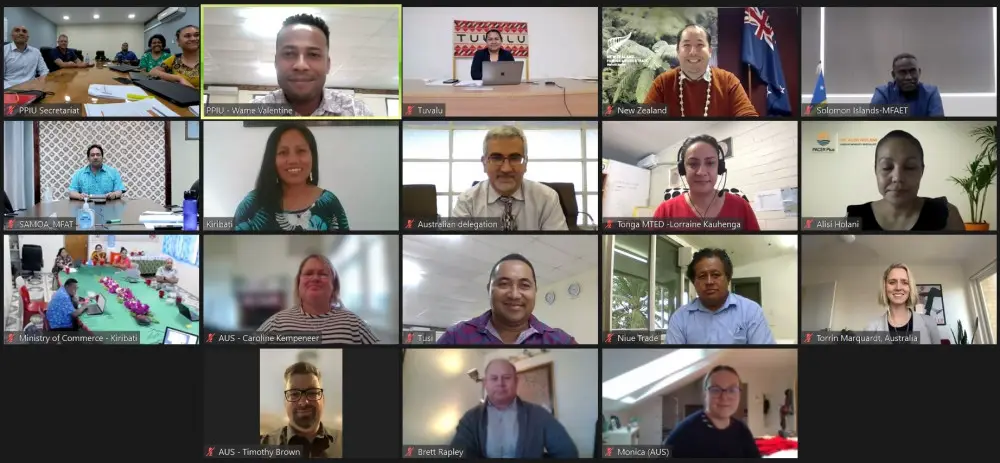
The PACER Plus Implementation Unit (PPIU) today released its inaugural Strategic Plan 2022-2025 which provides the public with the PPIU’s overarching mission and activities. The Strategic Plan was endorsed by the PACER Plus Joint Committee which consists of representatives of the PACER Plus parties. The Strategic Plan was developed on the substantial work undertaken by PACER Plus parties in accordance with PPIU’s foundation documents. Kiribati, which chaired the Joint Committee meeting held virtually on Wednesday 22 June, encouraged the parties to take a collective response in identifying opportunities that will bring significant and sustainable benefits as the region grapples with the ongoing impact of climate change, non-communicable diseases, and COVID-19. “PACER Plus provides us with a unique opportunity and forum to respond collectively. It is also an opportunity to do things differently and to leverage our collective knowledge and expertise to achieve our shared vision of improving the livelihood and welfare of our people,” said Hon Bootii Nauan, Kiribati’s Minister of Commerce, Industry and Cooperative. Roy Lagolago, Head of the PPIU, supported Mr Nauan’s sentiments adding that PPIU will implement the Development and Economic Cooperation Work Programme to achieve the Agreement’s vision. “By delivering the implementation activities as mutually prioritised and determined by the parties, the PPIU will remain directed and clear in our mission and intent to ensure that everyone will benefit from the PACER Plus Agreement,” said Mr Lagolago. Solomon Islands Trade Commissioner Barrett Salato said: “To achieve meaningful benefits from PACER Plus Agreement would require full and effective implementation of the Development and Economic Work Programme. The Strategic Plan 2022-2025 sets the pathway for the full realization of those benefits.” PACER Plus is a regional development-centered trade and investment agreement aligned with the Sustainable Development Goals. The Agreement is designed to support Pacific Island countries to stimulate economic growth by becoming more active partners in, and benefit from, regional and global trade. Nine countries are currently parties to the Agreement: Australia, Cook Islands, Kiribati, New Zealand, Niue, Samoa, Solomon Islands, Tonga, and Tuvalu. This was Tuvalu’s first Joint Committee meeting since ratifying the PACER Plus Agreement in January 2022. “Through PACER Plus, Tuvalu foresees accessing new labour markets in other countries, expanding of our labour seasonal worker scheme, local product mapping, value adding and potential exporting, including necessary storage facilities, equipment and labs for processing and testing of local product prior exportation,” said Loloma Homasi, Assistant Secretary to Tuvalu’s Ministry of Fisheries and Trade. Vanuatu’s parliament recently voted in favour for the ratification of the Bill for the PACER Plus Agreement which will make Vanuatu the 10th country to endorse PACER Plus. Vanuatu’s Department of External Trade director, Joe Pakoa Lui, was present at the PACER Plus Joint Committee meeting. “We’re excited to join the PACER Plus family and to collaborate with the PPIU and the parties to implement activities in Vanuatu that would benefit our people and our communities,” said Mr Lui. “PACER Plus marks an exciting new era for Pacific cooperation in trade and investment which Vanuatu is looking forward to participate in.” To view the PPIU Strategic Plan 2022-2025, please visit pacerplus.org/resources or click on the link below. PACER-Plus-Implementation-Unit-Strategic-Plan-2022-2025 -ENDS- Caption: The PACER Plus Joint Committee Meeting, which consists of representatives of the PACER Plus parties, was held virtually on Wednesday, 22 June 2022. More articles like this one
PPIU partners with SPTO to strengthen capacity building

The Pacific Tourism Organization (SPTO) and Pacific Agreement on Closer Economic Relations (PACER) Plus Implementation Unit or the PPIU have signed a Memorandum of Understanding (MoU) to foster a collaborative partnership that will benefit both organizations and their stakeholders. With its extensive knowledge and experience centred in trade and investment aligning itself to the Sustainable Development Goals, PPIU supports Pacific Island countries to implement activities under the PACER Plus Agreement, stimulating economic growth and sustainable development in the Pacific. Both regional organisations SPTO and PACER Plus will benefit from knowledge sharing and best partnership experiences under the MoU. A key objective of this partnership is that PACER Plus Implementation Unit and SPTO will collaborate to advocate and respond to issues and opportunities that support the development and sustainable growth of the tourism industry in the Pacific. The PACER Plus Implementation Unit will manage and deliver the Development and Economic Cooperation Work Programme that will support Pacific PACER Plus members to strengthen their capacity to benefit from regional trade, economic growth, and sustainable development. Head of the PACER Plus Implementation Unit Mr. Roy Lagolago commended the MoU with SPTO, adding this was an important step in a partnership agreement between two major regional organisations in a time when collaboration and sharing of knowledge was more important than ever. Similarly, SPTO Chief Executive, Mr. Christopher Cocker, emphasized the importance of building partnerships to effectively address common challenges. “We are very excited to work with the PACER Plus Implementation Unit to develop a partnership framework, bringing together our resources and experiences for the benefit of our respective member countries. “To partner and collaborate with an established regional body like the PPIU is crucial particularly when working towards recovery in the tourism industry post the global pandemic. A collaboration with like-minded partners is critical for SPTO and our member countries to drive tourism’s recovery and ensure resilience in the long run”, said Mr. Cocker. -END- Caption: The partnership will respond to issues that support the growth of the tourism industry in the Pacific. (Photo: Samoa Tourism). More articles like this one